
House · Installed in Park City and across Utah
Mancini Wallpapers is a wallcovering installation contractor headquartered in Park City, Utah. We install Farrow & Ball wallpaper, the block-printed stripes, the damasks, The Purnon Papers, and The Heritage Papers among them, across Park City, Deer Valley, the Heber Valley, and the Salt Lake Valley, to the Product Advice Sheet the house publishes for each pattern. We hold no partnership or certification from Farrow & Ball.
The house
Farrow & Ball began in Dorset in 1946, founded by John Farrow, a trained chemist, and Richard Ball, an engineer. They built their first factory at Verwood, and the house later moved to its present home near Wimborne, where, by its own account, it has made its paint and its wallpaper ever since. Since 2021 it has been part of Hempel A/S of Denmark.
Wallpaper came in 1997, block and trough printed with the house's own paints, and that remains the signature. The core range is paint on paper, made at the house's factory in Dorset, free of vinyl, and finished with a wipeable glaze. In 2026, for its 80th anniversary, the house added The Heritage Papers: three archive designs printed in ink on a non-woven paper. The house does not say where those three are made.
What arrives on a job is one of two constructions, and each carries its own method. A core-range roll is pasted on the back, folded, and left to soak before it is hung. A Heritage Paper goes onto a pasted wall. The house publishes a Product Advice Sheet for every pattern, and the crew reads it before the paste is chosen, and the repeat before the quantity.
Eighty years
The house dates itself to 1946, in Dorset. Its first showroom opened on the Fulham Road in Chelsea in 1996, and a year later it began making wallpaper by block and trough printing, with its own paints. Its first overseas showroom followed in Toronto in 1999.
The recent chapters are an owner and two collections. In 2021 the house became part of Hempel A/S. In 2024 The Purnon Papers brought five patterns found at a French château into the range, Adelaïde among them. In 2026 The Heritage Papers marked the 80th anniversary with Sweet Pea, Vine Leaf, and Gothic, in 14 colourways: the only papers in the collection that are pasted to the wall.
 2024
 2026
A founding, a showroom, a first wallpaper, an owner, a château, and an anniversary
A curiosity from the archive
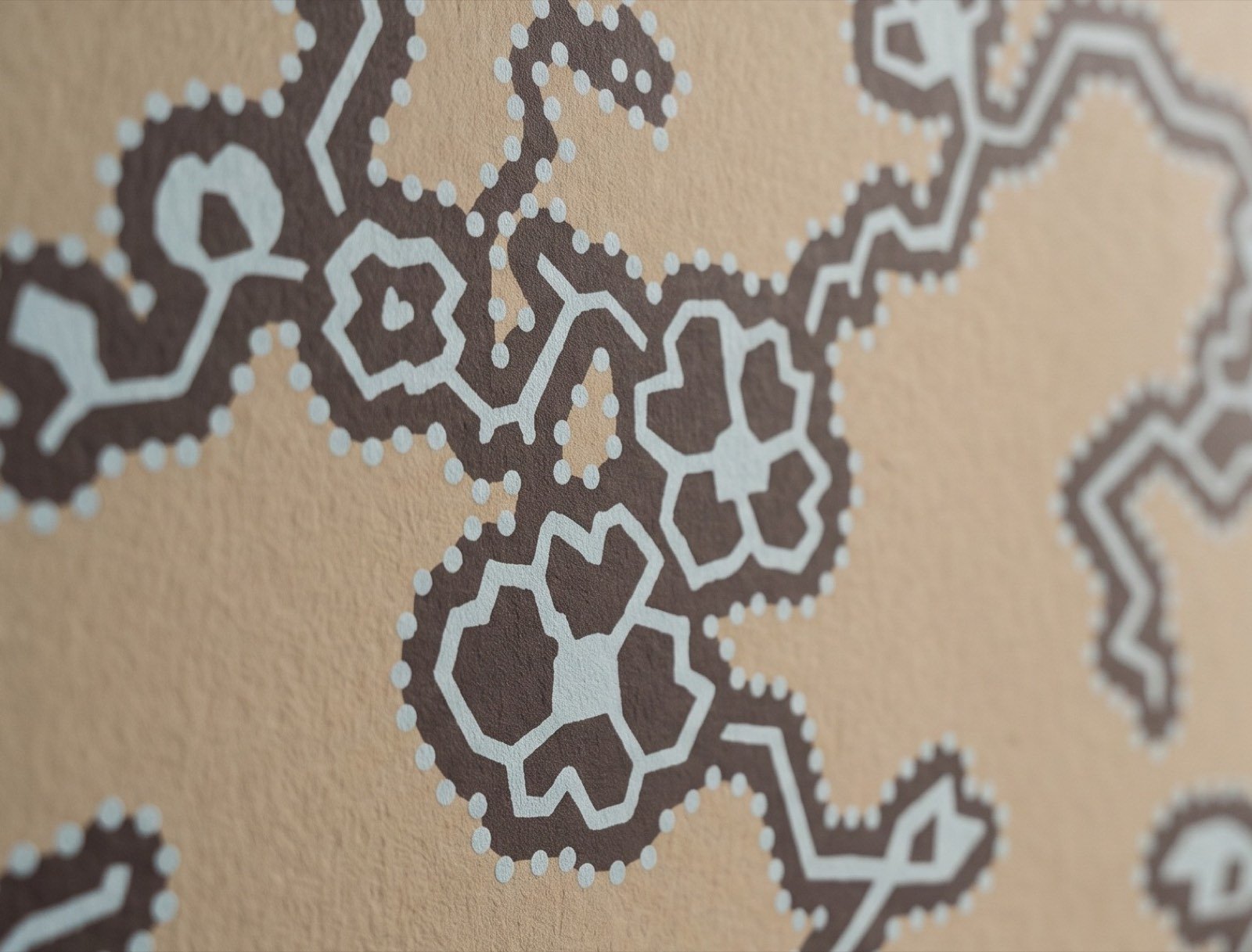
The Purnon Papers began, by the house's account, with a restoration enquiry. Château de Purnon was built in 1788, just south of the Loire Valley in France, and when the house's Creative Director, Charlotte Cosby, saw the pattern and colour within its walls, five designs followed: Purnon, Adelaïde, Achard, Auguste, and Baracé. They reached the range in 2024.
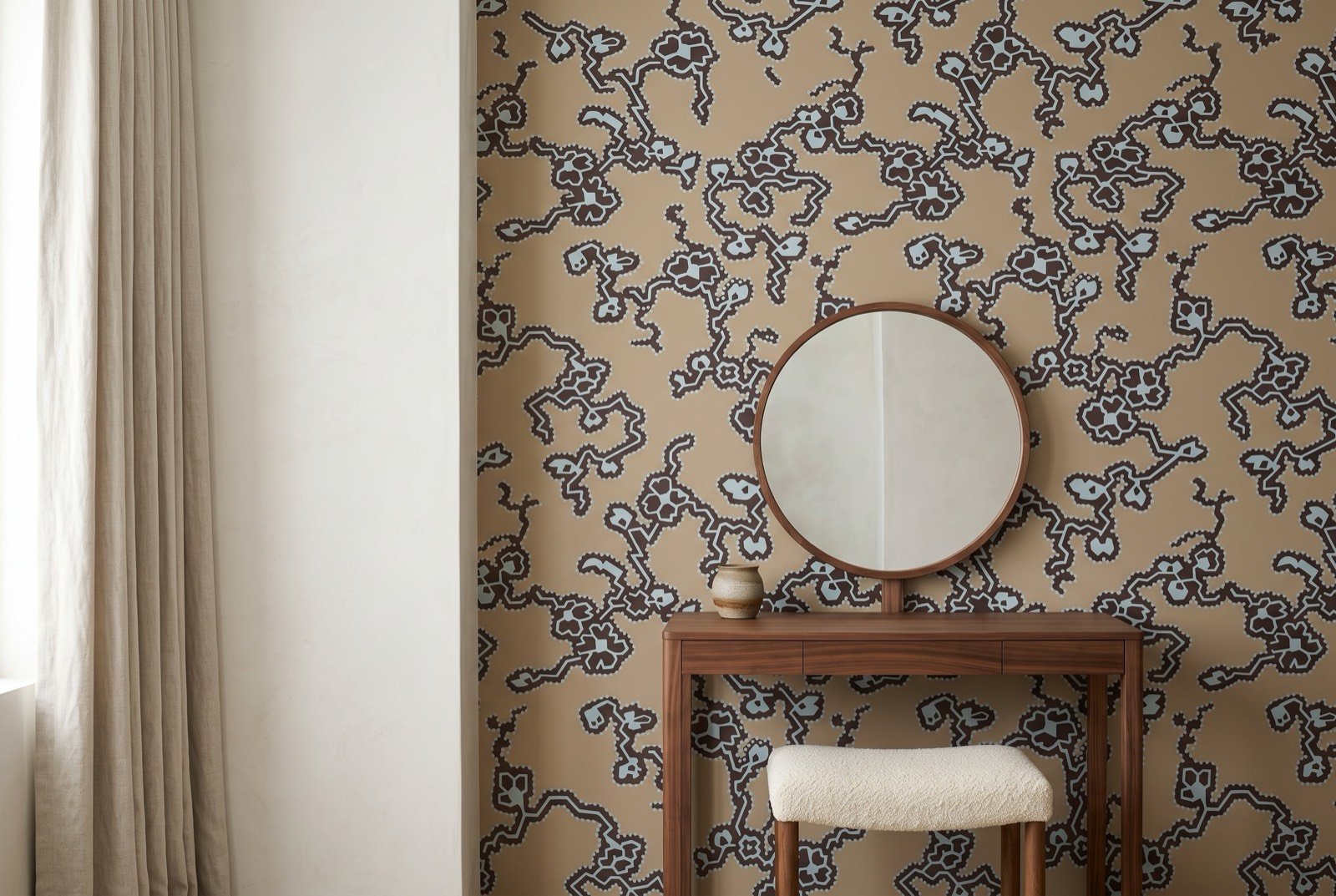
Adelaïde is inspired by a smaller-scale pattern found in the dressing room of Adelaïde, the daughter of the family who built the château. The heron of Purnon was discovered on an eighteenth-century folding screen. Like every paper in the collection outside The Heritage Papers, the five are pasted on the back before they are hung.
Adelaïde 6303, shown in a dressing room
Where it comes from
Farrow & Ball gives its address as Uddens Estate, Wimborne, Dorset, about 4,830 miles from Park City, and says it has made its paint and its wallpaper at its home near Wimborne ever since it moved there. Its advice sheets state that every roll of the core range is made at its factory in Dorset. The pin on this map marks the Uddens Estate address. For the three Heritage Papers the house states no place of manufacture, so the map makes no claim for them.
A roll reaches Utah from one of the house's showrooms, a stockist, its own web store, or its trade programme. The last leg is ours. When the rolls arrive, the crew sets them out in the order of their roll numbers, because the house asks that they be hung consecutively, and checks which way up the pattern runs, because the house's papers can be rolled in either direction. The rolls rest in the room before anything is cut.
The savoir-faire
Farrow & Ball describes a process led by hand at every stage: patterns drawn by hand, printing blocks cut with a scalpel, and checks made by eye. The paper is FSC paper, sourced from responsibly managed forests, and on the advice sheets it weighs 140 gsm. The ground colour is brushed on. The pattern is then printed in the house's own paint by methods it calls age-old, open-trough and flatbed printing among them.
Some colours are mixed only for wallpaper, which is why a colourway can list a print colour as Bespoke. Each roll is finished with a fine, wipeable glaze, and the house says it makes a roll only when it knows the roll has a home to go to. The Heritage Papers are made another way, in ink on a non-woven paper. For the installer the lesson is in the surface: the house warns that paste left on a painted face can cause flaking and discolouration, and that a hard tool polishes it.
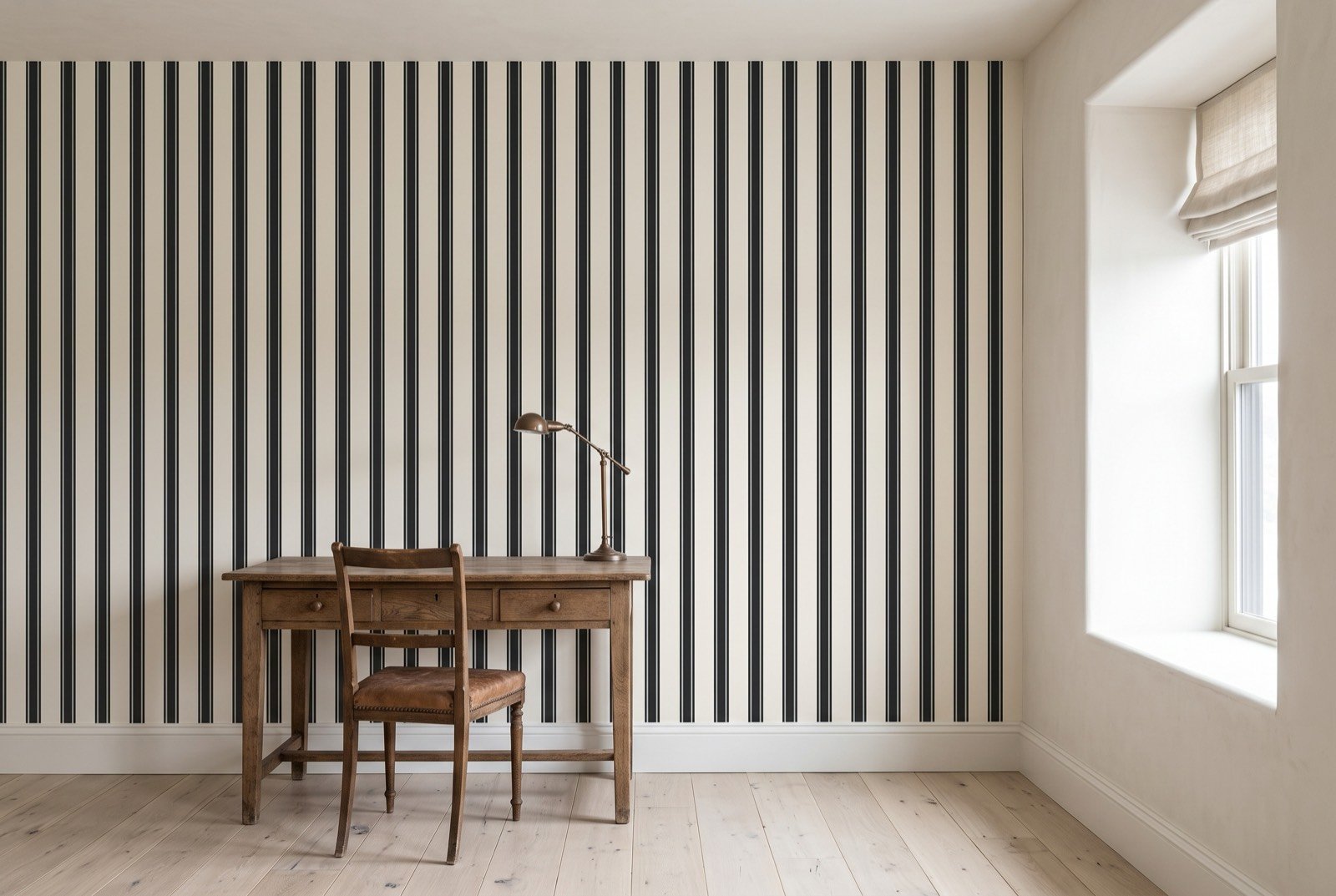
Block Print Stripe 754, a block-printed stripe, shown in a study
What arrives on the job
Farrow & Ball ships two constructions. The core range, which the house's sheets call woven, is paint on a 140 gsm paper: it is pasted on the back, folded with the pasted side innermost, and left to soak for 10 minutes, until pliable. The three Heritage Papers are non-woven and printed in ink: the paste goes on the wall, and the house's own wallpaper paste is not recommended for them. A core-range roll is 53 cm by 10 m and a Heritage roll is 52 cm wide, and we record both as 20 in by 33 ft: width rounds down to the inch, length rounds up to the foot.
 01
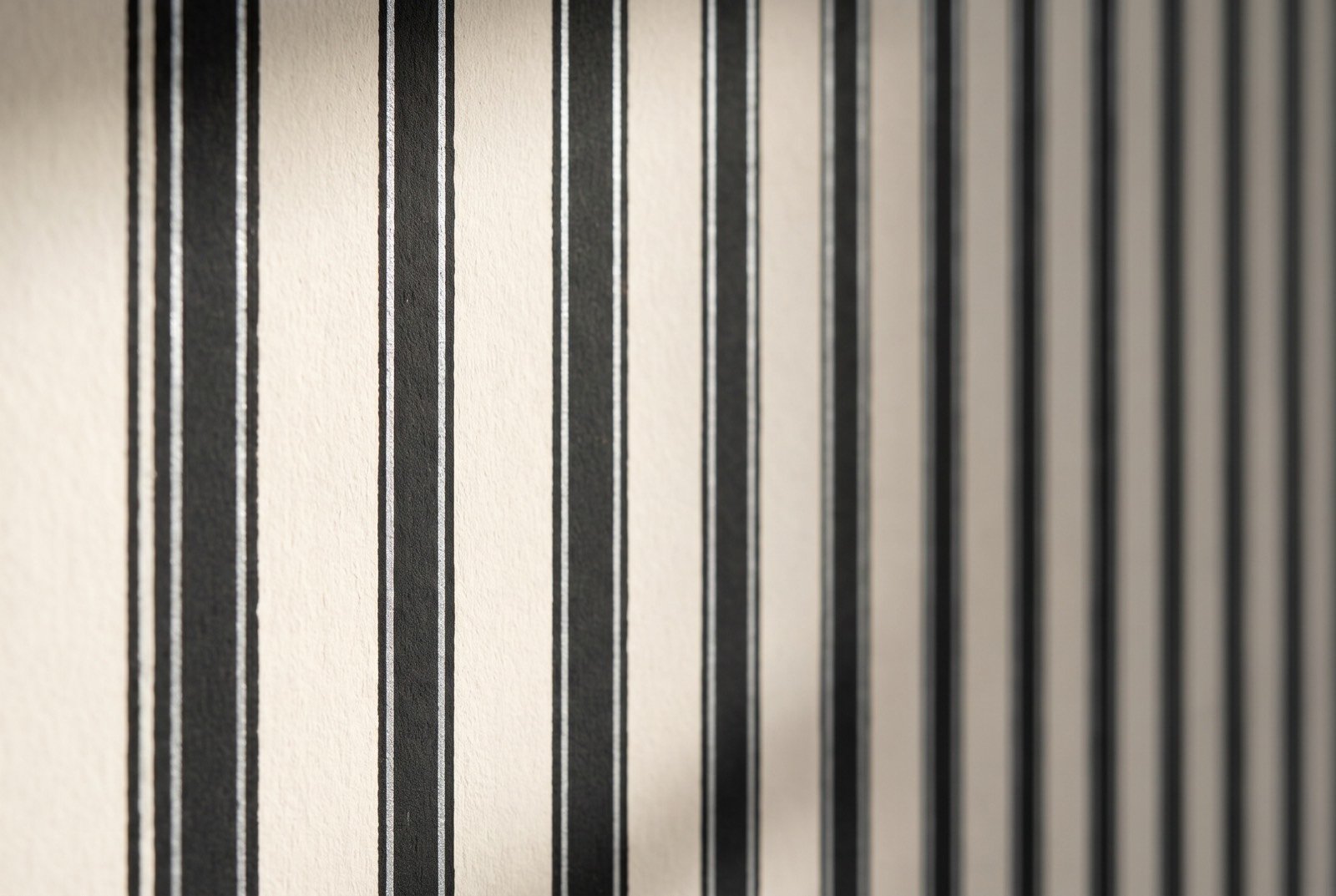
Paint on paper, block printed
Pasted on the back, folded, and soaked for 10 minutes. No matching: the stripe is 4.7 cm wide, a little under 2 in. A 53 cm by 10 m roll, recorded as 20 in by 33 ft.
 02
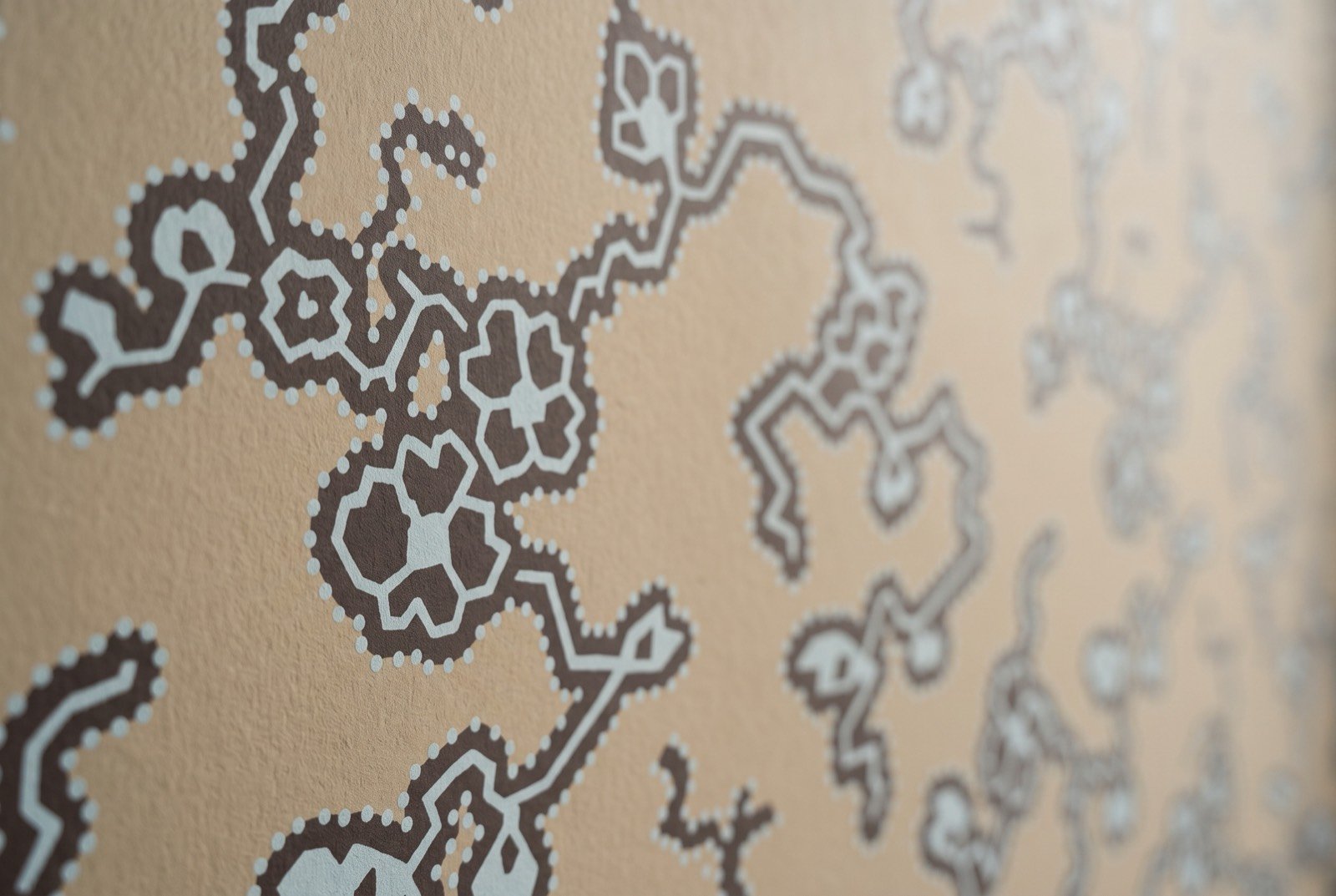
Paint on paper, two print colours
Pasted and soaked like the rest of the core range. Straight match on a 66.2 cm repeat, carried as 27 in. Paste is kept off the painted face.
 03
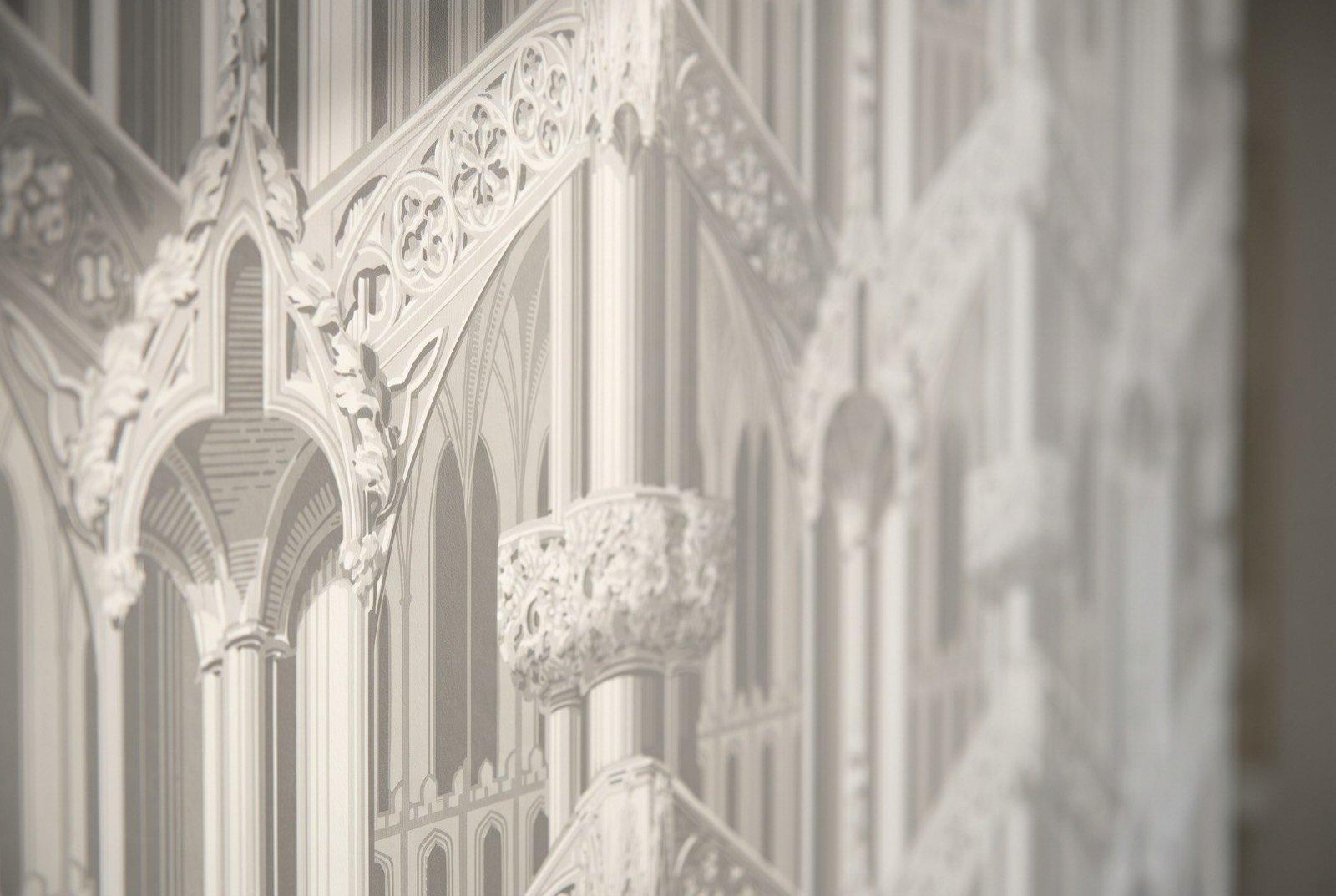
Non-woven, ink on paper
The wall is pasted, one length at a time, with a ready-mixed, pH-neutral paste. Offset match on a 41.9 cm repeat, carried as 17 in. The roll is 52 cm wide.
Some rules the sheets apply to both constructions. Edges are butted and never overlapped. A seam roller may press a seam flat if it spins freely; a spatula or any tool that is not a roller is not recommended, because it burnishes the face. The rolls are numbered and hung consecutively, and the house recommends inspecting the result after three or four lengths. Dragged Papers alone are reversed, top for bottom, on each alternate length.
What they are known for
Six from one collection. The advice sheet for the pattern decides the paste, the match, and the method.
| Line | Material | Backing | Rooms | At the wall |
|---|---|---|---|---|
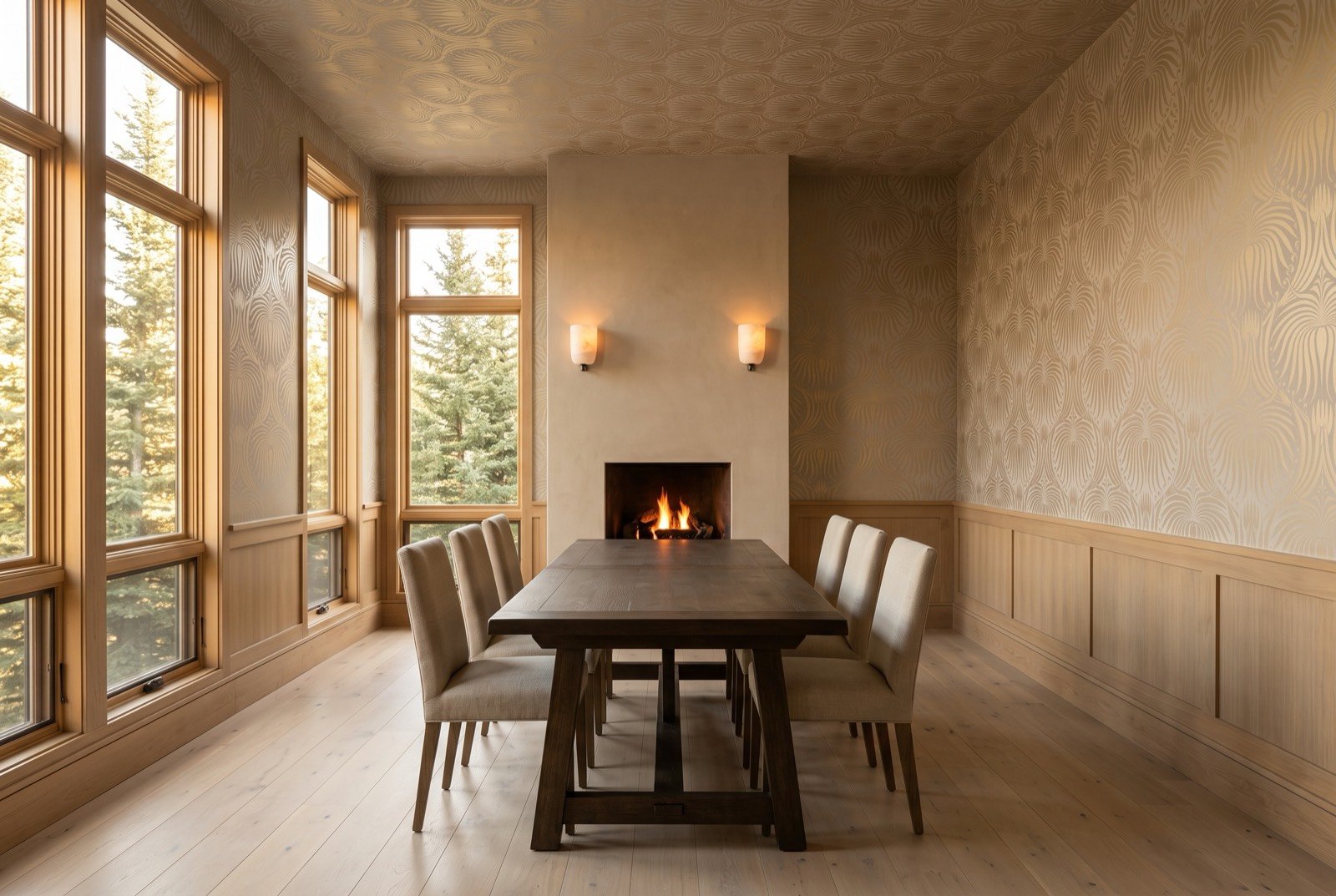
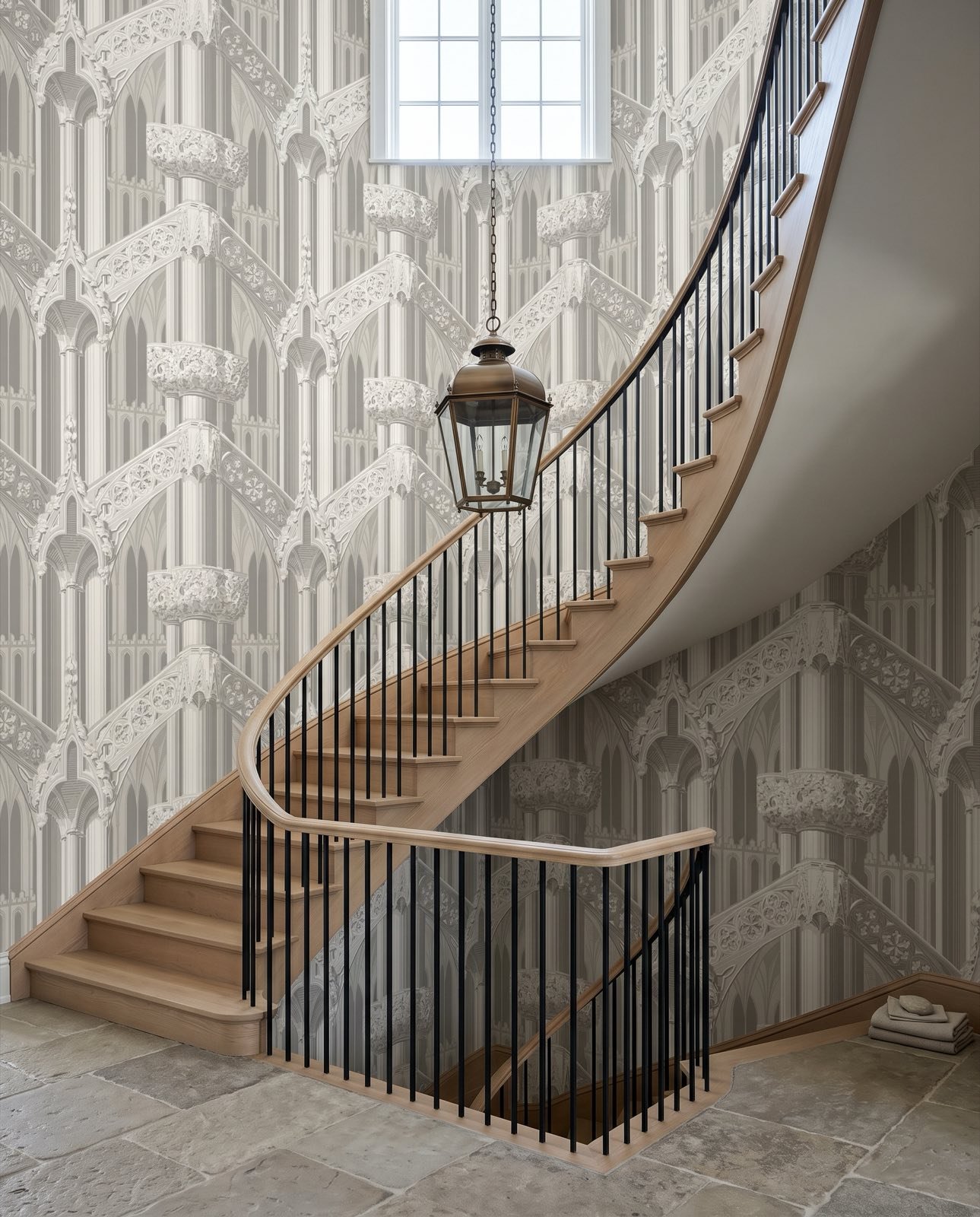
| Large Scale Patterns | Lotus, an Art Nouveau-inspired design. Colourway 2066 prints a bespoke metallic on a Jitney ground. | 140 gsm paper. Paste the paper. | Dining rooms, stair halls | Straight match, 51.8 cm (21 in). Pasted, folded, and soaked for 10 minutes before it is hung. |
| Stripes | Block Print Stripe, block printed in the house's water-based paints. Colourway 754 adds a bespoke silver. | 140 gsm paper. Paste the paper. | Studies, powder rooms | No matching. The stripe is 4.7 cm wide, a little under 2 in. Paste is kept off the painted face. |
| The Purnon Papers | Adelaïde, one of five patterns found at Château de Purnon, in two bespoke print colours on a Biscuit ground. | 140 gsm paper. Paste the paper. | Dressing rooms, bedrooms | Straight match, 66.2 cm (27 in). A large repeat, read before the order. |
| The Heritage Papers | Gothic and Vine Leaf, two of the three archive designs of 2026, printed in ink. | Non-woven. Paste the wall. | Stair halls, libraries, bedrooms | Gothic: offset match, 41.9 cm (17 in). Vine Leaf: straight match, 45.7 cm (18 in). The house's own paste is not recommended for them. |
| Carte Blanche | Dot, from the 2023 collection with the fashion designer Christopher John Rogers, flatbed printed. | Paper. Paste the paper. | Hallways, family rooms | The house recommends that two experienced, professional decorators hang Dot, with extra time for pattern matching. |
| Dragged Papers | Drag, the house's plain dragged papers, under pattern numbers 6 and 12. | Paper. Paste the paper. | Libraries, bedrooms, halls | Reverse alternate lengths: top and bottom are reversed on each alternate length hung. |
Reading the number
A Farrow & Ball wallpaper is known by its pattern name and a number, and the number is two numbers run together. Each advice sheet prints a Pattern Number in its header, and for Lotus it is 20. The digits that follow are the colourway, usually two of them. So Lotus 2066 is pattern 20, colourway 66; Block Print Stripe 754 is pattern 7, colourway 54; Adelaïde 6303 is pattern 63, colourway 03. This is observation, read from the house's product pages and advice sheets on 30 September 2026.
Two cautions. Three-digit colourways exist: Broad Stripe 13109 is pattern 13, colourway 109. And one pattern number can be shared by more than one design: the sheets for Brockhampton Star and Bumble Bee both print Pattern Number 5, so 547 means Bumble Bee only with the name beside it. Some of the house's own captions also set letters before the number, which the house does not explain; its current product pages show the number alone. That is why we ask for the pattern name and the full number before a quantity is derived.
If you are new to the house
Homeowners and designers who want a wall with the depth of paint. The house prints its core range with its own paint and describes texture and brush marks as a desired part of the process, closer to a painting than a photograph. It also notes that a colour can look slightly different on wallpaper than it does painted on a wall.
At the house's own showrooms, more than 60 worldwide by its account, with 13 listed in the United States on 30 September 2026; through its stockists; and on its own site. See a sample at full scale before the order: a large repeat reads larger on a wall than on a swatch.
By the roll, from a showroom, a stockist, the house's own web store, or its trade programme. The house warns that a later order may come from a different production run, with visible differences, so every roll for a room is ordered at once. Mancini does not sell or source it; send us the pattern name and number and our work begins when the rolls arrive.
Bought in a showroom, online, or through a designer: the same measurement, the same preparation, and the same crew.
The wall, before and after
Drag the line. The house asks for a surface that is sound, clean, and dry, and always recommends cross-lining before its paper.
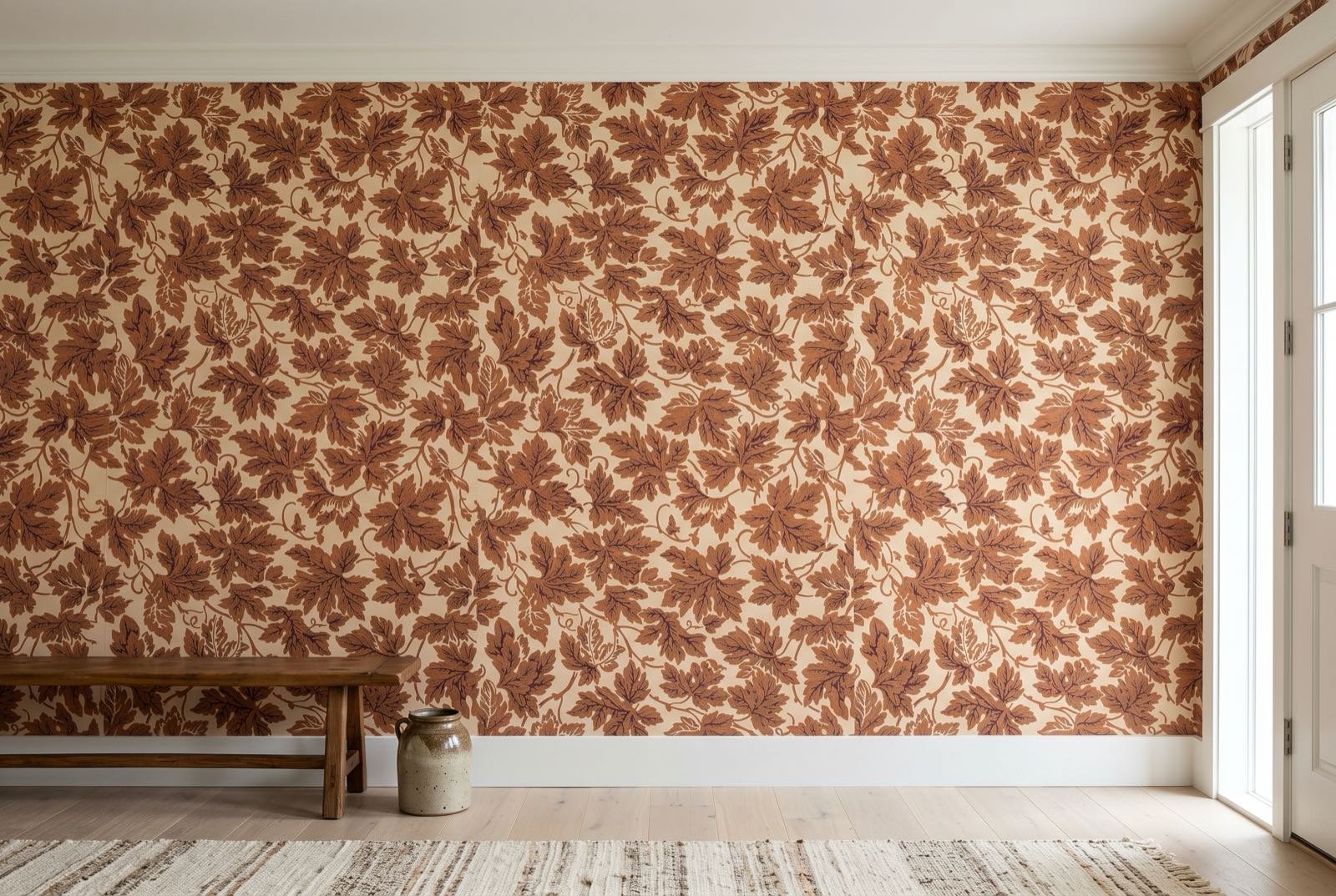
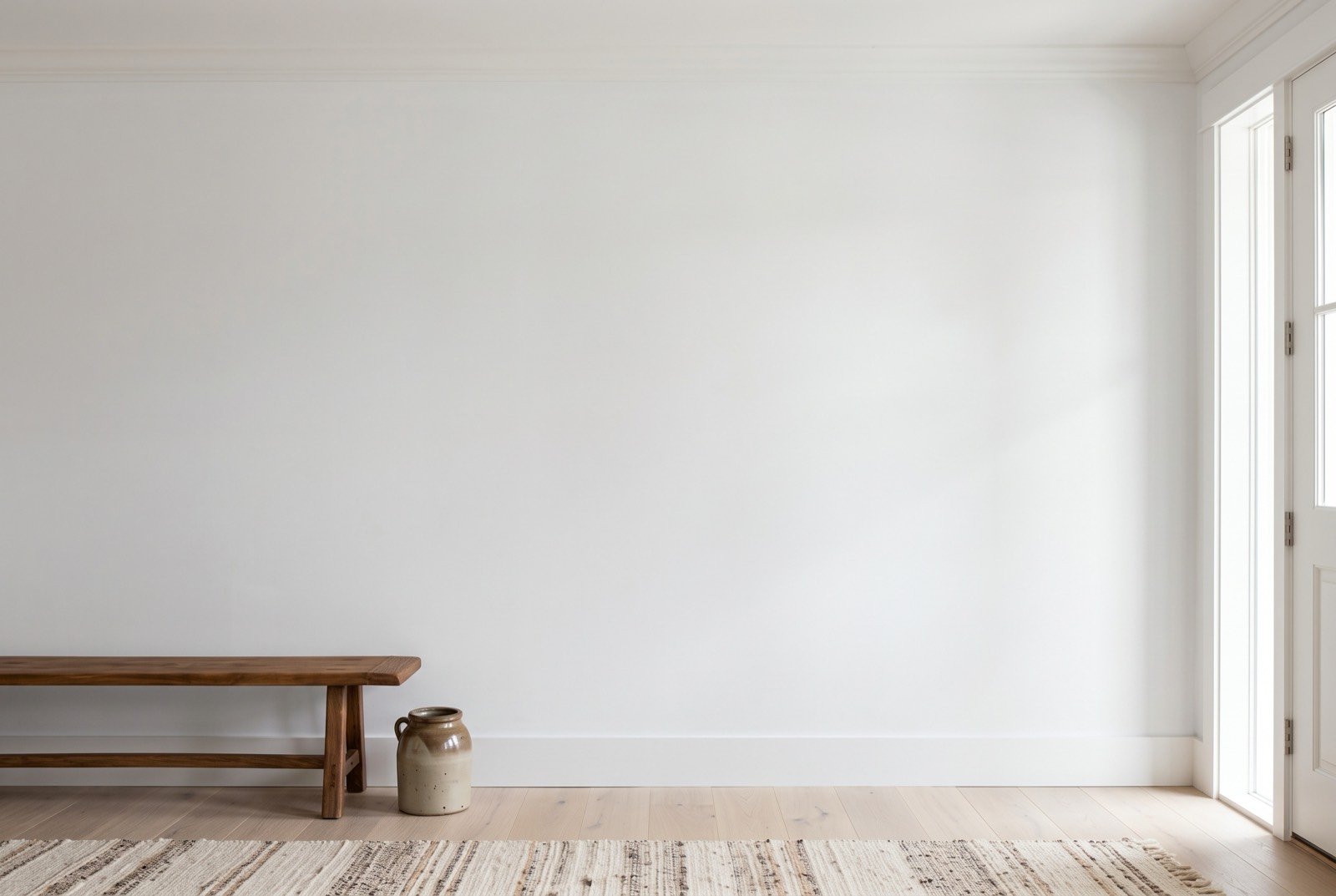
Vine Leaf 6805, shown in an entry hall
Installed to their specification
Farrow & Ball publishes a Product Advice Sheet for each pattern. These are the lines that matter most in a Utah house.
The line that decides most on a Farrow & Ball job is the wall. The house asks for a surface that is sound, clean, and dry, free of dirt, old wallpaper, and flaking paint, with unsound paint sealed, gloss paint sanded, and new plaster sized. Beyond that it always recommends cross-lining with a medium to heavyweight lining paper, left to dry for at least 12 hours, and calls that best practice. The wall arrives primed and sealed, and the crew confirms it before the first roll is opened.
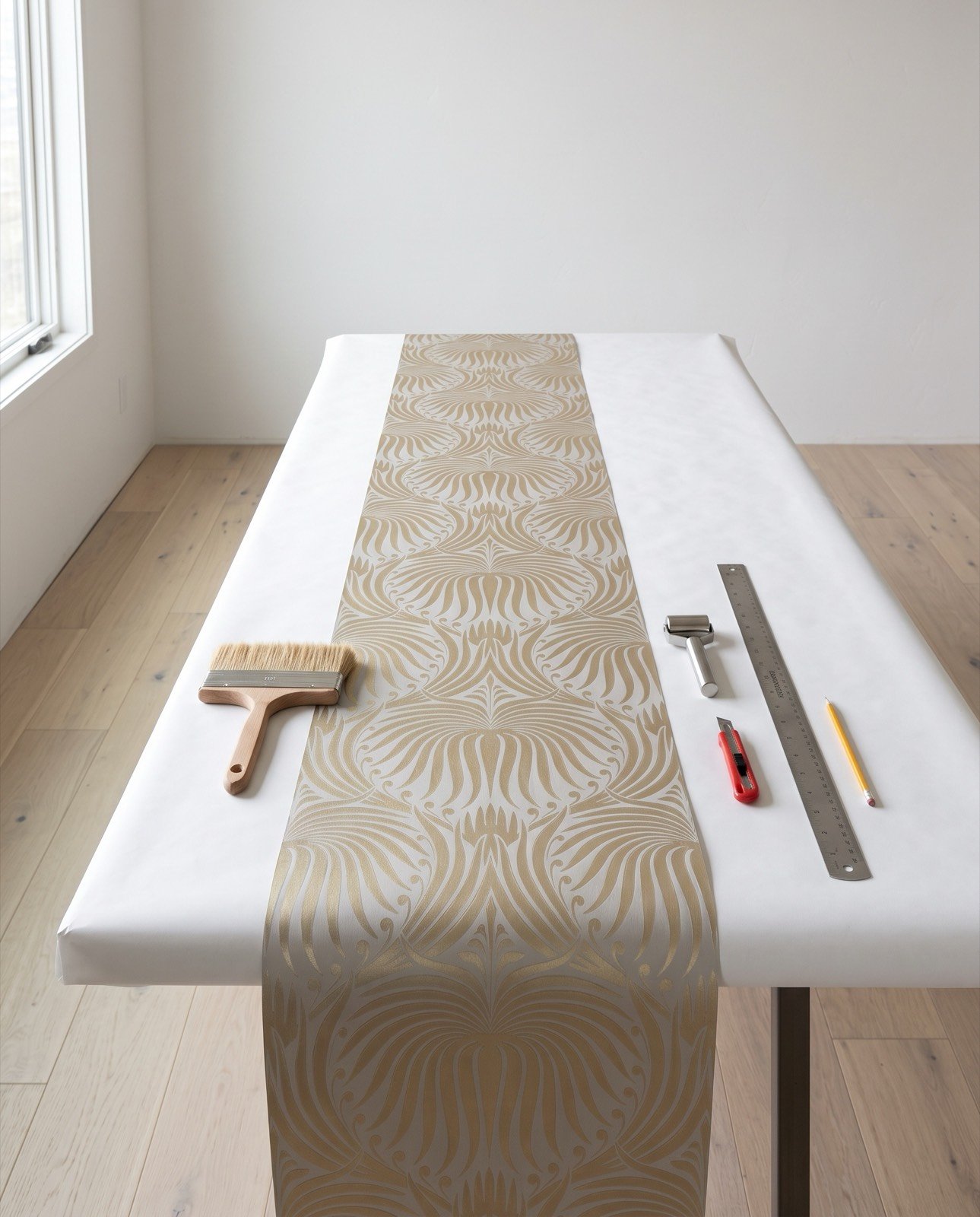
The second is the method. A core-range roll is pasted on the back, folded with the pasted side innermost, and soaked for 10 minutes; the house warns that a paper left too wet shrinks back as it dries, and that stretching it exaggerates the seams. A Heritage Paper goes onto a wall pasted one length at a time. The quantity on our proposal comes from the measurement, the repeat, and the roll's yield, line by line, with the metric figure and the imperial figure side by side.
The Mancini standard
Whichever house is on the roll, the work follows one sequence. It is the reason the wall reads as the designer drew it.
A member of our team walks the space and measures every wall. Fractions of an inch round up, heights round up to the next half-foot, and each wall gains three inches per side.
The roll count comes from the measurement, the repeat, and the roll's yield. The written proposal shows the arithmetic, in metric and imperial.
The advice sheet, the roll numbers, and the batch are read before the first cut. One room, one batch.
Four crews and twelve trained installers. The match is set at the table, every seam is butted, and the rolls rest in the room before anything is cut.
For designers who specify it
A damask for a dining room, a stripe for a study, an archive design for a stair hall: the specification belongs to the designer or the homeowner, and the installation follows the house's advice sheet.
Farrow & Ball is bought from its showrooms, its stockists, its own web store, and through its trade programme. Whichever way the rolls are ordered, our part is the same: a measurement in person, a written proposal with the roll count shown, and a crew that reads the advice sheet before the first cut. We name a designer here only with their written consent.
Our work
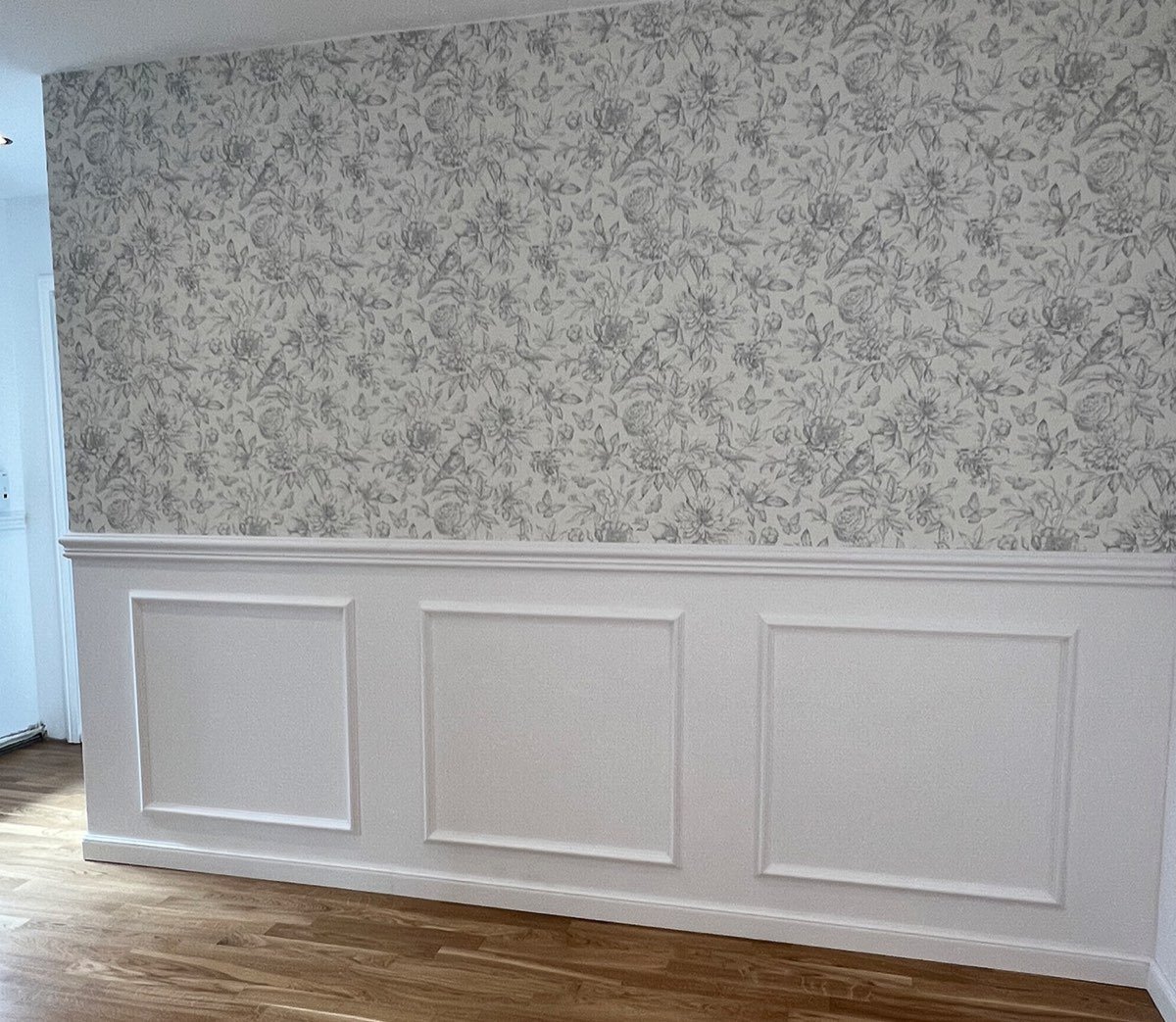
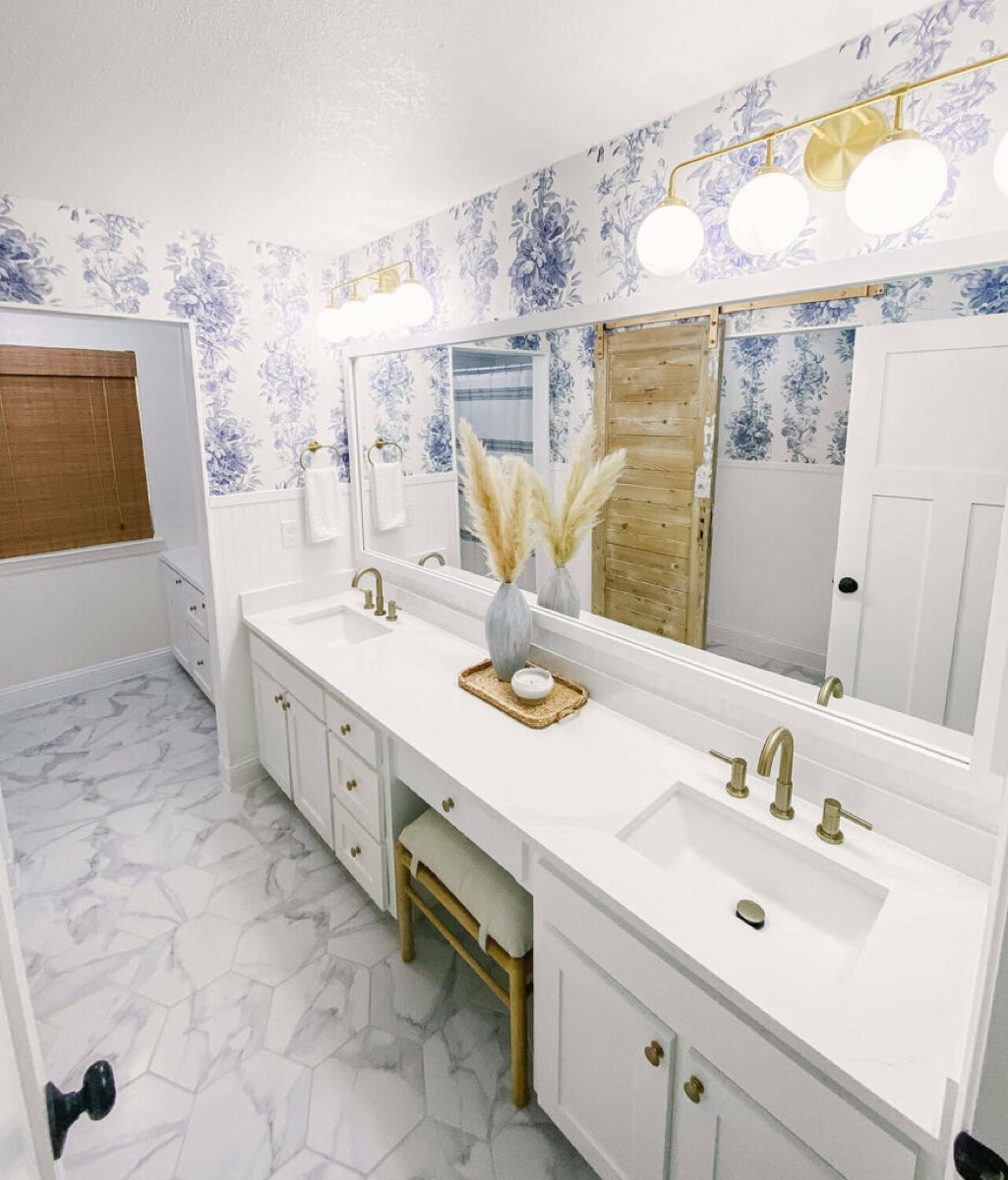
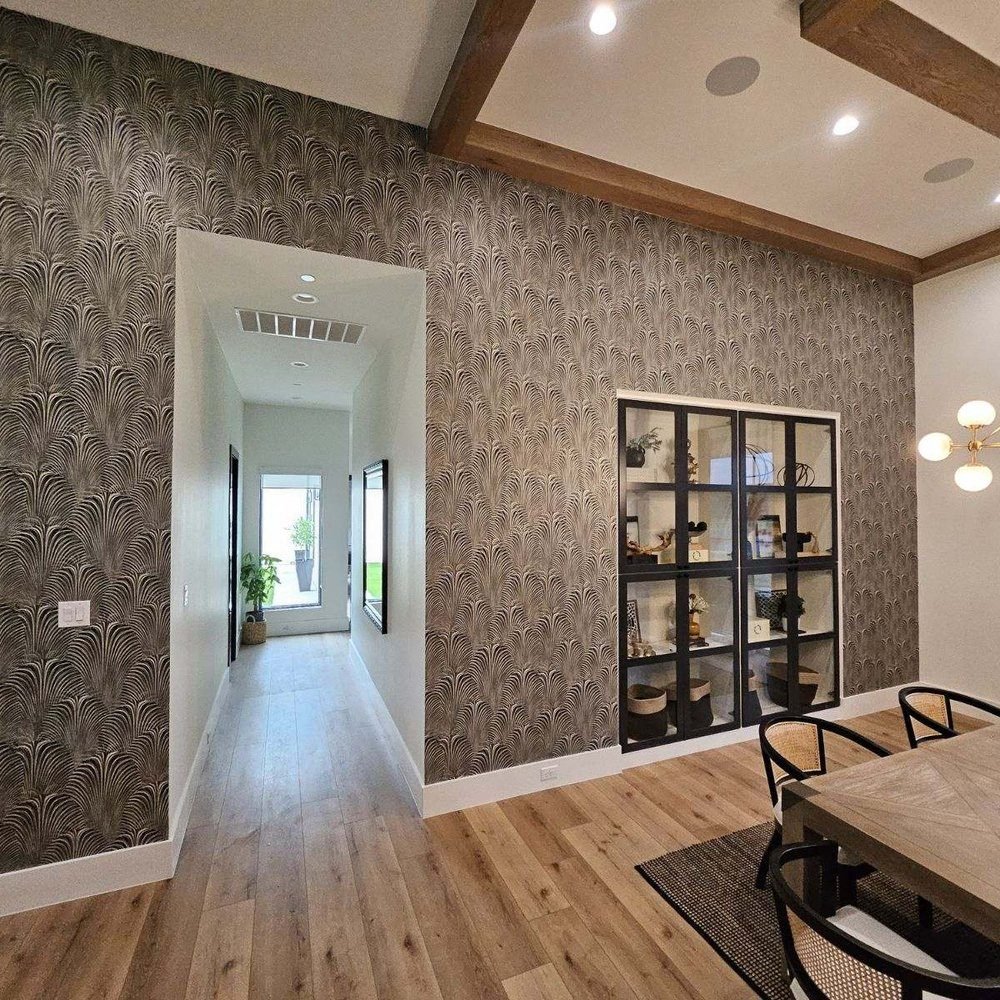
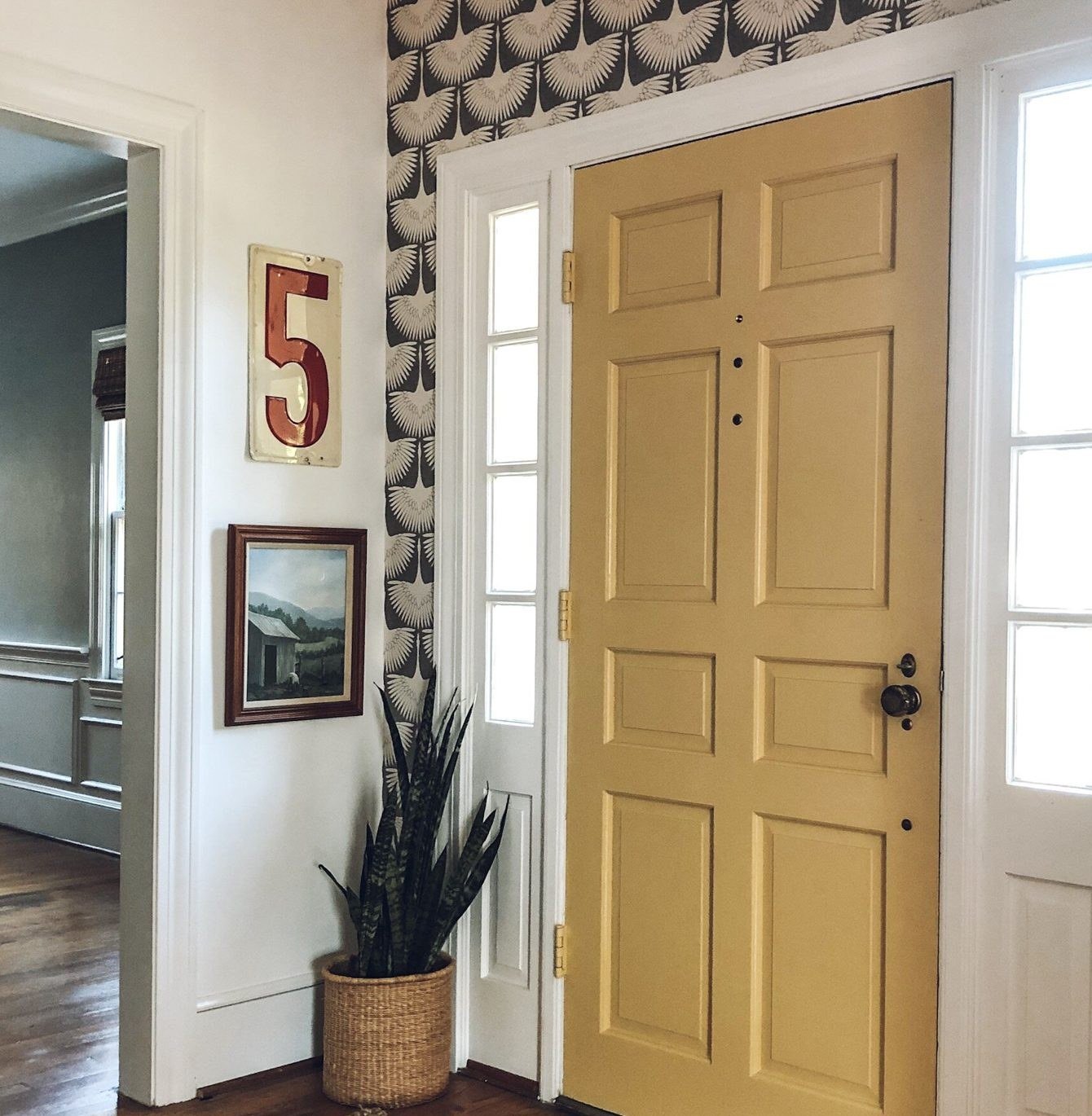
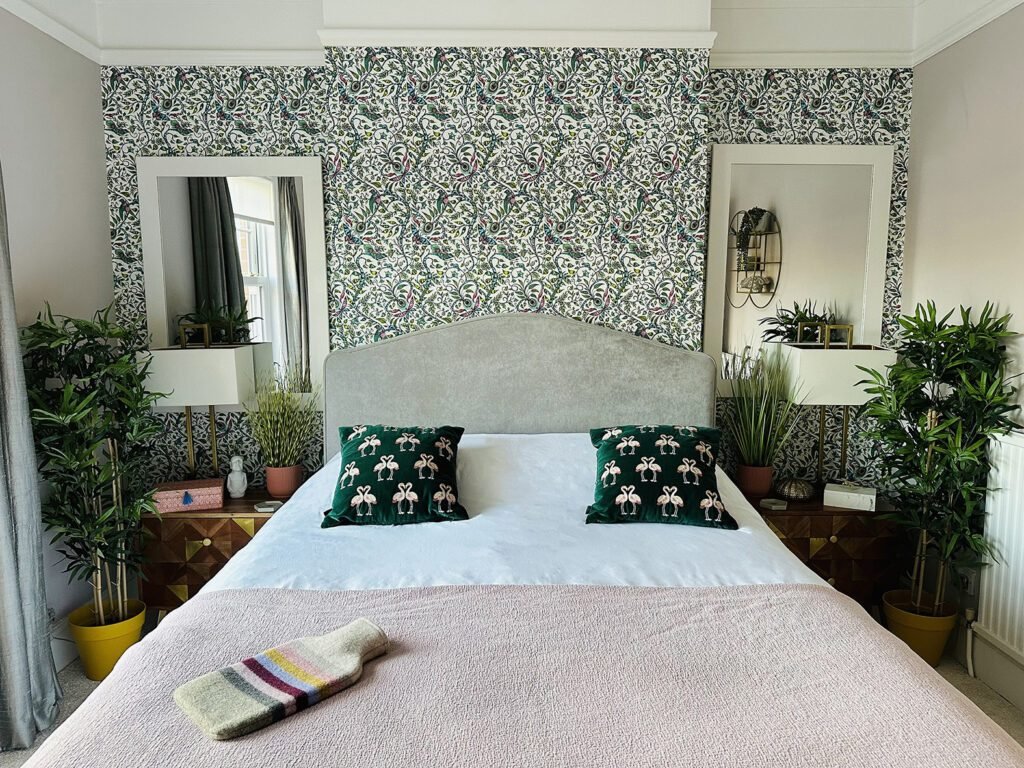
A damask in a dining room, a stripe in a study, an archive design up a stair hall: whichever Farrow & Ball pattern is on the roll, it is hung to the advice sheet the house publishes for it.
Materials we install from Farrow & Ball
The construction on the roll tells us which set of rules to bring. Each of these pages goes deeper on the material itself.
The Purnon Papers and The Heritage Papers, drawn from a château and from the house's Archive. Matched at the table, handled clean.
Material pageColourways printed with a bespoke metallic, Lotus 2066 and Block Print Stripe 754 among them. Nothing hard is drawn across the face.
Material pageGothic, which the house files under Scenic, carries an offset match. The match is set before the first length goes up.
Material pageThe wall the advice sheets assume: sound, clean, dry, and cross-lined with 1200 to 1400 grade lining paper.
Material pageDesign house and manufacturer names referenced on this page are the property of their respective owners. They identify materials we install and completed project history. Mancini Wallpapers holds no partnership, certification, or endorsement from any house named, and installs every product to the instructions its manufacturer publishes.


