
Material · Heritage and vintage
Archival reprints, document papers, toile, damask, and period friezes, installed to the instruction each house publishes. Selvedge trimmed by hand. Booked and hung to timing. Seams butted, never overlapped. Frieze, fill, and dado planned as one composition. Installation-only, headquartered in Park City.
What heritage is
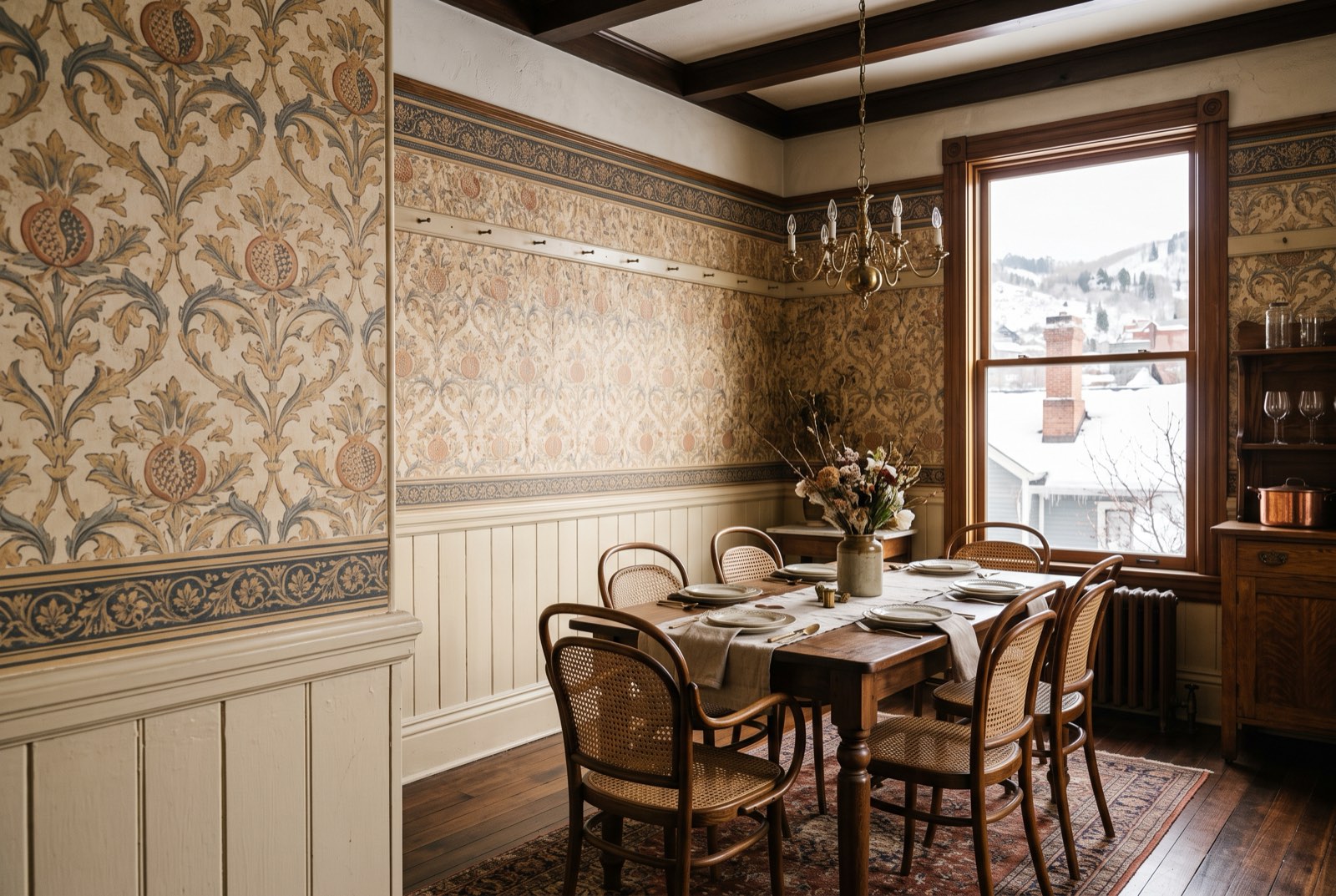
Papers printed from archives: woodblock, surface-print, and hand-screened reproductions of documents that predate the modern press. Toile, damask, document florals, Victorian and Arts and Crafts friezes. Many arrive untrimmed, unpasted, and printed on a pulp paper that stretches when wet and must be hung to timing. Some are genuine vintage stock with no replacement.
They are chosen for period homes and for new houses that want a room with a history, and they reward an installation that treats them as what they are. Selvedge is trimmed by hand. The paper is pasted, booked, and rested to the house's clock. Seams are butted and never overlapped. Where a frieze, a fill, and a dado share a wall, they are planned as one composition before the first cut.
Heritage papers are specified across Park City and the Heber Valley for mining-era houses, farmhouses, and new mountain homes alike, and they are installed by the crews that carry our hand-painted and textured work, to the instruction each house publishes.
How the archive is printed
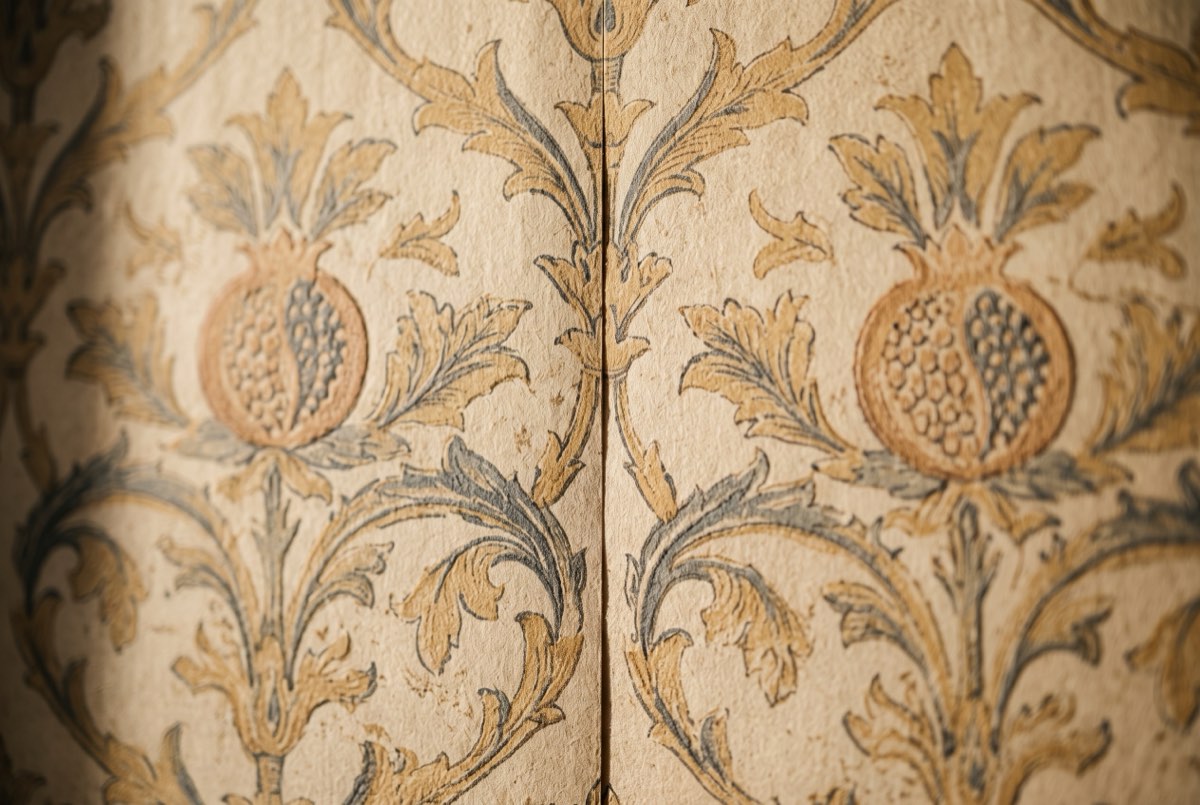
A woodblock paper is printed one colour per carved block, and the ink stands proud with a slight drift between blocks. A surface print is rolled from raised rubber, thick-inked with a soft edge. A hand-screened paper is pulled one colour per screen, flat, with a drift per sheet. All three sit on the surface of the paper, where a machine print sits in it, and all three are printed on paper that behaves the way the original paper did.
That paper is often untrimmed and unpasted, and on a pulp stock it stretches when it is wet. Genuine vintage stock is the same paper decades on, brittle at the edges and with no replacement roll. Some houses print the same archive on non-woven, which behaves like a modern paper; the house's instruction says which, and the crew confirms the paste and the trim before the order.
Heritage guide
Heritage covers everything from a Zuber woodblock to a toile on non-woven. Each asks its own trim, its own paste, and its own seam.
| Paper | Printing | Arrives | Paste | Seam | Best uses |
|---|---|---|---|---|---|
| Woodblock reprint | Carved blocks, one per colour | Untrimmed, pulp paper | Paste the paper, booked | Butted, matched by eye | Dining rooms, entries, panoramics |
| Surface-print document paper | Raised rubber rollers | Untrimmed or trimmed, pulp | Paste the paper, booked | Butted | Period rooms, libraries, halls |
| Hand-screened reprint | Screen pulled by hand | Trimmed, pulp or non-woven | Per house | Butted, drift matched | Bedrooms, dining, dressing rooms |
| Toile | Copperplate style, one colour | Trimmed, paper or non-woven | Per house | Butted, scene matched | Bedrooms, baths, powder rooms |
| Damask | Surface or screen, often two tone | Trimmed, paper or non-woven | Per house | Butted, repeat centred | Dining rooms, halls, libraries |
| Frieze and border | Block or surface print, deep repeat | Untrimmed strips | Paste the paper | Butted at the repeat | Above a picture rail, dado tops |
| Ceiling paper | Block or surface print, small repeat | Untrimmed or trimmed | Paste the paper | Butted, laid from the fixture | Entries, dining rooms, parlours |
| Genuine vintage stock | Original print, any method | As found, often brittle | Per test, clear paste | Butted, every drop planned | A single wall, a panel, a frieze |
Where heritage performs
What heritage demands at the wall
The material is correct more often than the installation. These are the steps that close the gap.
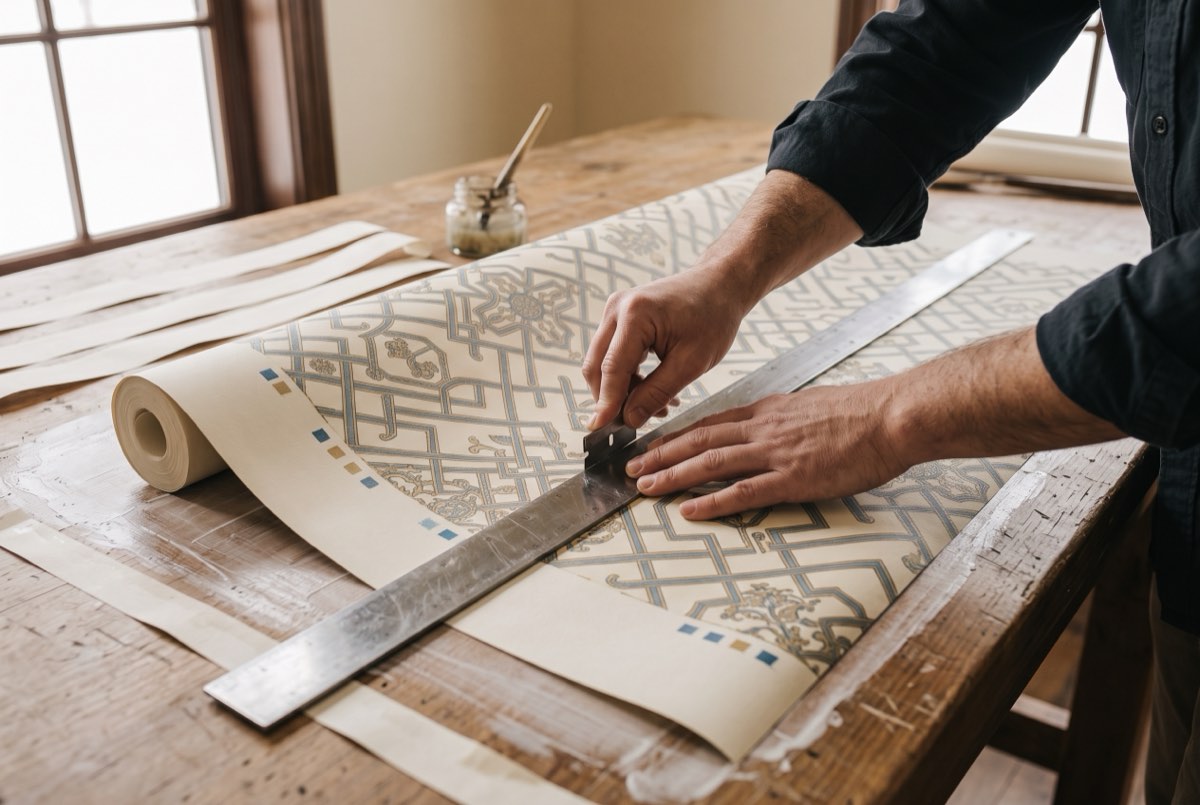
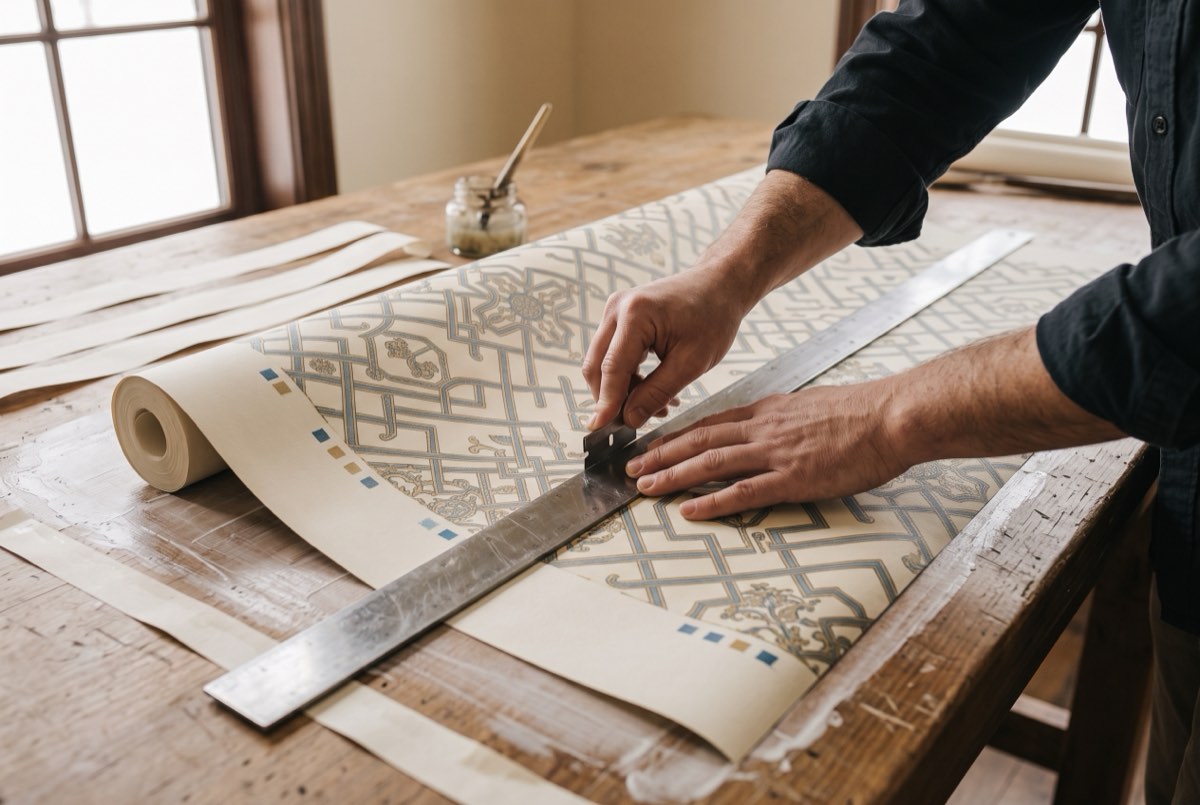
On a steel straightedge, one pass with a fresh blade, both edges to the same mark, so the pattern edge is true before it is pasted.
Paste to the paper, booked paste to paste, rested to the house's timing, the same clock for every drop, checked with a timer.
Two trimmed edges meet with no step. An overlap on a thin paper is a ridge and a shadow for the life of the room.
The frieze repeat centred on the wall, the fill seams set from it, the dado following, all drawn from the measurement and signed off by the designer.
Every drop planned and numbered before a cut, paste tested on an offcut, the layout signed, and the surplus kept flat and dark.
The selvedge
Many archival papers arrive with a printed selvedge on each edge, the blank margin that carries the registration marks and protected the print in the press. It is trimmed by hand on a steel straightedge, one pass with a fresh blade, both edges to the same mark, so the pattern edge is true. A dull blade tears a pulp paper, and a trim a millimetre off shows as a pattern break the full height of the drop.
Then the seam is butted: the two trimmed edges meet with no step and no overlap. Overlapping was the Victorian shortcut, and it reads as a ridge and a shadow under every sconce for the life of the room. On a thin paper it is never done. Where a house supplies the paper trimmed, the edge is checked before it is trusted.
The clock
A paper printed on pulp stretches when it is pasted, by one to three percent across its width, and it stretches by the same amount only if every drop rests for the same time. A drop hung early is narrower than its neighbour; the pattern misses at the seam and the paper bubbles on the wall as it catches up. A drop hung late has begun to dry at the edges and will not slide.
So the paste goes on the paper, the drop is booked paste to paste with the edges aligned, and it rests to the house's timing before it goes up. The same clock for every drop, checked with a timer rather than by feel, in a room held at a steady temperature. Non-woven reprints skip the clock and take paste on the wall; the house's instruction says which paper it is.
The composition
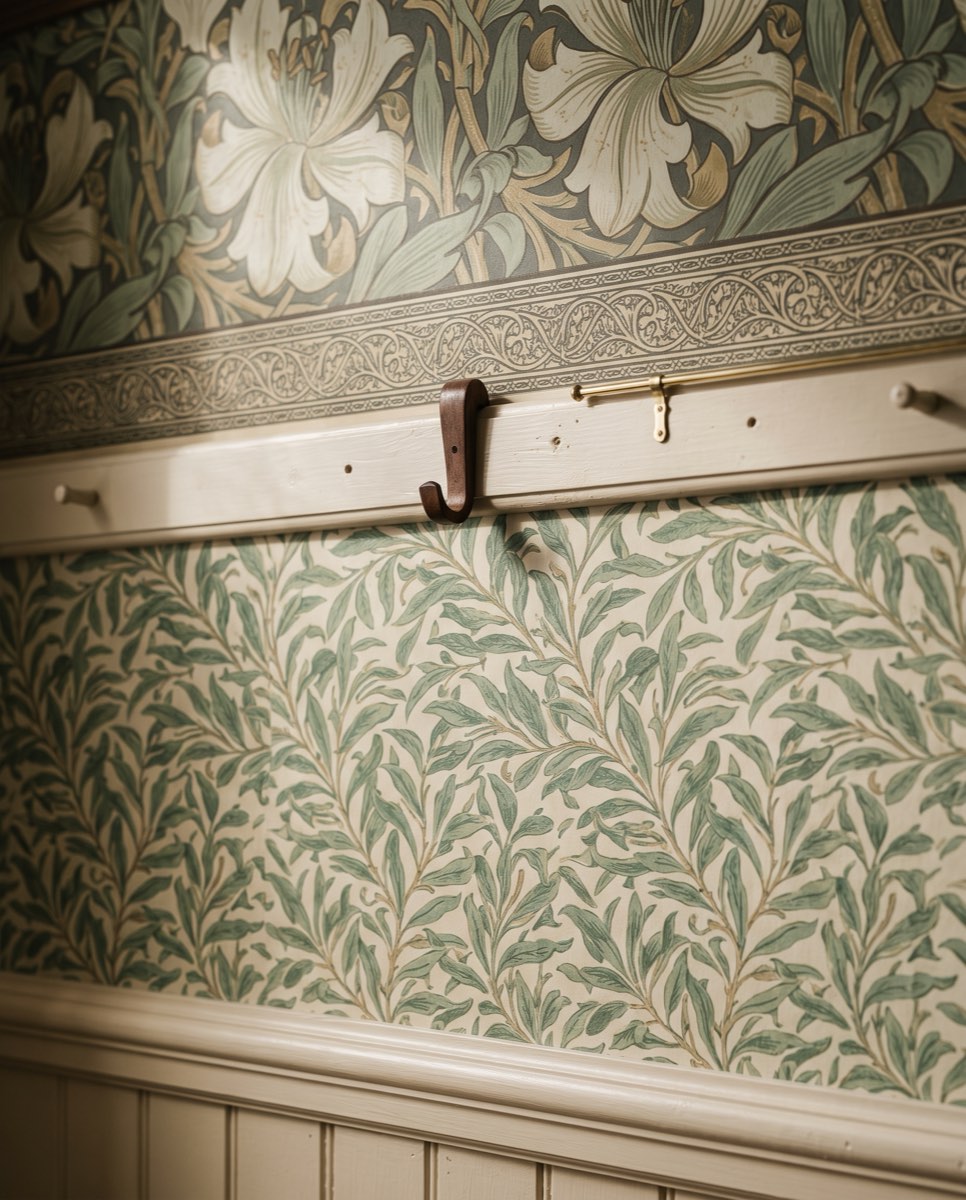
A period wall is three papers that must read as one: the frieze above the picture rail, the fill between the picture rail and the dado rail, and the dado below. Each has its own repeat, and each is registered to a rail. The frieze repeat is centred on the wall first, the fill seams are set from that centre line, and the dado follows, so the three registrations meet at the rails without a fight.
The composition is drawn from James's measurement, agreed with the designer, and signed before the first drop is trimmed. Rails are fitted after the paper where the millwork allows it, covering the top edge of each band. A ceiling paper is laid from the fixture outward, and a frieze on a stair follows the rake of the rail.
Living with heritage paper
Paper, treated as paper.
Dust dry with a soft brush or a feather duster. No water, no cleaners, no damp cloth: surface-printed ink and pulp paper both mark on contact with moisture. A mark is referred to the house's guidance.
Archival pigments soften under direct, sustained sun, and vintage stock fades faster than a reprint. Walls that take the sun are identified at the measurement.
Pulp-backed paper is stable in a room with normal humidity and no steam. Baths with a shower and laundry rooms are declined at the measurement; toile on non-woven in a family bath is the exception.
Not a scrubbable surface. In a dining room the fill sits above a dado or a chair rail, which is what the dado was for.
A reprint on a sound wall serves for decades; Victorian originals have served for a century. Vintage stock ages visibly and is chosen for exactly that.
A reprint can be reordered from the house while the archive stays in print. Vintage stock cannot, which is why the surplus stays flat, dry, and dark, and the layout drawing stays on file.
Why Mancini
Trimmed on the straightedge. Booked to the clock. Butted, never overlapped.
An archival wall shows the hand that set it at every seam and every rail. The standard is measured in what you do not see: no ridge, no pattern break, no frieze that fights its fill.
Installed to the instructions each house publishes, paper by paper.
Every heritage house publishes the trim, the paste, the timing, and the seam for each paper. We read it before the order and follow it at the wall. No shortcuts, no substitutions.
Four active crews. Twelve trained installers. Scheduling measured in weeks.
Multi-crew capacity means a period room is held for the slow, timed installation it needs, on the designer's timeline, without the clock being hurried.
Heritage and vintage, installed

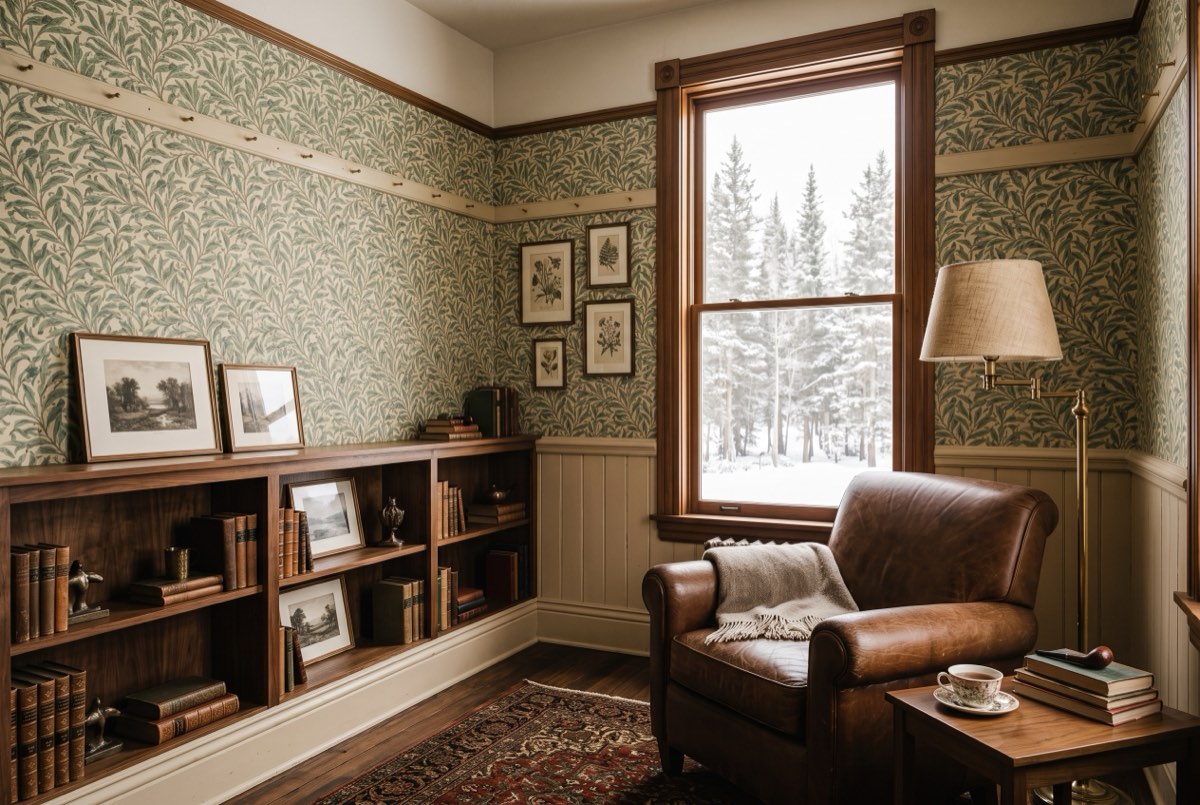
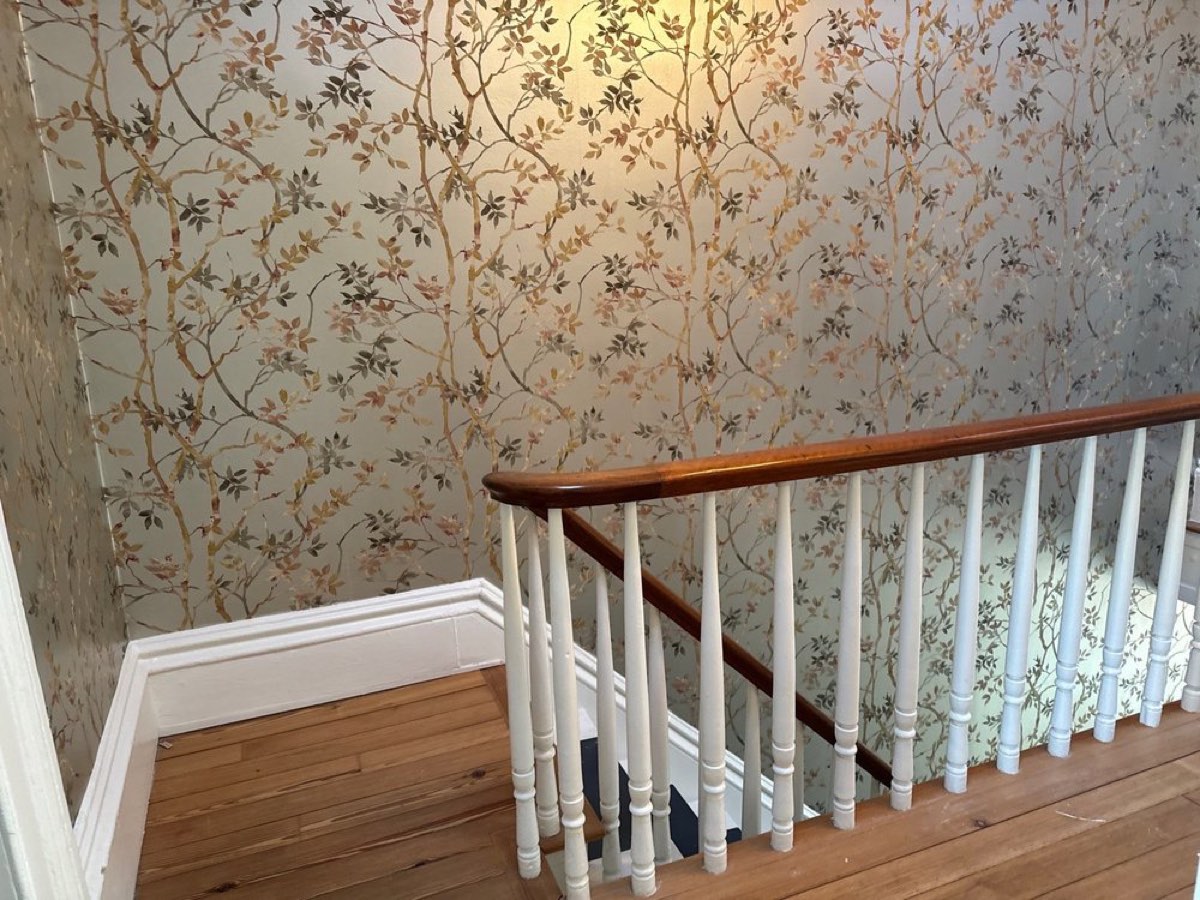
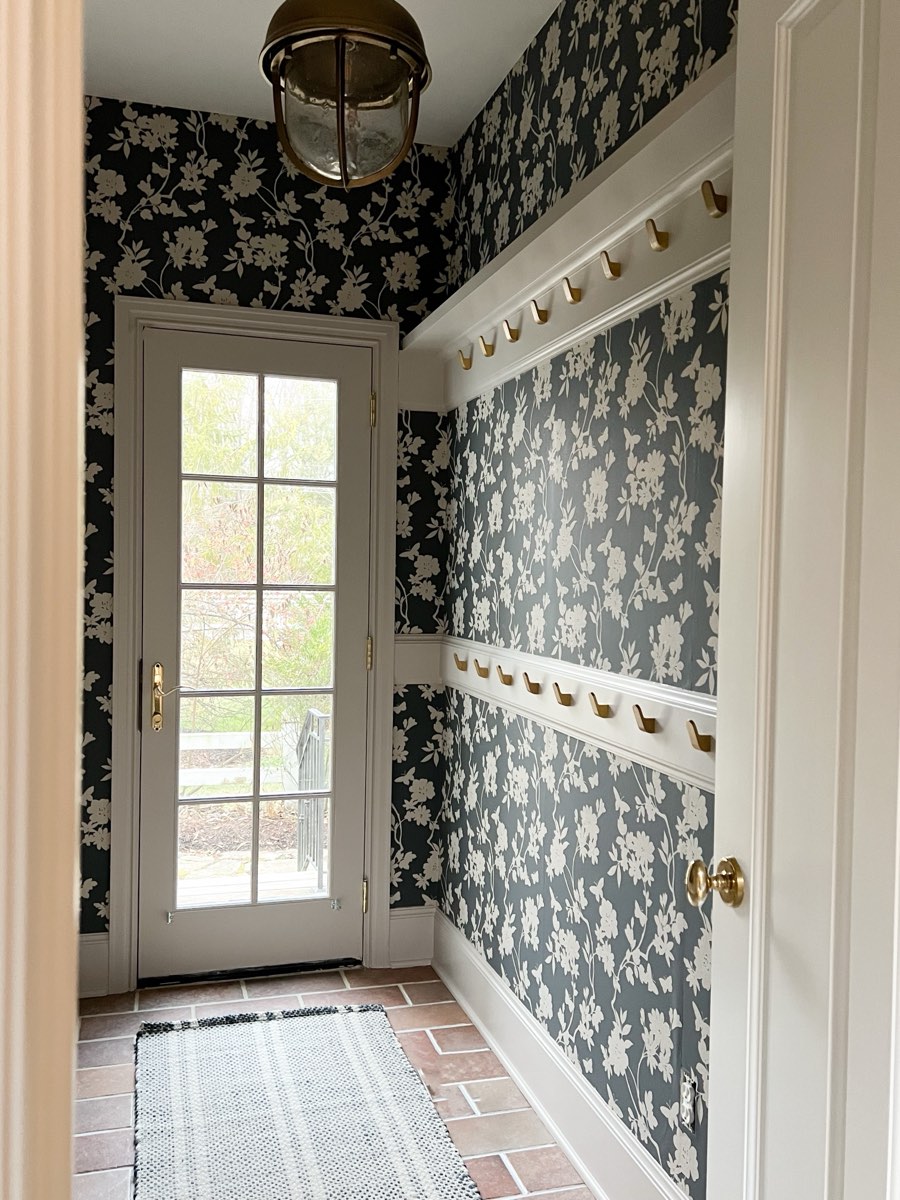
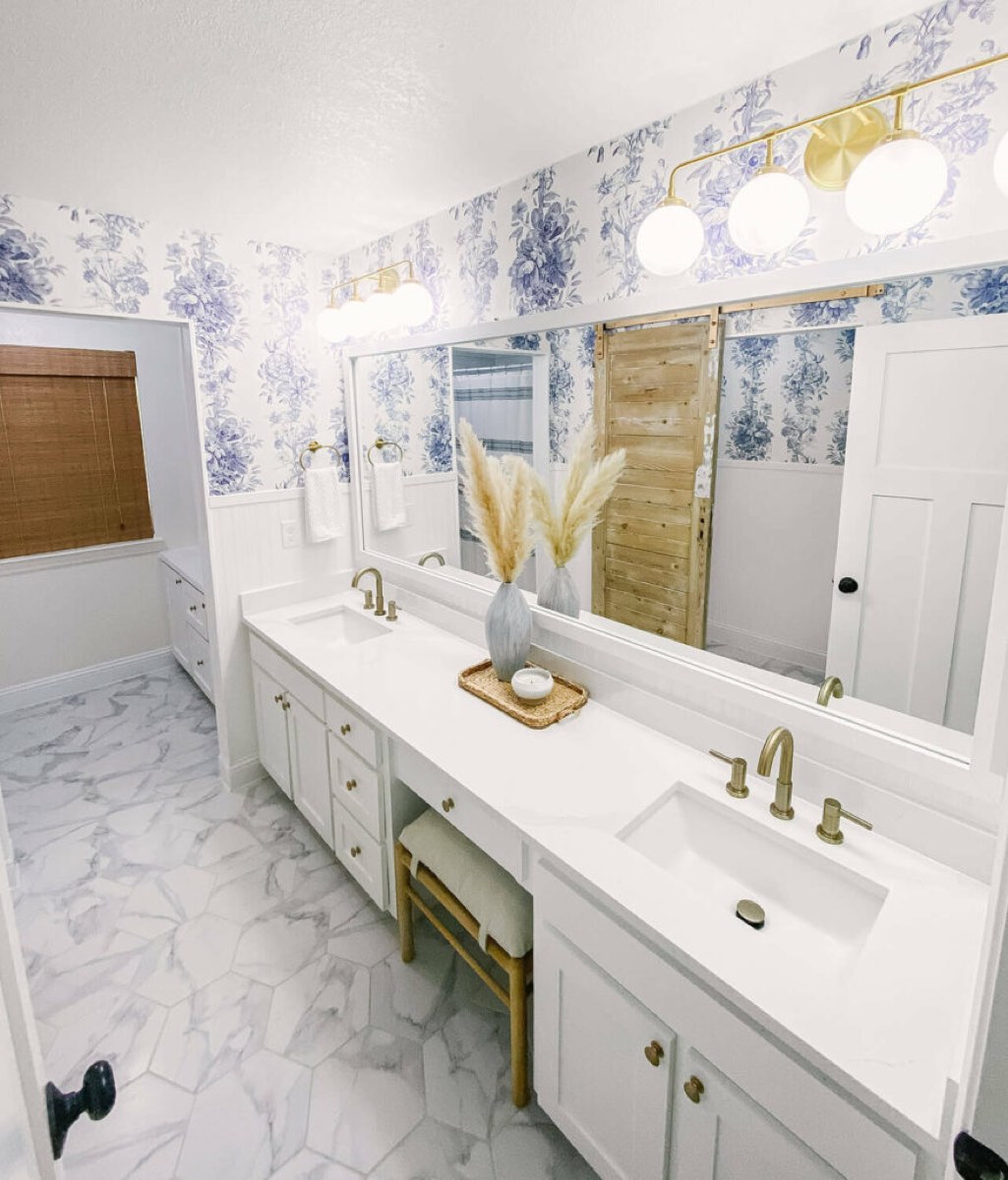
Heritage and archival papers are installed by the crews that carry Mancini's hand-painted and textured work across the Wasatch Back: four crews, twelve trained installers, fully insured and bonded, with 70+ five-star reviews.
The houses
Each house prints its archive differently and publishes its own trim, paste, and timing. These are the ones we install most, and what each asks for.
Rixheim since 1797. Woodblock-printed papers and panoramics from the original blocks, untrimmed, hung in printed order and matched by eye.
Installation notesLondon since 1875. Archive reprints, surface prints, and hand-screened papers, each with its own instruction for trim and paste.
Installation notesThe Morris archive in surface print and screen, on paper and non-woven; the house's instruction says which paste and which timing.
Installation notesEnglish archive florals and document papers, many on non-woven, some on pulp; trim and paste per pattern.
Installation notesArchival damasks and document papers, often untrimmed; hand-trimmed and booked to the published timing.
Installation notesAmerican Victorian and Arts and Crafts room sets: frieze, fill, dado, and ceiling printed to be composed as one wall.
Installation notesPapers printed with the house's own paint, the pattern proud of the surface; trimmed by the crew, butted, never rolled hard.
Installation notesSend the sample and the room. If it is printed from an archive, we have installed something printed the same way, and we read the house's instruction before the order.
Send the sampleDesign house and manufacturer names referenced on this page are the property of their respective owners. They identify materials we install and completed project history. Mancini Wallpapers holds no partnership, certification, or endorsement from any house named, and installs every product to the instructions its manufacturer publishes.