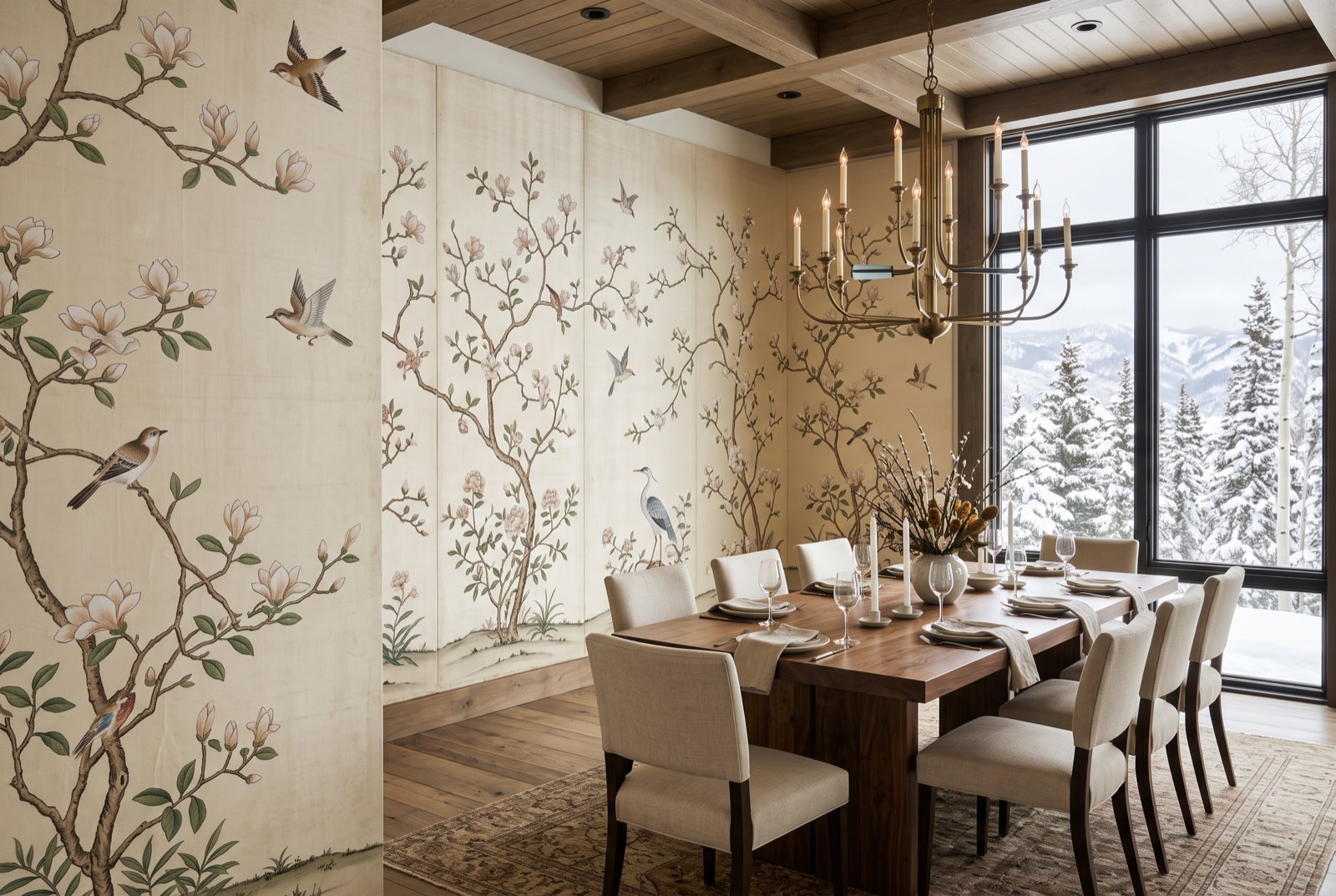
Hand-painted chinoiserie panels with magnolia branches and birds across a dining room, Park City, Utah
Park CityUtahHand-painted

Material · Hand-painted and hand-printed

Hand-Painted and Hand-Printed Wallpaper Installation in Park City and Across Utah

Chinoiserie, scenic panels, block-printed and hand-screened papers, installed to the instructions each studio publishes. Every panel unique. One cut each, planned on paper first. Installation-only, headquartered in Park City.

What hand-painted is

A commission, not a roll

Hand-painted wallcoverings are painted by artists onto silk or paper, panel by panel, to a commission for one room. Hand-printed papers are block-printed or screen-printed by hand, with the paint texture and slight variation that a press cannot produce. In both cases every panel is unique.

There is no reorder and no second attempt at the wall. A panel hung a quarter inch high breaks the branch on both sides of it, and there is no offcut to repair it with. The material asks for a different kind of installation: slower, drawn on paper first, and checked at every step.

Hand-painted and hand-printed papers are specified by designers across Park City, Deer Valley, and the Heber Valley for the rooms where the wall is the design, and they are installed by the same crews that carry our silk and mural work.
ChinoiserieScenic panelsPanoramicsBlock-printedHand-screenedGilded groundsPainted silkPainted paper
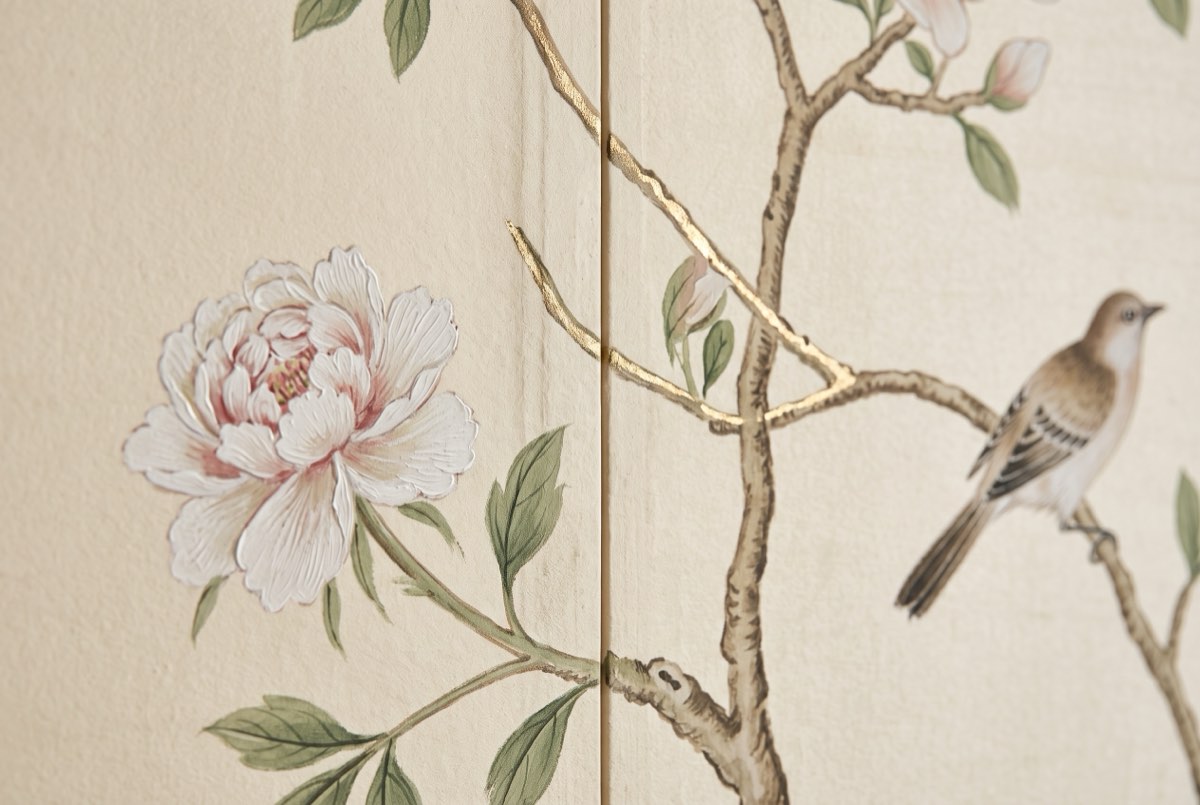
Hand-painted wallcovering detail with visible brushwork, gold leaf, and a panel join, Park City, Utah

Three ways to the wall

Painted, pressed, or printed, and why it changes the installation

A hand-painted panel carries the design once. The studio paints it for a numbered position on a specific wall, and the panel beside it continues the branch. A hand-printed paper carries a repeat, but the paint sits proud of the surface and the repeat drifts a little from sheet to sheet, because a person pressed it. A machine-printed roll is identical every time.

The installation follows the material. Machine-printed paper forgives a mistake with a fresh roll. Hand-printed paper forgives less: the sheets must be matched by eye and hung in the order they were printed. Hand-painted panels forgive nothing, so nothing is left to the wall. Every cut is drawn before the blade moves.

  • Hand-painted panels: typically 36 inches wide, cut to the wall's height by the studio, delivered numbered in a crate
  • Hand-printed papers: standard rolls or sheets, untrimmed at the mill, with a repeat that is matched by eye
  • Both are pasted at the wall; neither face is ever wetted
Three ways a design reaches the wall: hand-painted panel, hand-printed paper, and machine-printed roll, compared Hand-paintedHand-printedMachine-printed Painted by hand, panel by panelEach panel unique · no reorderBlock or screen, pressed by handSlight variation · paint sits proudRotary or digital, by the rollIdentical repeats · reorderable The first two are the subject of this page. A hand-painted panel has no repeat and no offcut to fix a mistake with. A hand-printed paper has a repeat, but the ink texture and the slight drift of hand pressing are part of the design. 0 second attempts· one cut per panel · planned on paper before the blade moves
Hand-paintedPainted by hand, panel by panel · unique · no reorder Hand-printedBlock or screen pressed by hand · paint sits proud Machine-printedRotary or digital · identical repeats · reorderable 0 second attempts · 1 cut per panel
Hand-painted, hand-printed, and machine-printed wallcoverings compared

Guide

Eight kinds, eight behaviours

Hand-painted and hand-printed cover very different things. Each one asks something different of the wall and the crew.

TypeHow it is madeGroundSeam handlingBest roomsAt the wall
Chinoiserie on silkPainted by hand on silk panelsSilk, often with metallic washDesigned away: the branch continues acrossDining rooms, primary suitesLevel 5 wall. Gloves. One cut per panel.
Chinoiserie on paperPainted by hand on paper panelsPaper, tea-stained or colouredDesigned awayDining rooms, powder rooms, entriesPaste at the wall. Panels sequenced on the floor with the designer.
Scenic panoramic, paintedContinuous landscape across numbered panelsPaper or silkRegistration held across the runEntries, stair halls, dining roomsMeasured to the panel before the order. Start point at the focal wall.
Woodblock panoramicPrinted from carved blocks, hundreds per sceneHeavy paperMatched by eye; slight drift is authenticStair halls, formal roomsSheets hung in printed order. Never rolled hard.
Gilded and metallic groundsGold, silver, or mica leaf laid under the paintingLeafed paper or silkLeaf direction kept consistentPowder rooms, bars, dining roomsNever wetted. Handled in gloves. Light read at the measurement.
Block-printed paperCarved block pressed by hand, one colour per passPaper, paint-based inksDouble-cut on a straightedgeBedrooms, libraries, hallsTrimmed by the crew. Paste at the wall. Booked before hanging.
Hand-screened paperScreen pulled by hand, one colour per screenPaperDouble-cut; matched by eyeBedrooms, dressing rooms, dining roomsSheets hung in print order. Never rolled hard.
Custom painted panelsCommissioned from an artist or studio to the roomPaper, canvas, or silkPer the studio's instructionFeature walls, ceilings, children's roomsStudio's instructions read before the order. Layout signed by the designer.

Chinoiserie on silk

How it is made
Painted by hand on silk panels
Ground
Silk, often with metallic wash
Seam handling
Designed away: the branch continues across
Best rooms
Dining rooms, primary suites
At the wall
Level 5 wall. Gloves. One cut per panel.

Chinoiserie on paper

How it is made
Painted by hand on paper panels
Ground
Paper, tea-stained or coloured
Seam handling
Designed away
Best rooms
Dining rooms, powder rooms, entries
At the wall
Paste at the wall. Panels sequenced on the floor with the designer.

Scenic panoramic, painted

How it is made
Continuous landscape across numbered panels
Ground
Paper or silk
Seam handling
Registration held across the run
Best rooms
Entries, stair halls, dining rooms
At the wall
Measured to the panel before the order. Start point at the focal wall.

Woodblock panoramic

How it is made
Printed from carved blocks, hundreds per scene
Ground
Heavy paper
Seam handling
Matched by eye; slight drift is authentic
Best rooms
Stair halls, formal rooms
At the wall
Sheets hung in printed order. Never rolled hard.

Gilded and metallic grounds

How it is made
Gold, silver, or mica leaf laid under the painting
Ground
Leafed paper or silk
Seam handling
Leaf direction kept consistent
Best rooms
Powder rooms, bars, dining rooms
At the wall
Never wetted. Handled in gloves. Light read at the measurement.

Block-printed paper

How it is made
Carved block pressed by hand, one colour per pass
Ground
Paper, paint-based inks
Seam handling
Double-cut on a straightedge
Best rooms
Bedrooms, libraries, halls
At the wall
Trimmed by the crew. Paste at the wall. Booked before hanging.

Hand-screened paper

How it is made
Screen pulled by hand, one colour per screen
Ground
Paper
Seam handling
Double-cut; matched by eye
Best rooms
Bedrooms, dressing rooms, dining rooms
At the wall
Sheets hung in print order. Never rolled hard.

Custom painted panels

How it is made
Commissioned from an artist or studio to the room
Ground
Paper, canvas, or silk
Seam handling
Per the studio's instruction
Best rooms
Feature walls, ceilings, children's rooms
At the wall
Studio's instructions read before the order. Layout signed by the designer.

Where it performs

The right rooms, and the wrong ones

Where it belongs

  • Dining rooms and formal living rooms
  • Primary suites and dressing rooms
  • Powder rooms without a shower
  • Formal entries and stair halls
  • Libraries and studies
  • Private dining in hospitality work

Where it does not

  • Any bath with a shower or tub
  • Kitchens, behind a range or a sink
  • Walls in direct, sustained sun
  • Family rooms where hands and bags meet the wall
  • Any wall that has not been made flat first
  • Walls whose measurement was not taken before the order

What it demands at the wall

Five disciplines before a painted wall reads as one

The material is correct more often than the installation. These are the steps that close the gap.

01

Inspection and layout with the designer

Panels are unpacked, inspected, photographed, and laid out in sequence on the floor before the wall is touched. The designer is present.

02

Level 5 substrate

The surface beneath a painted panel is read through it. The wall is skimmed, sanded, checked under a flat light, and primed before the first panel.

03

Paste to the wall

No moisture reaches the face at any stage. Adhesive goes on the wall, matched to the backing, and the panel is set from the top down in gloves.

04

One cut per panel, planned before it is made

Doors, outlets, switches, and corners are resolved on the drawing first. The blade follows the drawing.

05

Insured handling

From crate to wall, the panel is covered. Fully insured and bonded is not a footnote on this material.

The layout

Where every panel goes is decided on paper, with the designer

The studio numbers the panels, and the numbers are a sequence, not a position. Where the sequence starts on the wall is the crew's decision, and it is the decision that makes or breaks the room. The start point is moved until no seam falls on a bird or a bloom, until the corners land on quiet ground, and until the door and the outlets fall where a cut costs nothing.

So the wall is drawn before anything is unrolled. The panels are laid out on the floor in the drawn order with the designer present, the start point is checked against every painted element, and the designer signs the layout. Every cut around an obstacle exists on that drawing before it exists on the panel.

  • Layout drawn from James's measurement, never from the architectural plan
  • Obstacles resolved on paper: outlets, switches, sconces, thermostats, vents
  • The drawing is kept for the studio and for any future repair
Elevation of a dining room wall as the crew plans it: numbered panels, the door, an outlet, and the start point set so no seam lands on a bloom Door outlet 12345678 Start point · set at the focal wall, checked against every bloom and bird The studio numbers the panels. The crew draws the wall, places the door, the outlets, and the corners on it, and moves the start point until no seam lands on a painted element. Every cut around an obstacle is drawn here first. The blade follows the drawing, not the other way round. The designer signs the layout before the first panel is unrolled.
12345678 Numbers · panel sequence from the studioThin dashes · seams; the branch continuesHeavy dashes · start point at the focal wallGrey block · door · small block · outlet The start point is moved until no seamlands on a bloom or a bird, and the doorand outlets fall where a cut costs nothing.Every cut is drawn here first.The designer signs the layout. Drawn on paper · signed · then cut
A dining room wall as the crew draws it: panels numbered, the door and the outlet placed, the start point moved until no seam lands on a bloom

From crate to wall

Three inspection points, and coverage the whole way

A hand-painted commission arrives months after it was ordered and cannot be reordered in weeks. So the question is not whether a panel could be damaged, but where any damage is found and documented. The answer is: at the crate, on the floor, and at the wall, and never afterwards.

Every panel is inspected and photographed before the crate leaves the room. The sequence and the registration are checked on the floor with the designer. Each panel is checked at the wall before the next one is set. Coverage follows the panel through all three, which is what fully insured and bonded means on this material.

  • Damage documented at the point it is found, with the studio informed the same day
  • Panels stored flat, dry, and out of the sun between arrival and installation
  • Nothing else happens in the room on installation days: no other trades, no deliveries
The chain of custody for a hand-painted commission from the studio crate to the finished wall, with the inspection points marked StudioCrate arrivesLayoutWall 123 1 · Every panel inspected and photographed before the crate leaves the room2 · Sequence and registration checked on the floor with the designer present3 · Each panel checked at the wall before the next is set Damage is documented at the point it is found, never discovered afterwards. Coverage follows the panel from the crate to the finished wall. Fully insured and bonded· not a footnote on this material
StudioCrate arrivesLayoutWall 123 Inspected andphotographed in the crateSequence checked on thefloor with the designerChecked at the wall beforethe next panel is set Damage documented where it is found,never discovered afterwards. Fully insured and bonded, crate to wall
The chain of custody for a hand-painted commission, with the three inspection points

Hand-printed papers

Why a block-printed paper is not installed like a printed one

A block-printed or hand-screened paper looks like a roll of wallpaper and behaves like something else. The paint sits proud of the surface by a hair, which is the texture the designer chose it for. The repeat drifts slightly from sheet to sheet, because a person pressed it. The edges are rarely true, because the mill did not trim them.

So the crew trims the edges, matches the repeat by eye at every seam, double-cuts the join on a straightedge, and never rolls it hard, because a roller flattens the paint ridge and leaves a shiny stripe where the seam is. Paste goes on the wall, never the paper, because a wet hand-printed sheet stretches and the repeat walks.

  • Sheets booked and hung in the order they were printed, so the drift reads as one direction
  • Paint-based inks are never wiped: a mark is lifted dry or referred to the house
  • Heritage houses publish their own instructions per paper; they are read before the order
Cross-section comparing a hand-printed paper, with paint sitting proud of the surface, against a machine-printed paper, and what that means for the seam Hand-printed · block or screen Paint pressed by hand sits proud of the paper by a hair. Under raking light it reads as texture. The repeat drifts slightly from sheet to sheet. Matching is done by eye at every seam, not by the mark on the selvedge alone. Machine-printed · rotary or digital Ink lies flat in the paper. The repeat is identical on every roll. Matching follows the selvedge mark. A roll can be reordered from the same batch. At the seam Hand-printed paper is trimmed by the crew, not at the mill, because a hand-pressed edge is rarely true. Seams are double-cut on a straightedge, matched by eye, and never rolled hard: a roller flattens the paint ridge and leaves a shiny stripe where the seam is. Paste goes on the wall, never on the paper, because a wet hand-printed sheet stretches and the repeat walks. Each sheet is booked and hung in the order it was printed. Farrow & Ball, block-printed and hand-screened papers from the heritage houses, and artisan studios all print this way. Their instructions say so; the crew reads them before the order. Trimmed by hand · double-cut · never rolled hard · pasted at the wall
Hand-printed Paint sits proud of the paper.Repeat drifts sheet to sheet. Edges untrimmed. Machine-printed Ink lies flat. Repeat identical on every roll. At the seam, hand-printed Trimmed by the crew, not the millDouble-cut on a straightedgeMatched by eye at every joinNever rolled hard: a roller leaves a shiny stripePasted at the wall: a wet sheet stretchesSheets hung in printed order Instructions read before the order
Hand-printed paint sitting proud of the paper against flat machine ink, and what that means at the seam

Living with it

Care, lifespan, and what to expect at year ten

A painting on the wall, treated as one.

Cleaning

Dust dry with a soft brush or a feather duster. No water, no cleaners, no damp cloth: paint-based work marks on contact with moisture. A mark is referred to the studio's guidance, never treated at home.

Sun

Pigments soften under direct, sustained sun, and metallics hold while the ground around them fades. Walls that take the sun are identified at the measurement, and the specification follows the room.

Humidity

In a room with normal humidity and no steam, painted and printed papers are stable for decades. Baths with a shower, laundry rooms, and kitchens are declined at the measurement.

Contact

Not a scrubbable surface. Chair backs are kept off the wall, and in a dining room the panels sit above a chair rail or the chairs are placed accordingly.

Lifespan

Installed on a Level 5 wall and kept out of the sun, hand-painted work serves for generations. Panels are routinely removed and re-hung when a house changes hands, which is its own testimony.

Repairs

Because the layout drawing and the start point are kept, a damaged panel can be repainted by the studio and set back into its place years later. Keep any surplus flat, dry, and dark.

Why Mancini

The standard a commission demands

01

Precision Craft

Drawn on paper first. One cut per panel. Checked at every seam.

A hand-painted wall shows the hand that set it. The standard is measured in what you do not see: no break in the branch, no seam on a bloom, no cut that was not planned.

02

Specification Discipline

Installed to the instructions each studio publishes, panel by panel.

Every studio and every heritage house writes an installation instruction for its work. We read it before the order and follow it at the wall: the primer, the paste, the handling, the seam. No shortcuts, no substitutions.

03

Responsive Capacity

Four active crews. Twelve trained installers. Scheduling measured in weeks.

Multi-crew capacity means a commission is installed when the panels arrive, on the designer's timeline, with the room held for the crew alone.

Hand-painted and hand-printed, installed
Across Park City, the Wasatch Back, and the Salt Lake Valley

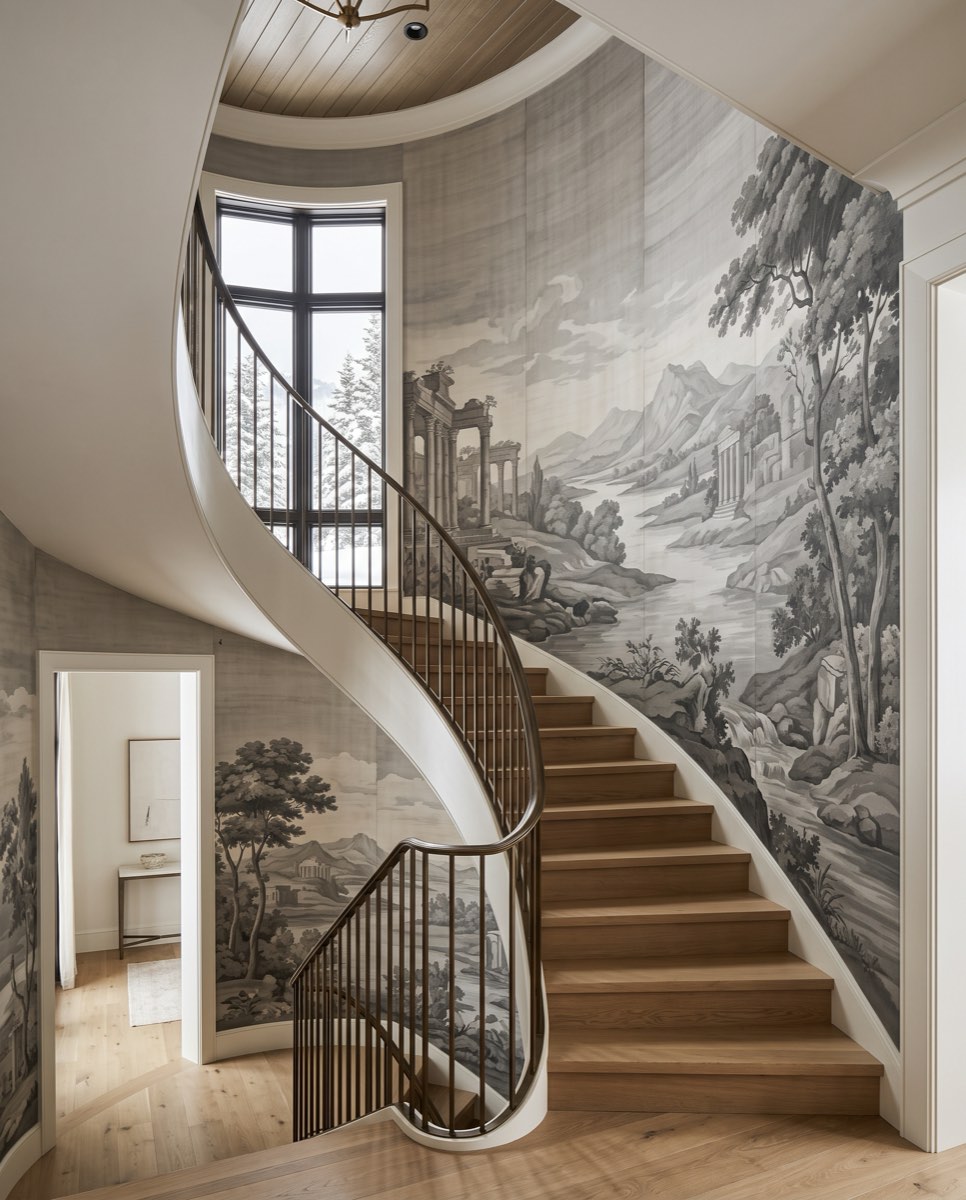
Grisaille woodblock scenic panoramic panels along a curving stair hall, Park City, Utah
Woodblock panoramic, stair hall
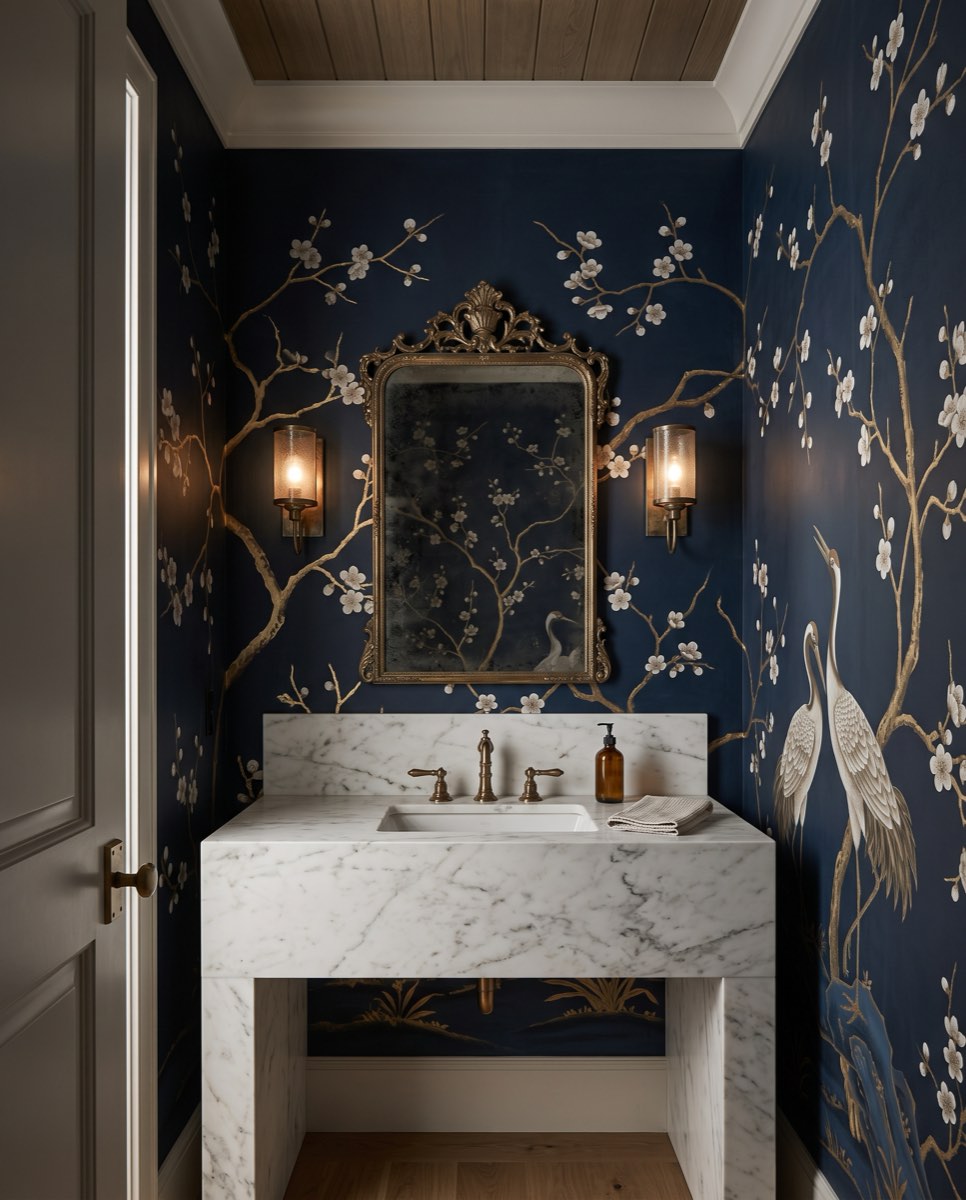
Hand-painted midnight-blue chinoiserie with gilded branches and cranes in a powder room, Deer Valley, Utah
Midnight chinoiserie, powder room
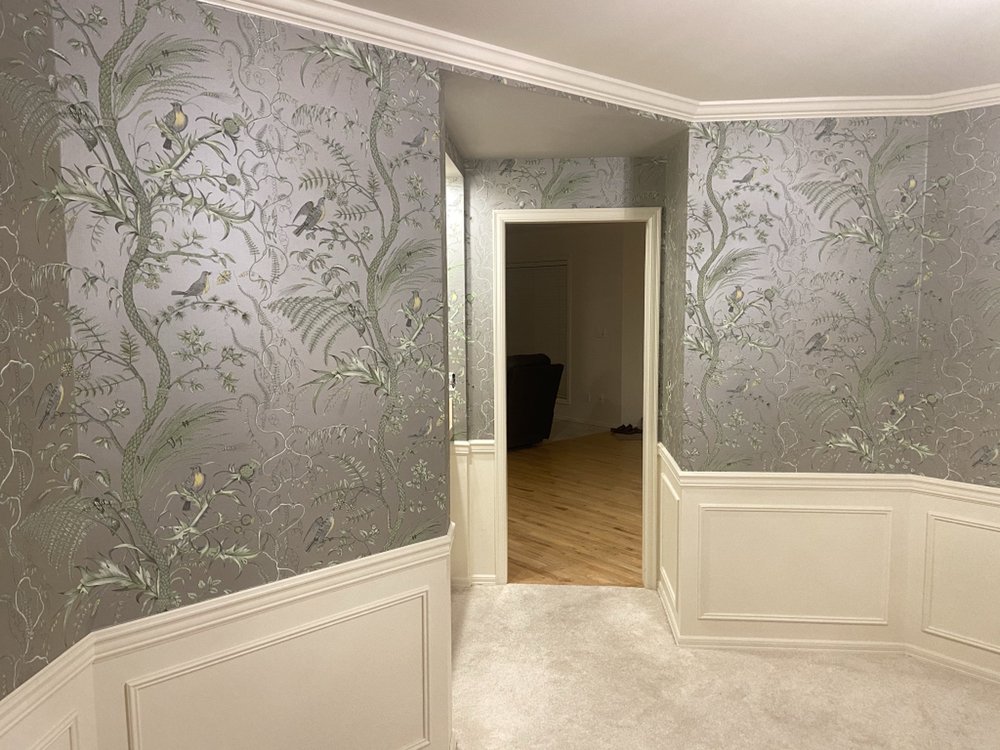
Chinoiserie bird and botanical wallpaper above wainscoting in a luxury hallway, installed by Mancini Wallpapers
Chinoiserie above wainscoting
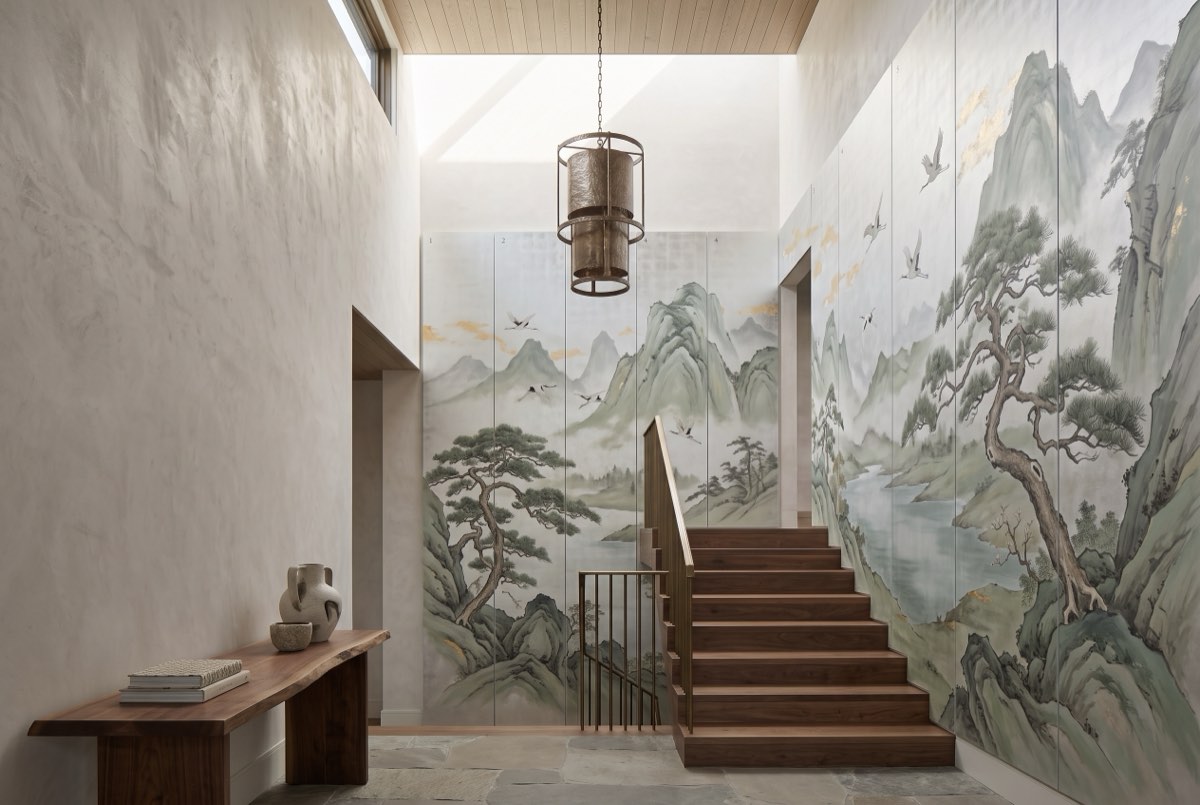
Hand-painted mountain scenic panels rising a double-height entry hall, Promontory, Utah
Scenic, double-height entry
Hand-painted blossom branches on a primary bedroom headboard wall, Park City, Utah
Blossom branches, headboard wall
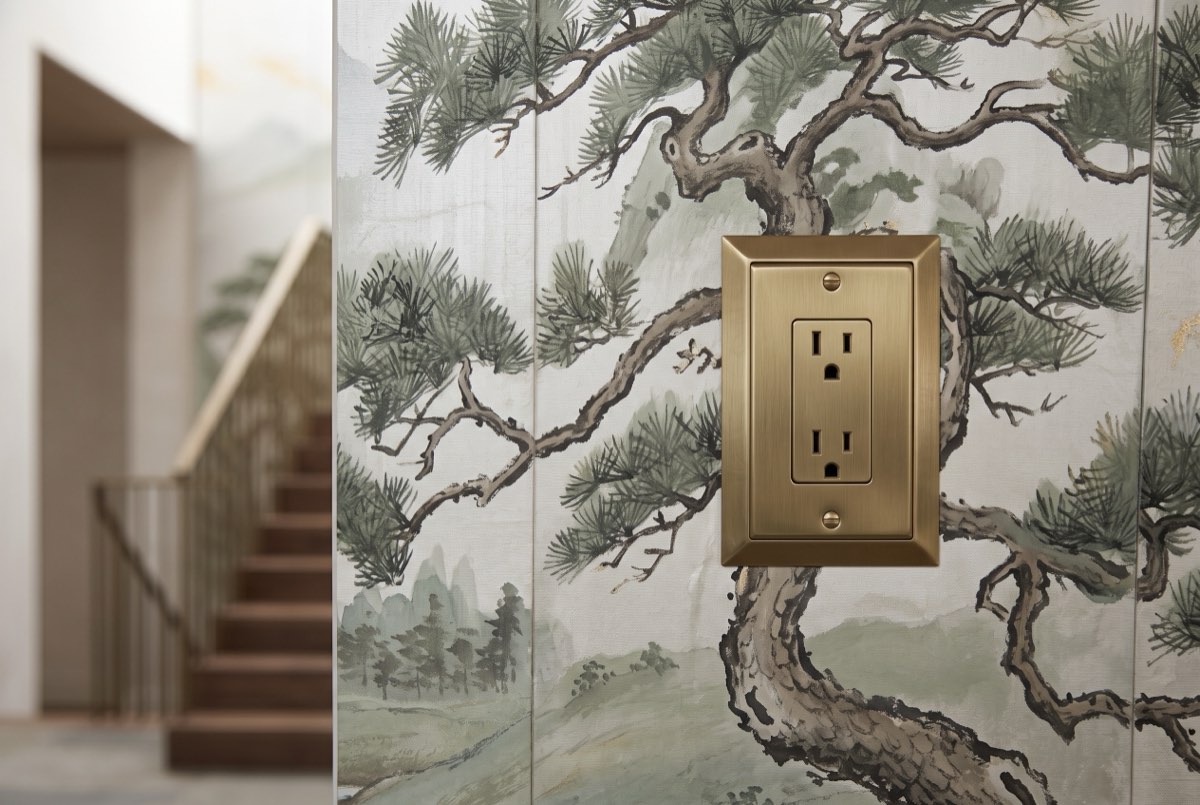
Hand-painted wallcovering cut cleanly around a brass outlet plate with the branch continuing past it, Park City, Utah
Cut planned around an outlet
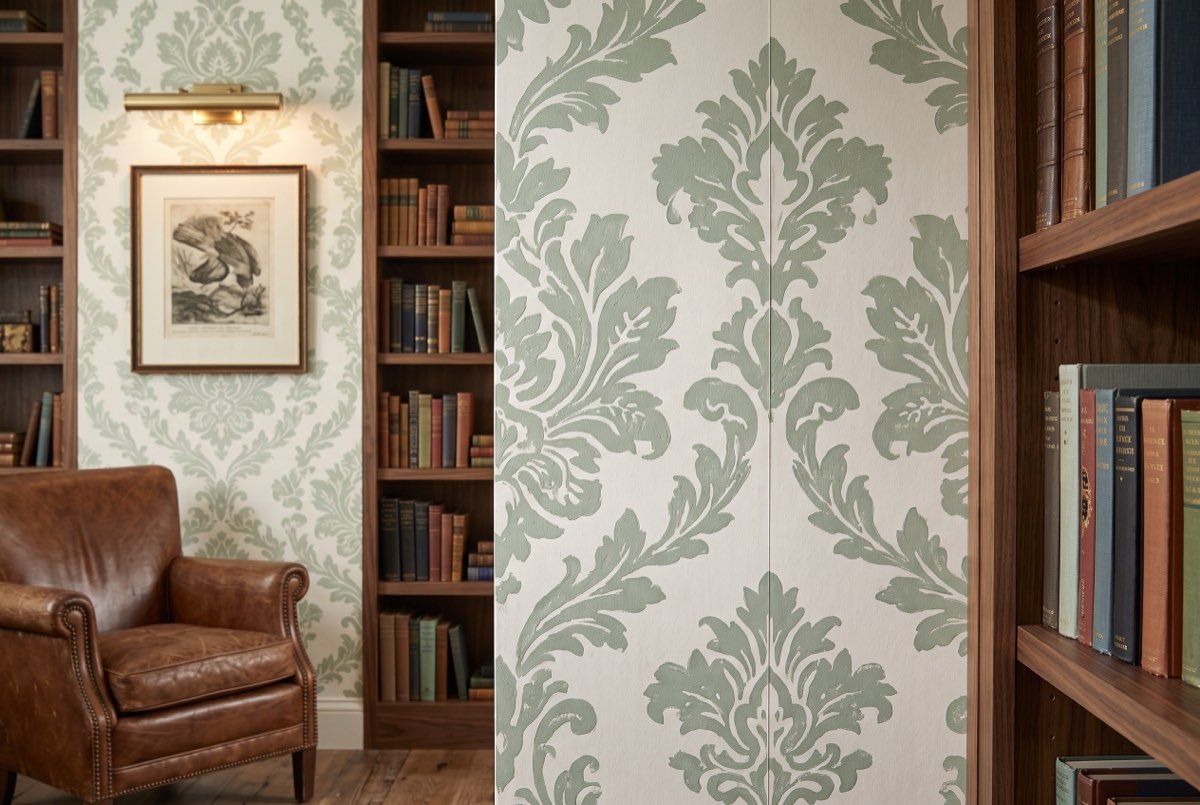
Block-printed sage damask wallpaper with visible print texture in a library, Park City, Utah
Block-printed damask, library
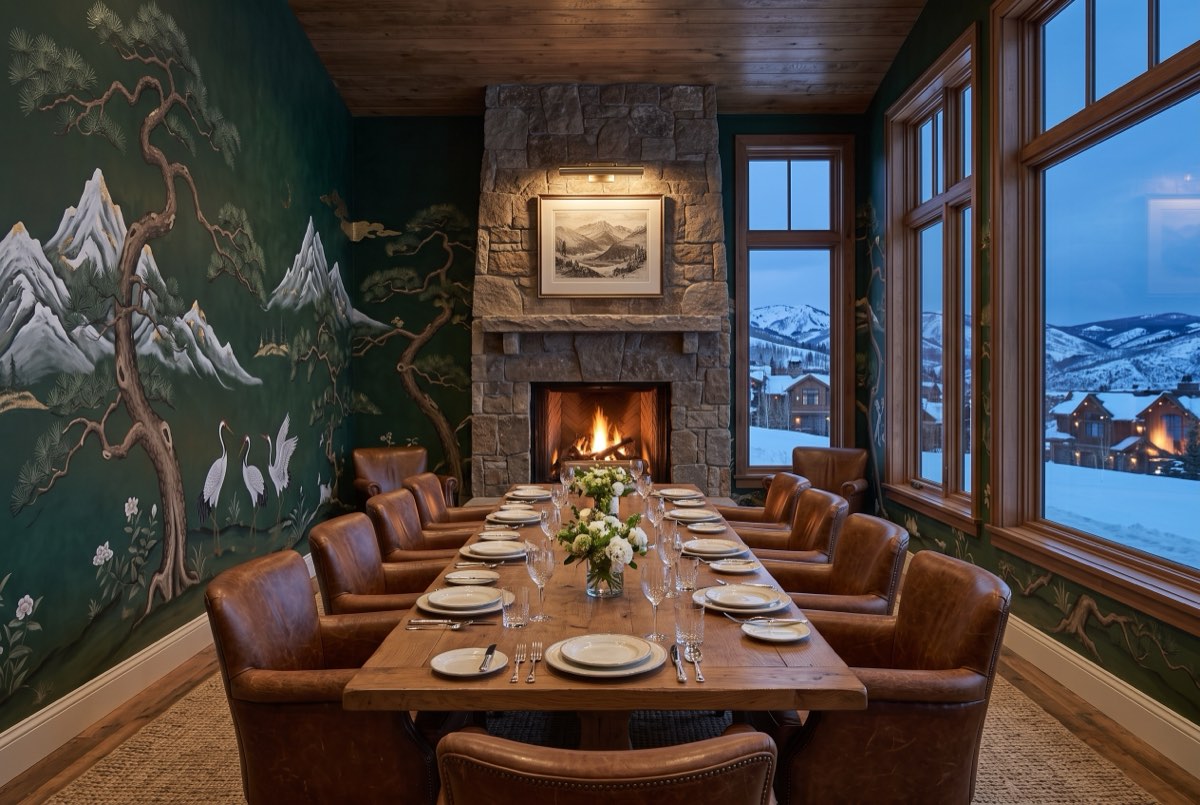
Hand-painted chinoiserie with pines and cranes in a ski-lodge private dining room, Deer Valley, Utah
Private dining, ski lodge
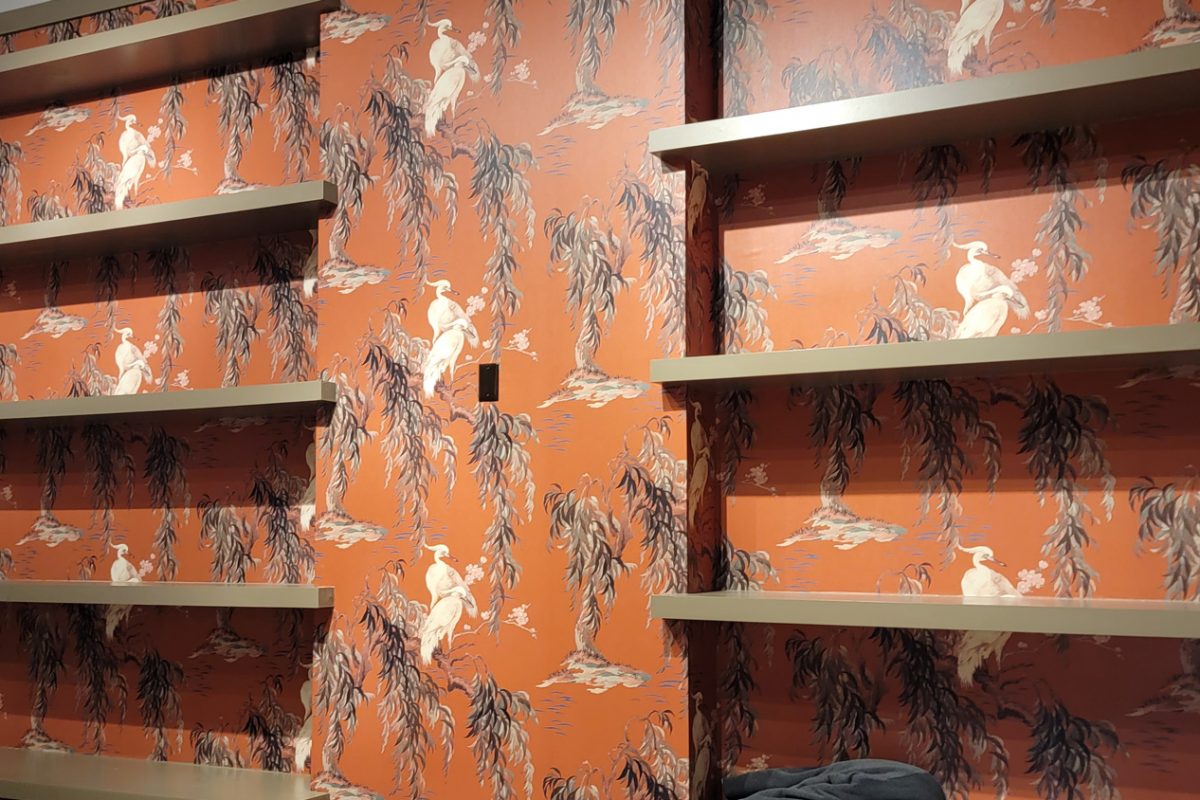
Orange chinoiserie wallpaper behind closet shelving, installed by Mancini Wallpapers
Chinoiserie behind shelving

Hand-painted and hand-printed papers are installed by the same crews that carry Mancini's silk and mural work across the Wasatch Back: four crews, twelve trained installers, fully insured and bonded, with 70+ five-star reviews.

The houses

Studios and houses we know at the wall

Each studio paints or prints differently and publishes its own instructions. These are the ones we install most, and what each asks for.

de Gournay

Hand-painted chinoiserie and scenics from London and Shanghai, delivered as numbered panels painted for the room. The studio's handling and hanging instructions govern every step from the crate to the wall.

Installation notes

Fromental

Hand-painted and hand-embroidered silks from London. Embroidered grounds are never rolled; the studio's instructions set the seam method and the paste.

Installation notes

Gracie

New York since 1898. Hand-painted chinoiserie on silk and paper, sequenced by panel number and registered across every seam to the studio's layout.

Installation notes

Zuber

Rixheim since 1797. Woodblock-printed panoramics from the original blocks, hung in printed order and matched by eye, never rolled hard.

Installation notes

Porter Teleo

Kansas City. Contemporary hand-painted papers, each panel unique, installed to the studio's per-commission instruction.

Installation notes

Farrow & Ball

Dorset. Papers printed with the house's own paint, so the pattern sits proud of the surface. Trimmed by the crew, double-cut, never rolled hard.

Installation notes

Cole & Son

London since 1875. Hand-screened and block-printed heritage papers alongside its printed lines, each with its own instruction for trimming and seams.

Installation notes

Your studio not listed?

Send the sample or the commission drawings and the room. If it is painted or printed by hand, we have installed something made the same way, and we read the studio's instructions before the order.

Send the sample

Design house and manufacturer names referenced on this page are the property of their respective owners. They identify materials we install and completed project history. Mancini Wallpapers holds no partnership, certification, or endorsement from any house named, and installs every product to the instructions its manufacturer publishes.

Client reviews

Homeowners and designers, in their own words

5.0 · 70+ Google reviews

Where we install hand-painted work

Headquartered in Park City. Serving the Wasatch luxury corridor.

Four crews, twelve trained installers, most projects on the calendar within weeks.

Park CityDeer ValleyEmpire PassThe ColonyPromontoryGlenwildJeremy RanchHeber CityMidwayRed LedgesVictory RanchTuhayeAlpineHighlandTraverse MountainSalt Lake CityHolladayCottonwood HeightsDraperSandy

Questions

Fifteen hand-painted questions, answered

The questions homeowners and designers ask before, during, and after a hand-painted or hand-printed installation.

Mancini Wallpapers, headquartered in Park City. Hand-painted panels from de Gournay, Fromental, Gracie, and the other studios are installed by the crew to each studio's per-commission instructions, fully insured from the crate to the wall, across Summit, Wasatch, Salt Lake, and Utah counties.

Every panel is inspected and photographed on arrival, before the crate leaves the room, and the designer is present for the layout. Damage is documented at the point it is found and the studio is informed the same day. Nothing is hung until the set is confirmed complete.

Yes. Every cut is planned on the drawing before it is made, the start point is moved so the obstacles fall where a cut costs nothing, and the designer signs off the layout. The branch runs to the plate and continues beyond it.

Hand-painted work is painted by artists for one room and arrives as numbered panels with no repeat. Hand-printed paper is block-printed or screen-printed by hand: it has a repeat, but the paint sits proud of the surface and drifts slightly from sheet to sheet. Both are installed with paste on the wall and neither face is ever wetted.

Yes. Hand-painted panels are painted to the wall's height and the scenic is composed to the wall's width. James measures every wall himself before the order is placed, so the studio paints to the room and no sky is missing at the ceiling.

On a hand-painted commission the design continues across the seam, so the join is designed away. On a hand-printed paper the seam is double-cut and matched by eye, and reads as a fine line the eye passes over. Seams are placed off the centre line and away from the sightline from the door.

Dust it, dry, with a soft brush or a feather duster. No water, no cleaners, no damp cloth. A mark is referred to the studio's guidance rather than treated at home; most studios will advise on the specific pigment.

In a powder room without a shower or tub, with ventilation, yes; it is one of the rooms chinoiserie is most often specified for. In any bath with a shower or steam, no. Those rooms are declined at the measurement.

A painted panel has no texture to hide behind. A joint feathered for paint reads as a long wave under a sconce, and the panel follows it. Level 5 is a full skim coat, sanded and primed, checked with a light held flat to the wall before the first panel is unrolled.

Yes. Woodblock panoramics are hung in printed order, matched by eye because the slight drift between sheets is part of the work, and never rolled hard. The start point is set at the focal wall from the elevation drawing.

Often, yes. Commissions are routinely taken down and re-installed when a house changes hands or a room is redesigned. It is slow, careful work, and it begins with the layout drawing we keep from the original installation.

Longer than a printed paper of the same area, because every panel is inspected, laid out, checked, and set once. The room is held for the crew alone on those days: no other trades, no deliveries. The schedule is set when the panels' arrival date is confirmed.

Yes. Papers printed with paint sit proud of the surface, so they are trimmed by the crew, double-cut on a straightedge, matched by eye, and never rolled hard. Each house's instruction is read before the order.

No. Mancini is installation-only. A commission is placed by your designer with the studio, or through a showroom, and we install what arrives. Designers keep their procurement chain and their markup; we are the execution at the end of it.

With a complimentary on-site measurement, before the commission is placed. James walks the space, reads the light on every wall, and measures it himself so the studio paints to the room. A written proposal follows. Send the property address and a photo of the room to begin.

Begin your hand-painted project

Schedule a measurement

Send the property address and a photo of the room. James will come back with a time to walk the space and measure it himself, so the panels can be ordered to the wall. A written proposal follows.

hello@manciniwallpapers.com · Mon–Fri 8 AM – 7 PM MT · Saturday by appointment

70+
Five-Star Reviews
12
Trained Installers
4
Active Crews
100%
Insured & Bonded
Park City
Headquarters