
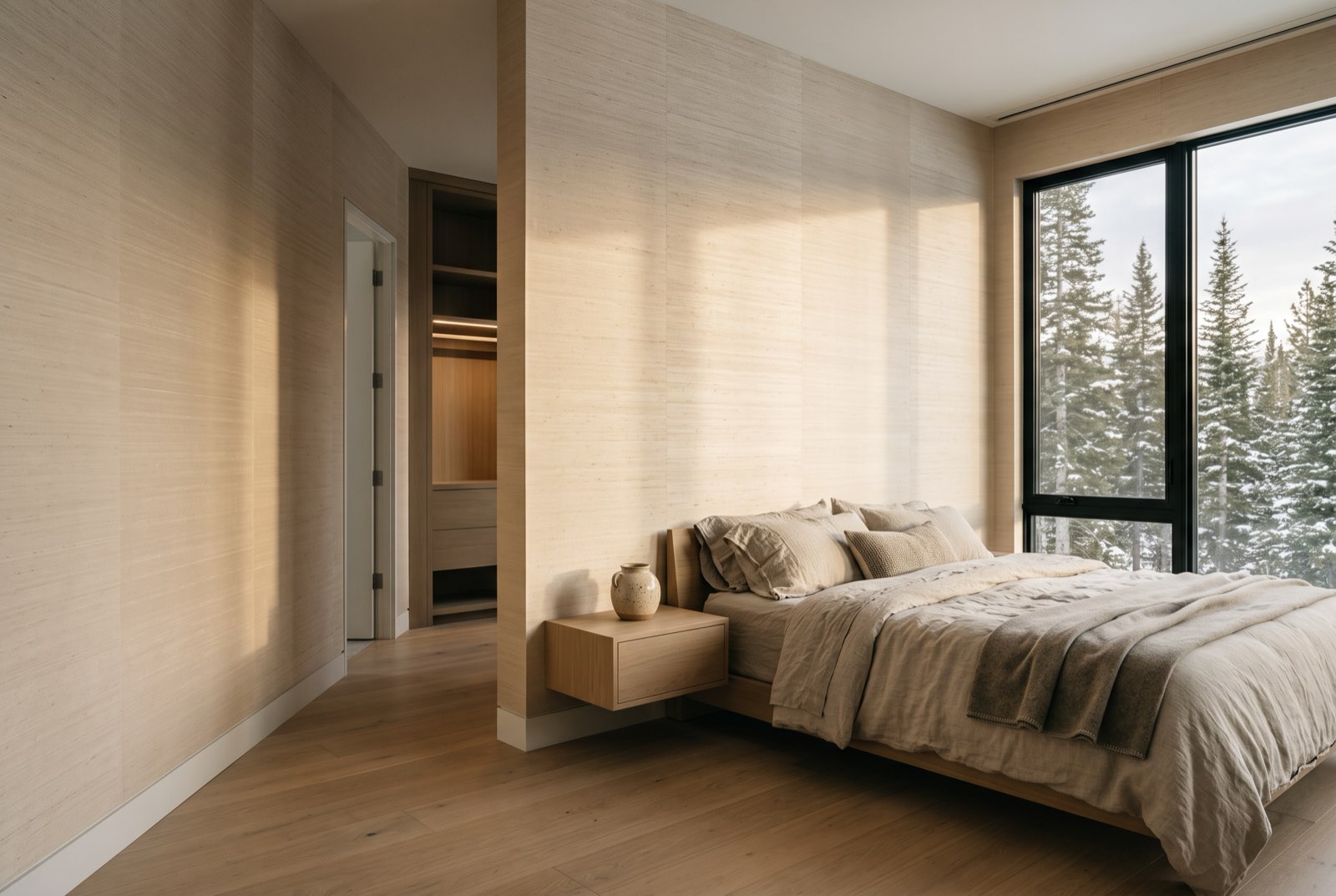
Material · Silk and hand-painted silk
Woven silk, silk blends, and hand-painted silk panels, installed to the specification each house publishes. Level 5 walls. Cotton gloves. One cut per panel. Installation-only, headquartered in Park City.
What silk is
Silk wallcoverings are woven silk or silk blends laminated to a paper or non-woven backing. Hand-painted silks carry the design on the silk face itself, panel by panel, from studios in London, New York, and Shanghai.
Silk marks on contact with moisture. It crushes under a seam roller. It shows every imperfection in the wall beneath it as a soft wave under side light. It is the least forgiving surface we install, and the one that returns the most when the wall has been made ready for it.
Silk is specified by designers across Park City, Deer Valley, and the Heber Valley for dining rooms and primary suites, and it is installed by the same crews that carry our grasscloth and hand-painted work.
Anatomy of a silk wallcovering
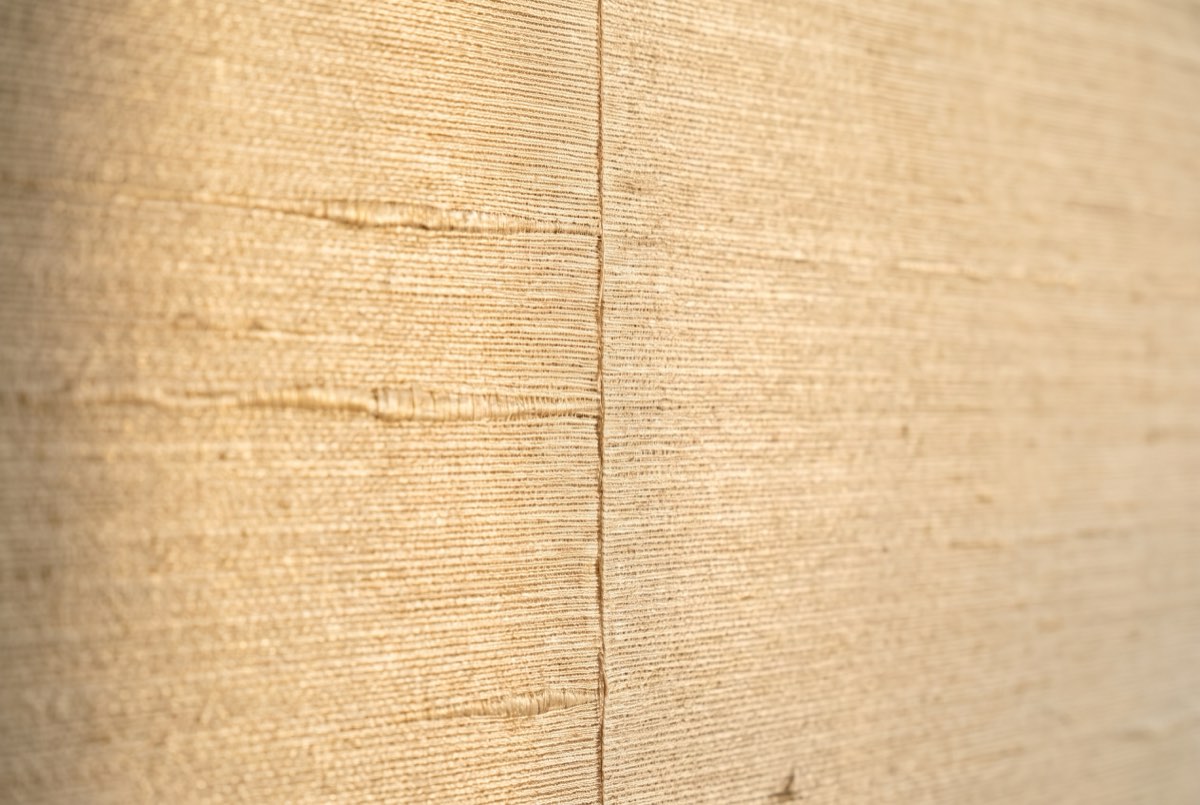
A silk wallcovering is two materials behaving differently. The face is silk: woven, slubbed, or painted. The backing is paper or non-woven, and it is the only layer that takes paste. Between them is a lamination that fails if the face is soaked, which is why paste never goes on the back of a silk panel the way it goes on printed paper.
The wall matters as much as the material. Silk has no texture to hide behind. A joint that was feathered for paint reads as a long shadow under a sconce. So the substrate is finished to Level 5, sealed, and checked with a light held flat to the wall before the first panel is unrolled.
Silk guide
Silk is not one material. Each construction asks something different of the wall, the paste, and the light in the room.
| Silk | Texture and read | Light behaviour | Seam visibility | Best rooms | At the wall |
|---|---|---|---|---|---|
| Plain woven silk | Fine, even, quiet sheen. Reads formal. | Fades under direct sun; colour deepens in low light. | Low to moderate | Dining rooms, primary suites | Level 5 wall. Seams butted and set by hand. |
| Dupioni and slub silk | Horizontal slubs, visible irregularity. Reads rich. | Slubs catch side light; the wall changes through the day. | Moderate | Bedrooms, dressing rooms, powder rooms | Slubs aligned drop to drop; every panel read before it is cut. |
| Silk-linen blend | Drier hand, matte read, less sheen. | More stable in light than pure silk. | Low | Studies, corridors, libraries | Handled as a textile: paste to the wall, seams double-cut where the house calls for it. |
| Silk on non-woven | Silk face, dimensionally stable backing. | As the face; the backing does not shrink. | Low | Rooms with humidity swings | Pasted at the wall. Seams stay closed through a dry winter. |
| Hand-painted silk | Painted design on silk. Reads as art. | Pigments and metallics fade at different rates; sun is assessed wall by wall. | Designed away | Dining rooms, entries, formal living rooms | Panels sequenced on the floor with the designer. One cut each. Never trimmed at the wall. |
| Embroidered silk | Raised thread on a silk ground. | Threads catch light; sheen varies with direction. | Moderate | Feature walls, powder rooms, headboard walls | Never rolled. Embroidery bridged at the seam, not pressed. |
| Moiré and watered silk | Rippled water-mark pattern. | Pattern reads strongest in raking light. | Moderate to high | Formal rooms with even light | Pattern matched by eye at every seam; start point set at the focal wall. |
| Silk with metallic thread | Silk ground with woven metallic. | Metallic holds; the silk around it softens. | Moderate | Bars, dining rooms, ceilings | Direction of the metallic kept consistent; no reverse hanging. |
Where silk performs
What silk demands at the wall
The material is correct more often than the installation. These are the steps that close the gap.
Silk telegraphs every flaw. The wall is skimmed, sanded, checked under a flat light, and primed to a Level 5 finish before the first panel.
Moisture on the face marks silk permanently. Adhesive goes on the wall, matched to the backing, and the face stays dry from crate to finish.
A seam roller crushes the weave and reads as a stripe. Seams are set by hand with a soft tool and left.
Panels are handled in cotton gloves and laid out on the floor in sequence with the designer present before anything is hung.
Direct sun on each wall is read across the day at the measurement. Where it falls, the specification is discussed before the order.
The Level 5 wall
Drywall is finished to levels. Level 3 and Level 4 are painter's finishes: joints taped, feathered, and sanded, and under paint they disappear. Under silk they do not. Side light from a window or a sconce turns every feathered joint into a long soft wave, and the silk face follows it exactly.
Level 5 is a full skim coat over the whole wall, sanded flat and primed. It is the only finish silk goes over. On most projects the substrate arrives from the painter; where our scope includes preparation, the skim, the light check, and the primer are written into the proposal. Either way, the wall is checked with a light held flat against it before the first panel is unrolled.
Silk and the light
Silk fades under direct, sustained sun, and the darker the dye the sooner it softens. In a Park City house with west-facing glass and 300 days of sun, that is not a footnote. It decides which walls take silk and which take paint.
So the light is read at the measurement, wall by wall and season by season. A north wall in indirect light keeps its colour for decades. A south wall behind an unshaded window does not. Where the design calls for silk on a wall that takes the sun, the conversation happens before the order: a UV-rated weave, a lighter dye, a window film, or a different wall.
Hand-painted panels
Hand-painted silk arrives as numbered panels, each painted for its place on the wall. The design continues across the seams, so a panel hung a quarter inch high breaks a branch on both sides of it. There is no offcut to fix it with. The panel is the panel.
The crew lays every panel out on the floor in sequence, with the designer present, before anything touches the wall. The start point is set so no seam lands on a bloom or a bird. Each panel is measured to its wall and cut once, on the floor, then carried up in gloves and set from the top down. Nothing is trimmed at the wall.
Living with silk
A fine textile on the wall, treated as one.
Dust with a soft, dry brush or a feather duster, in the direction of the weave. No water, no cleaners, no damp cloth. A mark is left to the studio's guidance; silk is not spot-cleaned at home.
Silk softens under direct, sustained sun, darker dyes first. Walls that take the sun are identified at the measurement, and the specification follows the room. Where light is unavoidable, film or shading protects the wall.
In a room with normal humidity and no steam, silk is stable for decades. Baths with a shower, laundry rooms, and kitchens are declined at the measurement, not discovered later.
Silk is not a scrubbable surface. It belongs above a chair rail, inside millwork panels, or on walls that hands and furniture do not meet. Chair backs are kept off the wall.
Installed on a Level 5 wall and kept out of the sun, silk serves for decades. Hand-painted silks are routinely removed and re-hung when a house changes hands, which is its own testimony.
Because the panel sequence and the start point are recorded, a damaged panel can be matched by the studio and set back into its place years later. Keep the surplus we leave with you, flat and dry.
Why Mancini
Walls finished to Level 5. Seams set by hand. Panels cut once.
Silk is the surface that shows the wall beneath it and the hand that set it. The standard is measured in what you do not see: no waves, no stripes at the seams, no mark on the face.
Installed to the instructions each house publishes, panel by panel.
Every studio and every mill writes an installation specification for its silk. We read it before the order and follow it at the wall: the primer, the paste, the seam method, the handling. No shortcuts, no substitutions.
Four active crews. Twelve trained installers. Scheduling measured in weeks.
Multi-crew capacity means a silk project moves on the designer's timeline. Most projects are on the calendar within weeks, not months.
Silk, installed
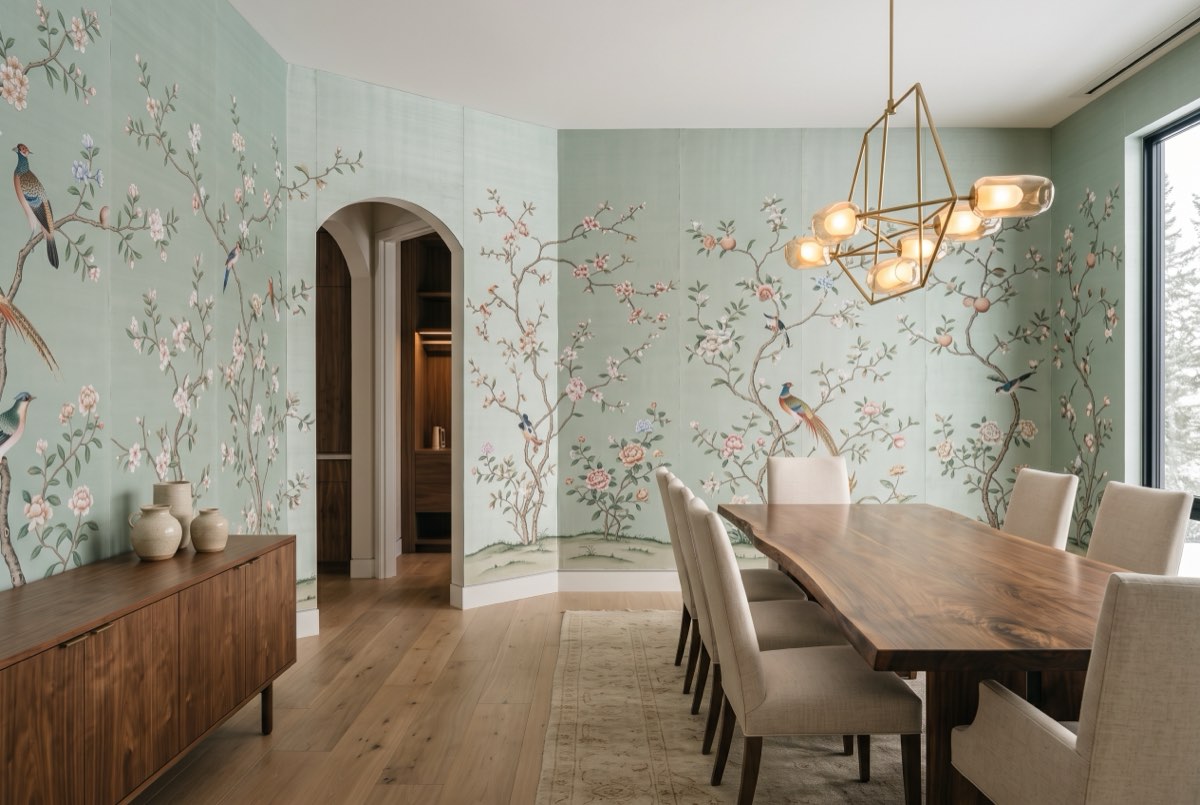
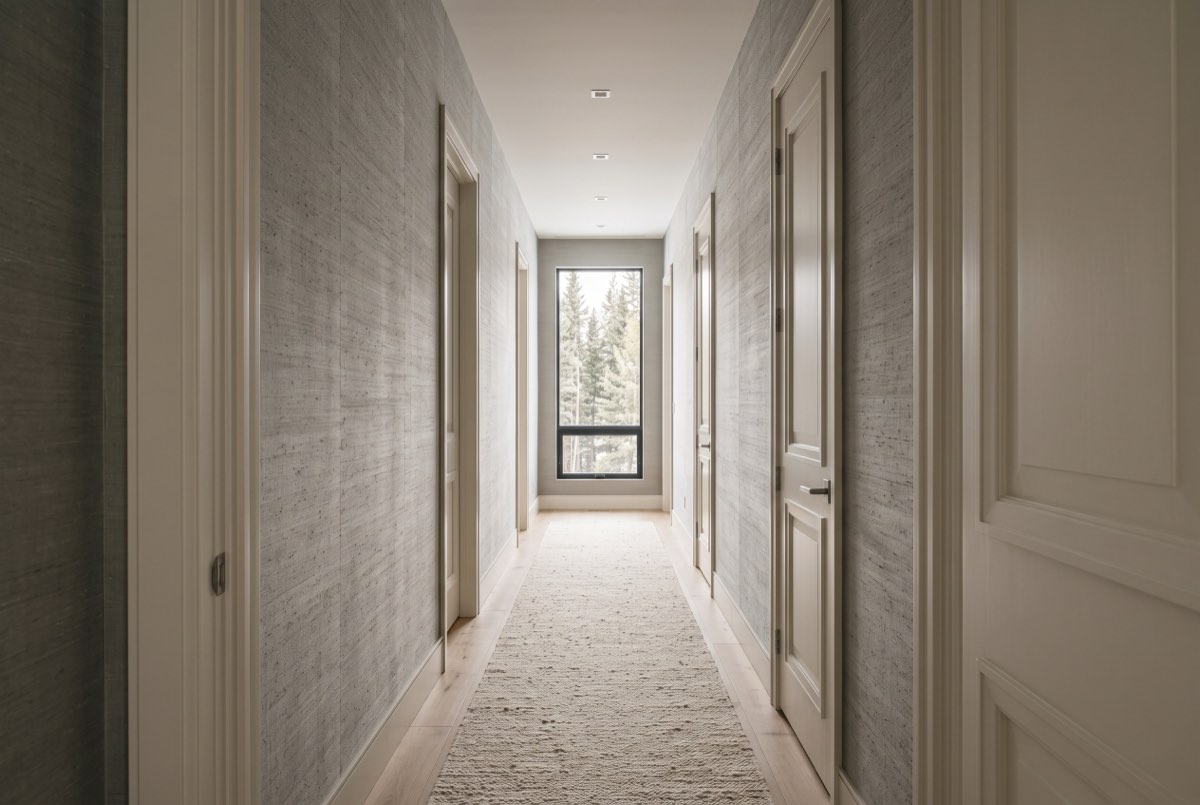
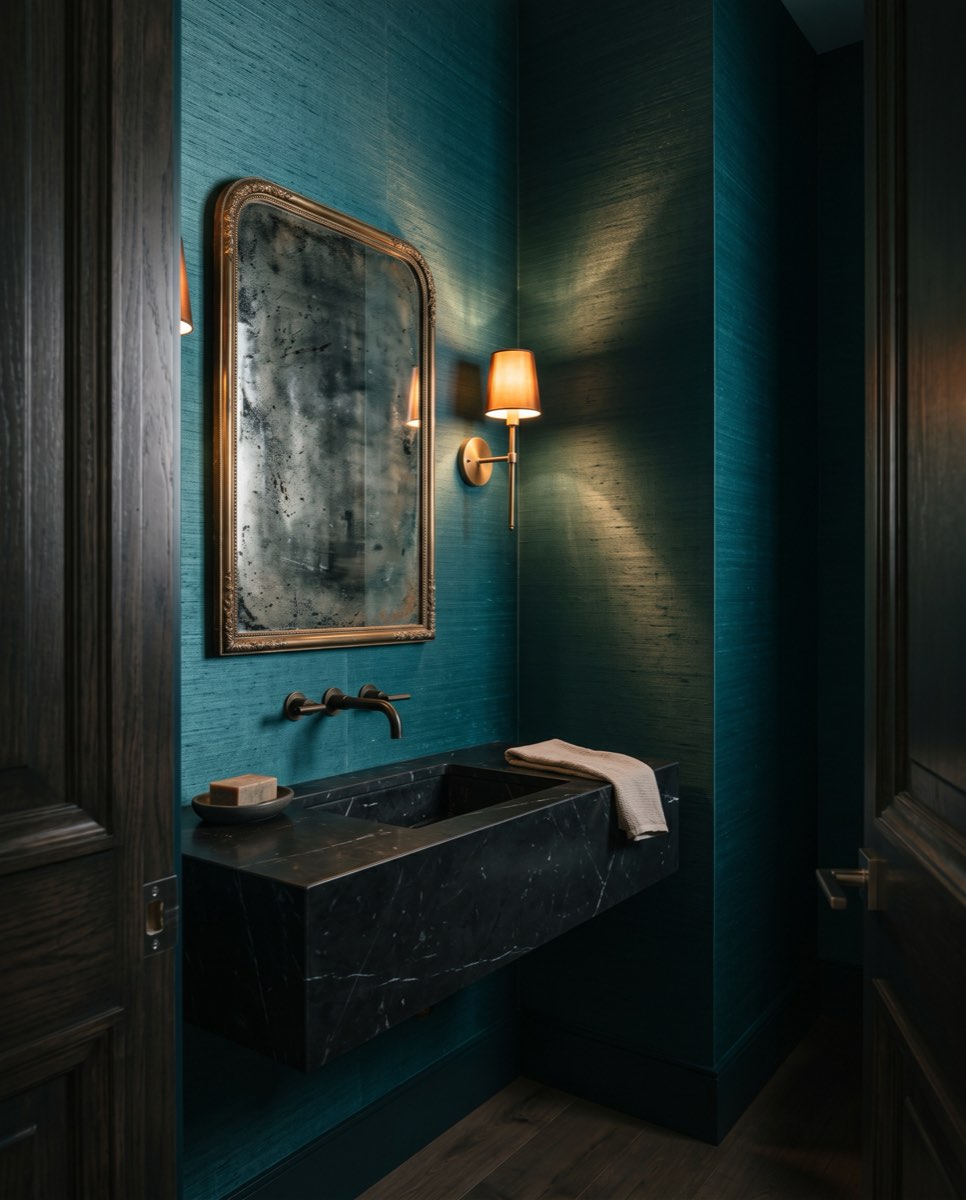


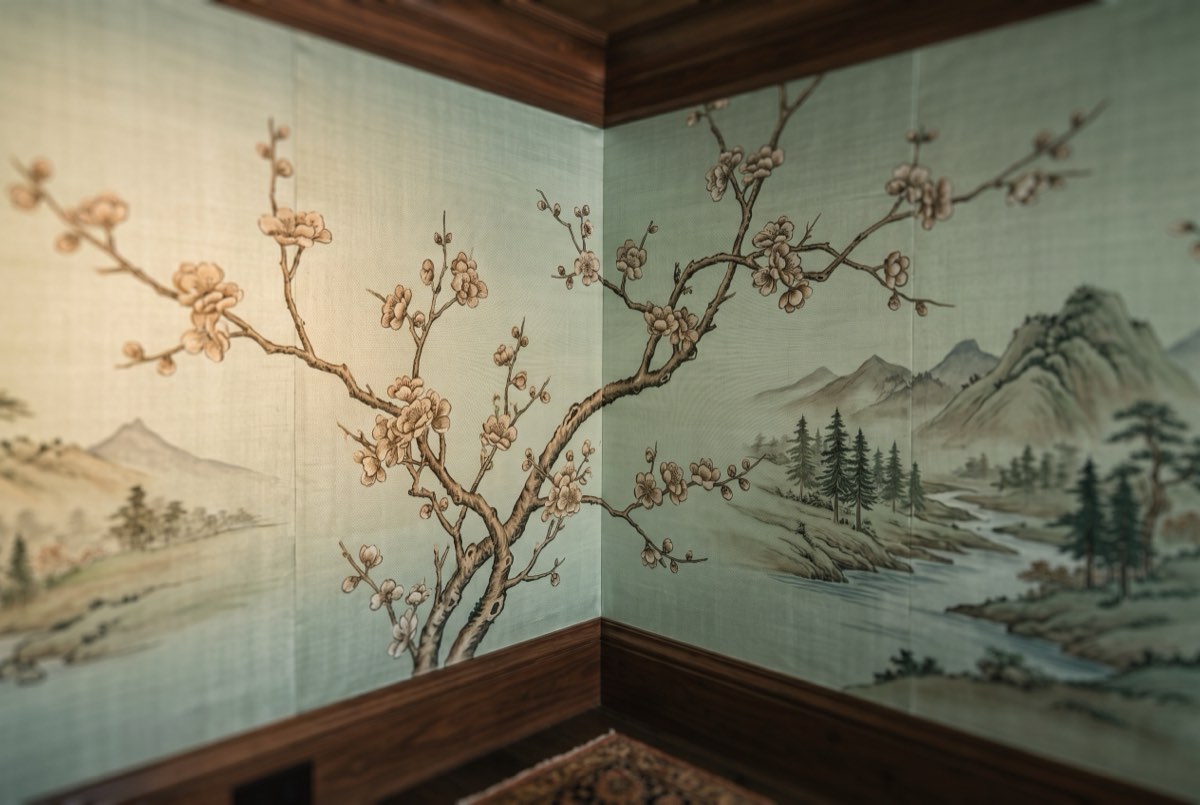
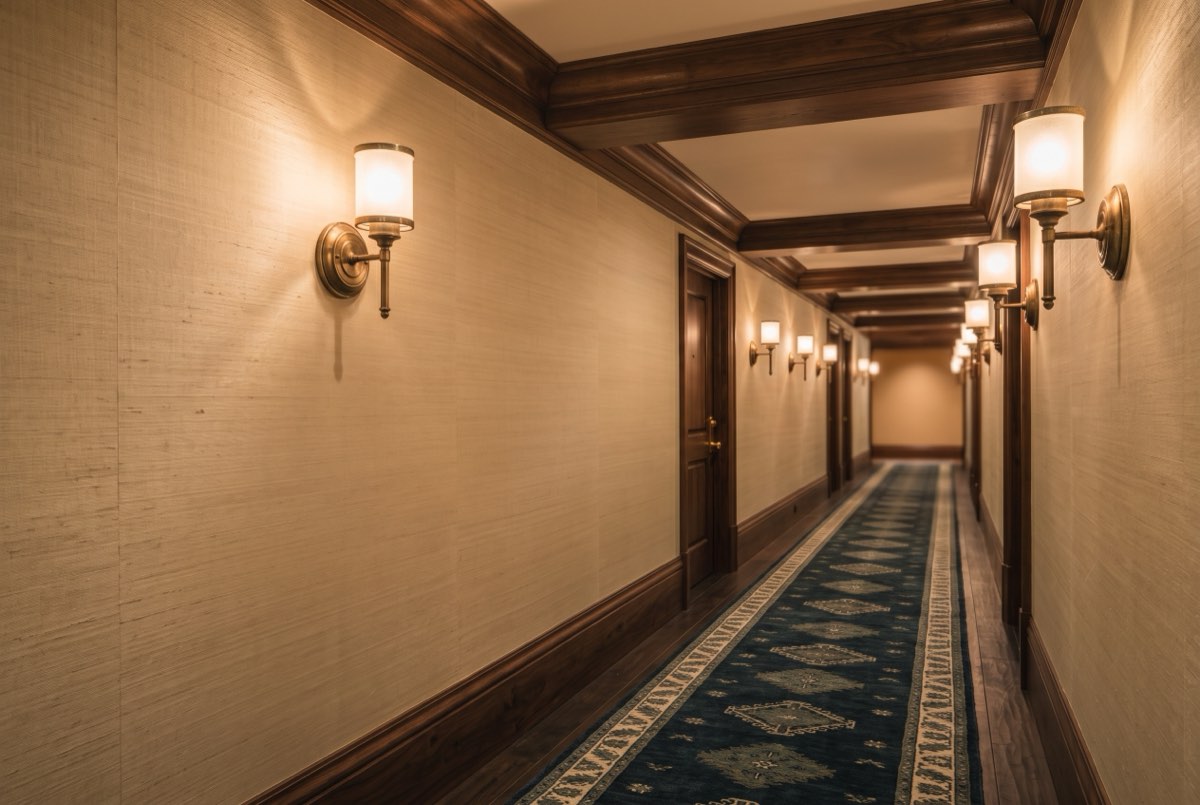
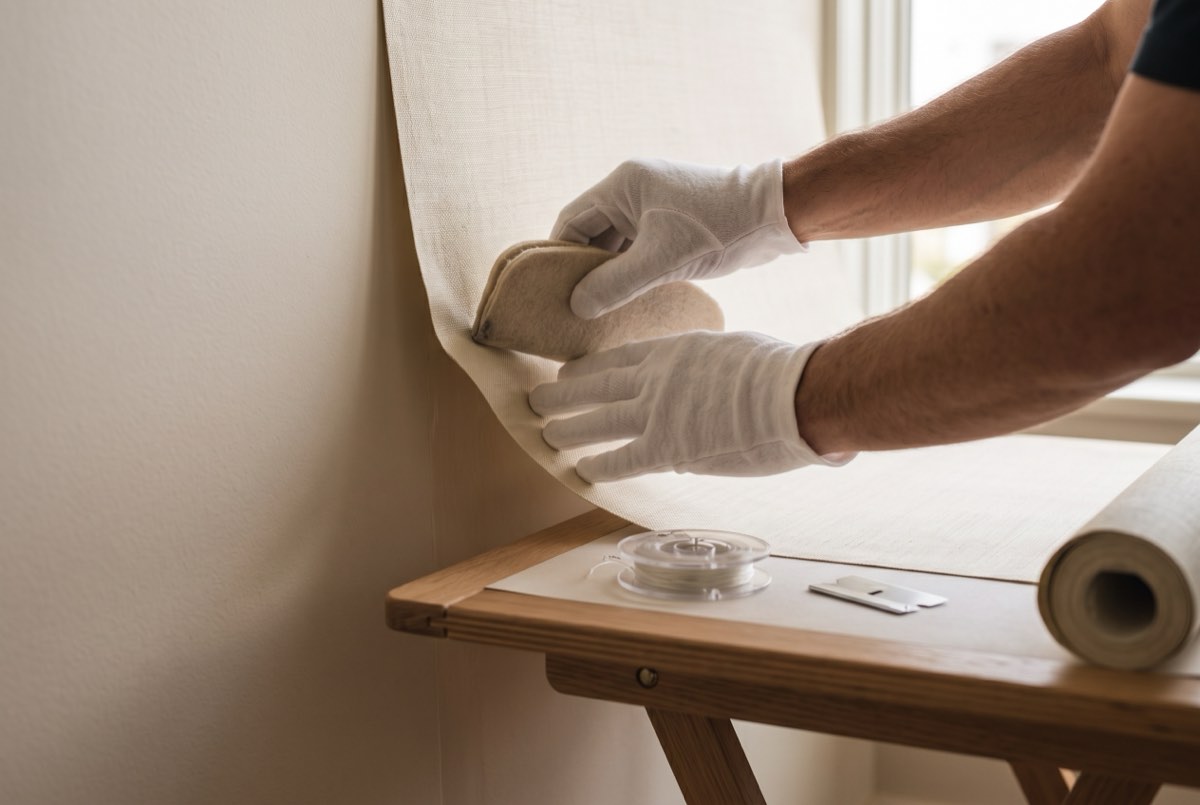
Silk is installed by the same crews that carry Mancini's grasscloth and hand-painted work across the Wasatch Back: four crews, twelve trained installers, fully insured and bonded, with 70+ five-star reviews.
The houses
Each house builds its silk differently and publishes its own instructions. These are the ones we install most, and what each asks for.
Hand-painted silk from London and Shanghai, delivered as numbered panels painted for the room. The studio publishes handling and hanging instructions that govern every step from the crate to the wall.
Installation notesHand-painted and hand-embroidered silk from London. Embroidered grounds are never rolled; the studio's instructions set the seam method and the paste.
Installation notesNew York since 1898. Hand-painted chinoiserie on silk, sequenced by panel number and registered across every seam to the studio's layout.
Installation notesNew York since 1889. Woven silks, dupioni, and silk blends on paper backing; the house's own guidance calls for a Level 5 wall and a strippable clear adhesive.
Installation notesSilk and silk-blend wallcoverings alongside its natural fibres. Seam and paste instructions are published per collection, and they differ by backing.
Installation notesFrench contemporary silks and silk-look textiles, often wide-width. Wide goods change the seam count and the paste.
Installation notesParis since 1935. Woven silk and textile wallcoverings on paper backing, installed to the house's textile instructions: paste to the wall, seams cut clean.
Installation notesSend the sample and the room. If it is silk, we have installed something built the same way, and we read the manufacturer's instructions before the order.
Send the sampleDesign house and manufacturer names referenced on this page are the property of their respective owners. They identify materials we install and completed project history. Mancini Wallpapers holds no partnership, certification, or endorsement from any house named, and installs every product to the instructions its manufacturer publishes.