
House · Installed in Park City and across Utah
Mancini Wallpapers is a wallcovering installation contractor headquartered in Park City, Utah. We install Maya Romanoff wallcoverings, Beadazzled glass bead, Mother of Pearl tile, and Ajiro wood veneer among them, across Park City, Deer Valley, the Heber Valley, and the Salt Lake Valley, to the installation guide the house publishes for each product. We hold no partnership or certification from Maya Romanoff.
The house
Maya Romanoff was founded in 1969 by the man whose name it carries. He began with tie-dye and resist dyeing, the company spent its early years as a fashion label, and the move from fabrics to wallcoverings followed. The house describes itself as the largest multi-disciplinary manufacturer of handcrafted wallcoverings in the United States, and as family owned and operated since 1969.
Its headquarters, its production studio, and its Chicago flagship showroom share one address: 3435 Madison Street in Skokie, Illinois, where the house gives the studio as 40,000 square feet. By its own statement its wallcoverings are handcrafted in that studio and in its mills abroad. Its artisans, it says, have worked glass beads, gold leaf, seashells, and wood with pigments and dyes.
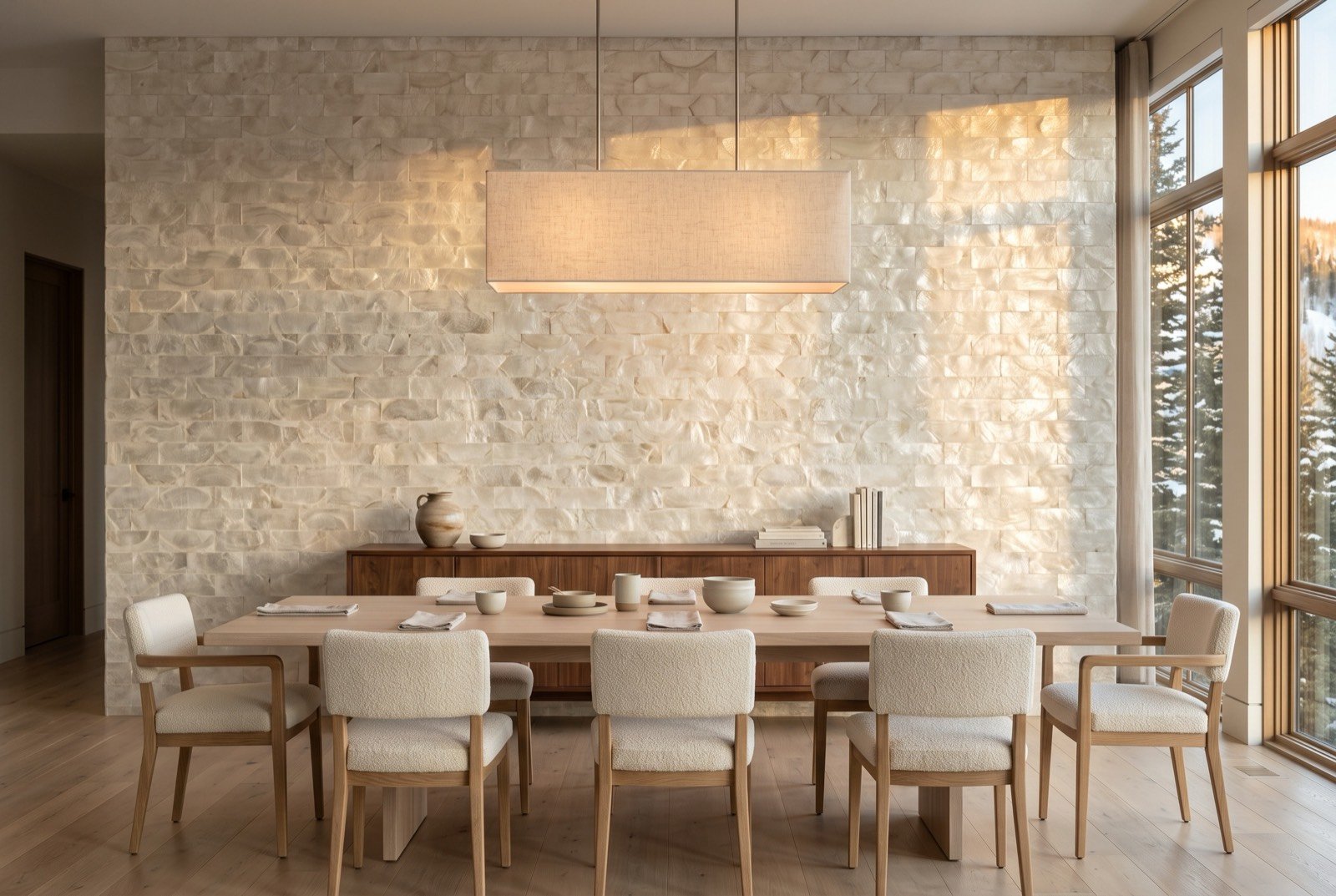
What arrives on a job is rarely an ordinary roll. Beadazzled comes in three-yard rolls about 28.5 inches (72.4 cm) wide once trimmed, Mother of Pearl as tiles about 24 inches by 12, and Ajiro Sunburst in nine-yard rolls with an untrimmed edge. The house wraps installation instructions with every roll it ships. When the goods arrive, the crew reads that guide before the adhesive is chosen, because the adhesive, the trimming, and the relaxing time change from one product to the next.
Since 1969
The house dates itself to 1969. Maya Romanoff, by its account inspired by working with textiles and dyes at Woodstock, began exploring tie-dye and resist dyeing and founded The Maya Romanoff Company later that year. In its early years the company was a fashion label, and its couture clothing line was sold in stores such as I. Magnin and Henri Bendel.
In 1988 Bess' Sunrise was installed on the former Sun-Times Building in Chicago. The founder, born Richard Romanoff in 1941, died on 15 January 2014. On 1 April 2024 the house announced that three of its collections, Flexi Mother of Pearl, Mother of Pearl Aphrodite, and Ajiro Fanfare, had been selected for the permanent collection of the Musée des Arts Décoratifs in Paris, and on 20 April 2026 it unveiled a new flagship showroom at the New York Design Center, 200 Lexington Avenue.
A company, a fashion label, a draped building, a farewell, a museum, and a new showroom
A curiosity from the house's history
In 1988 Bess' Sunrise was installed on the former Sun-Times Building in Chicago. By the house's account it was twenty-eight vividly tie-dyed canvas panels, each six feet wide and 120 feet long, draped from the rooftop of the seven-storey building down to the banks of the Chicago River. The house calls it the largest hand-dyed artwork in the world.
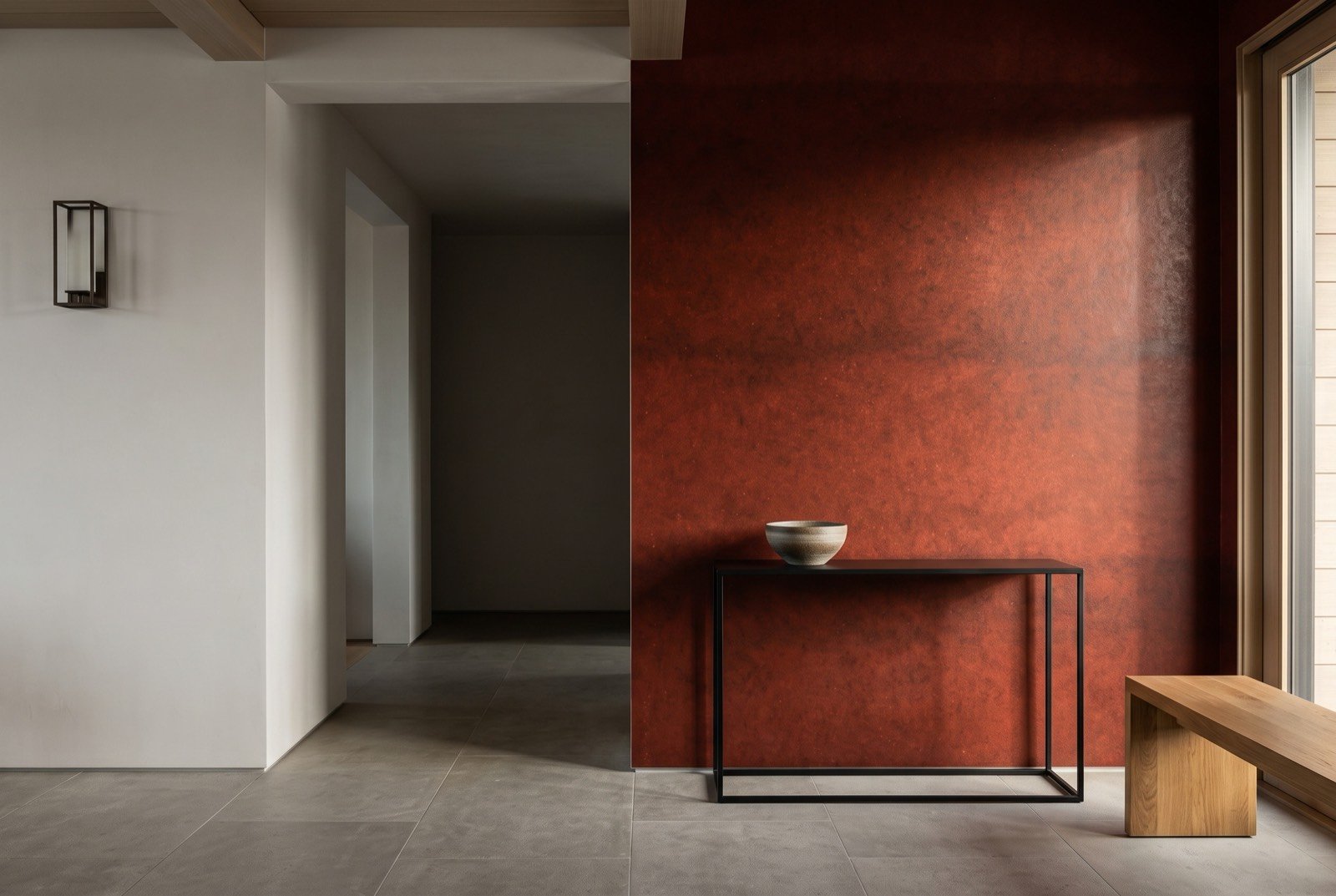
The dye runs through what followed. The Art Institute of Chicago holds Kyoto Evergreen, a furnishing fabric of 1989 designed by Maya Romanoff: rayon, a cut solid velvet, tie-dyed. Weathered Walls, which the house names among its first designs, is paper painted by hand with dyes in deep striations of colour, and the house likens it to fine lacquered leather.
Weathered Walls in Lacquered Rust, shown in an entry hall
Where it comes from
Maya Romanoff's headquarters, production studio, and Chicago flagship showroom are at 3435 Madison Street, Skokie, Illinois, about 1,230 miles from Park City. The pin on this map marks that address. The house states that its wallcoverings are handcrafted in that studio and in its mills abroad. It names no mill town, so the map plots the studio and nothing else. By the collection pages, Beadazzled is handcrafted in the studio, Weathered Walls is hand-painted there, and Mother of Pearl and Ajiro Sunburst are finished there. The Precious Metals page states no place of manufacture.
The goods reach Utah through the house's showrooms and sales representatives, and standard products are made to order, in as little as three weeks by the house's figure. The last leg is ours. When the goods arrive, the crew reads the labels: rolls are graded from left to right and labelled on the back, and the guides warn that more yardage from the same dye lot may not be available. The Beadazzled guide asks that the material be installed within twelve weeks of receipt, and every guide asks that uninstalled material be stored dry, between 60°F and 85°F.
The savoir-faire
The house publishes no full step-by-step account of how Beadazzled is made. What it does say: the wallcovering is handcrafted in the Skokie studio with genuine glass beads on a non-woven paper backing, and each roll is graded from left to right and labelled on the back. Of Zen Kanso, a glass-bead collection it features today, it says more: tiny glass beads are encapsulated in a resilient compound, raked by hand across a non-woven ground, and coloured, all in the studio.
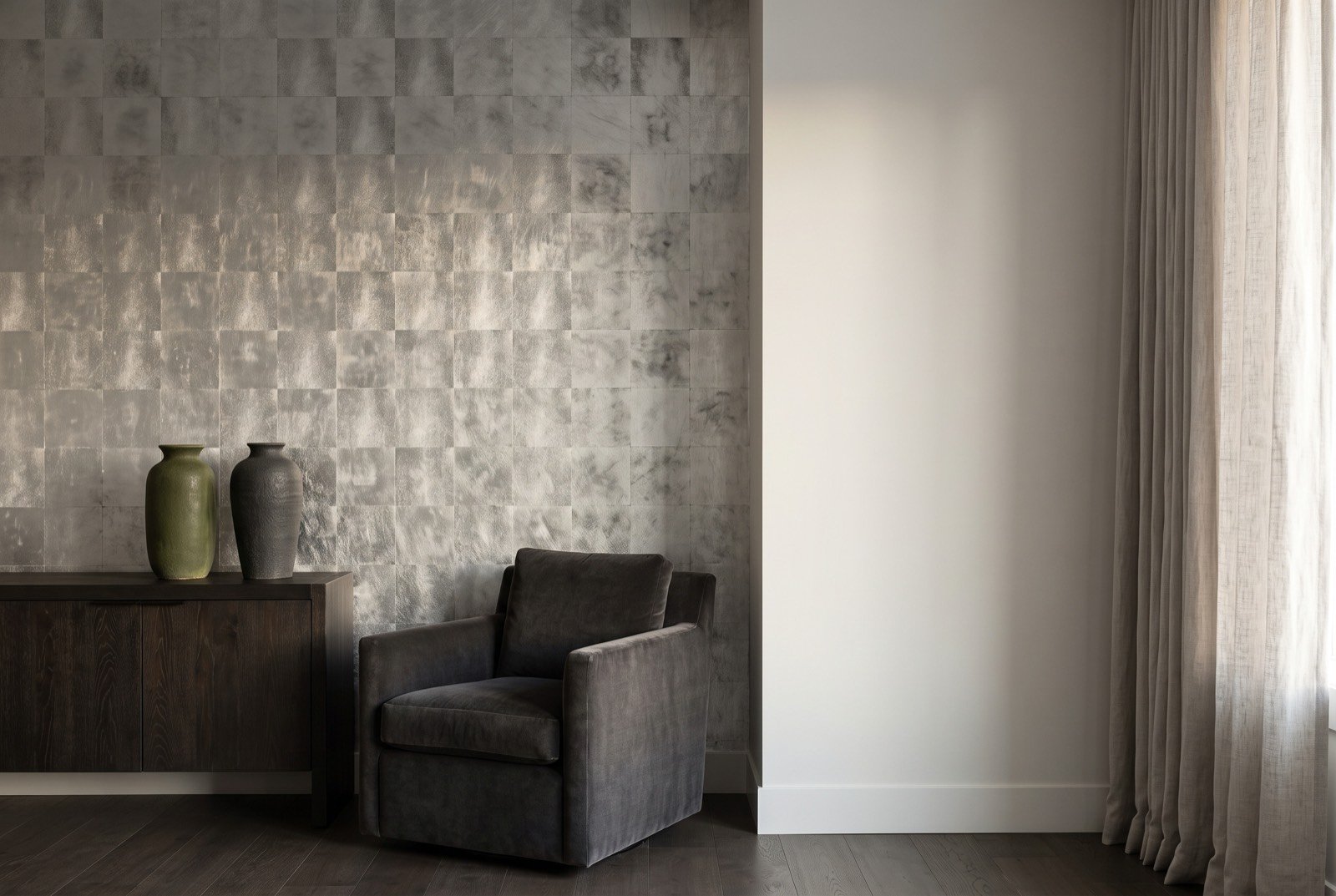
The other signatures follow the same logic of material and hand. Mother of Pearl is capiz shell, inlaid by hand in one-inch strips. Ajiro is micro-thin paulownia veneer, die-cut or laser-cut and inlaid on a paper backing. In Precious Metals the metal leaf is applied to paper with chopsticks and sealed under a top coat. The house says its artisans typically work in teams of two or three, and that a wallcovering generally takes one to three days to produce. For the installer the lesson is on the surface: nothing here is folded, creased, or scrubbed.
Precious Metals in Champagne Silver, shown in a lounge
What arrives on the job
One house, five constructions on this page alone: glass bead, shell tile, wood veneer, metal leaf, and hand-painted paper. The house publishes a separate installation guide for each collection, and the guides differ because the materials differ. Adhesive, trimming, seam method, and relaxing time are set product by product. There is no single Maya Romanoff method, and the crew does not bring one.
 01
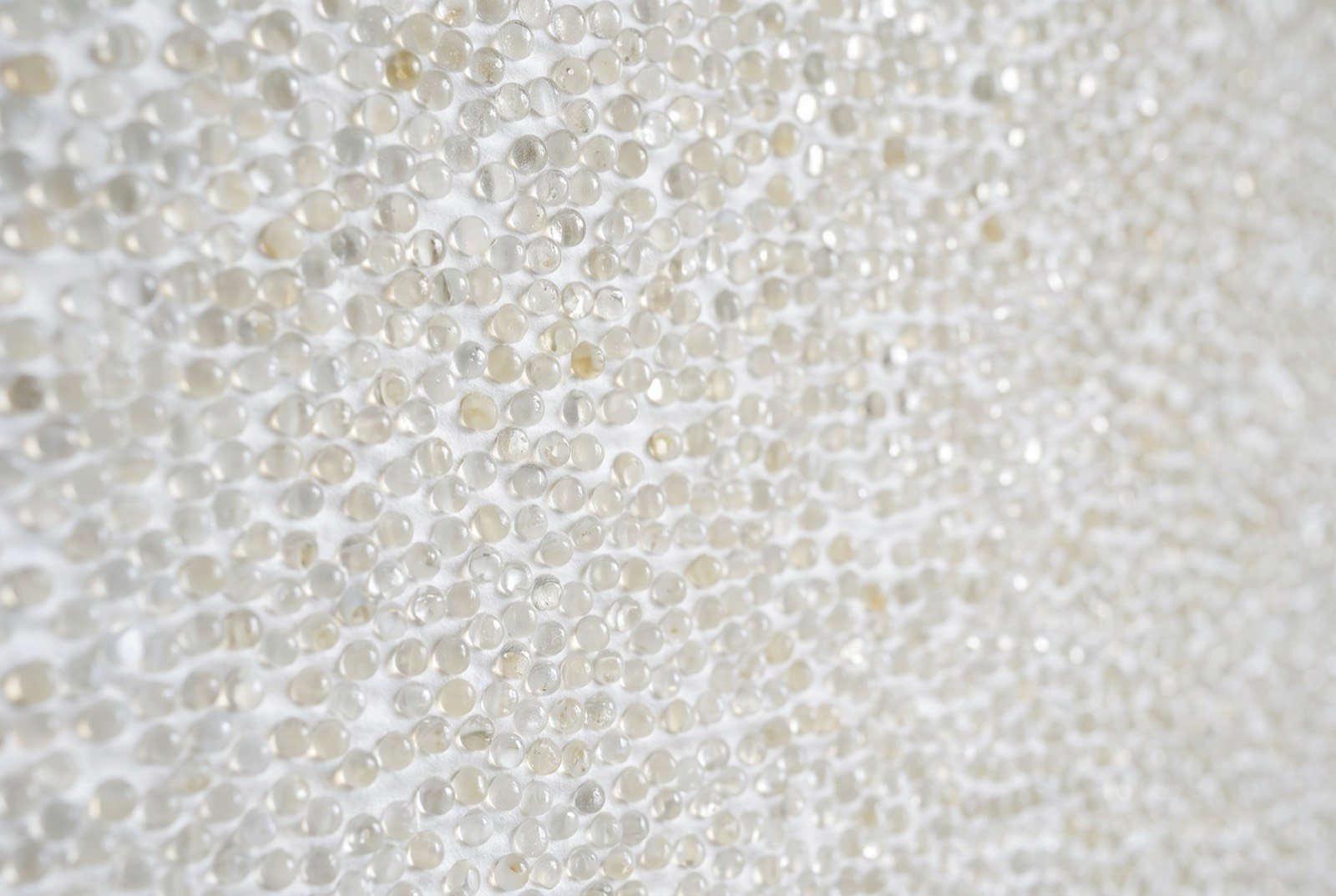
Glass bead
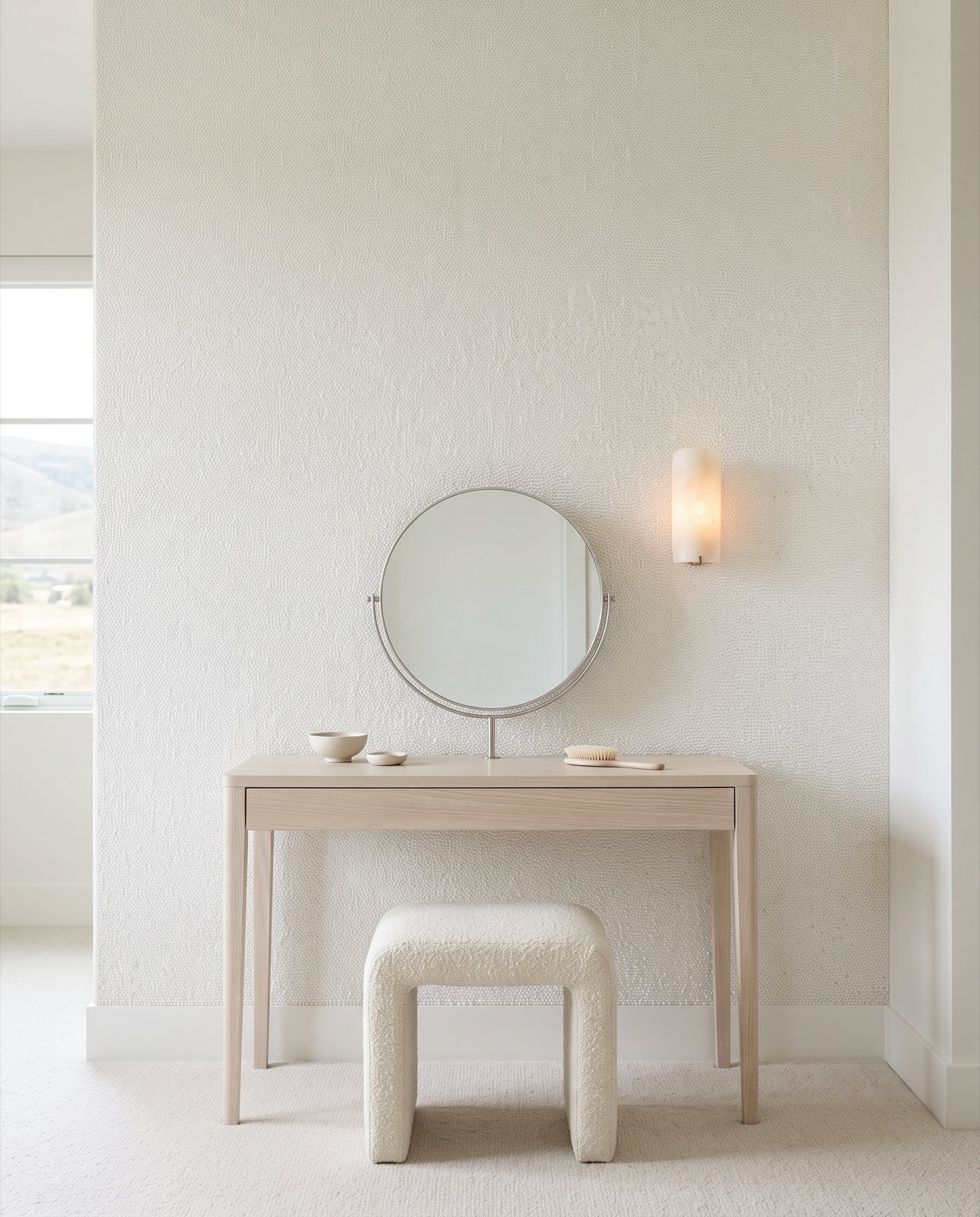
Pre-trimmed, about 28.5 in wide, in 3 yd rolls. The wall is pasted first, then the back of the roll. Never double-cut on the wall, and the house says the seams will show.
 02
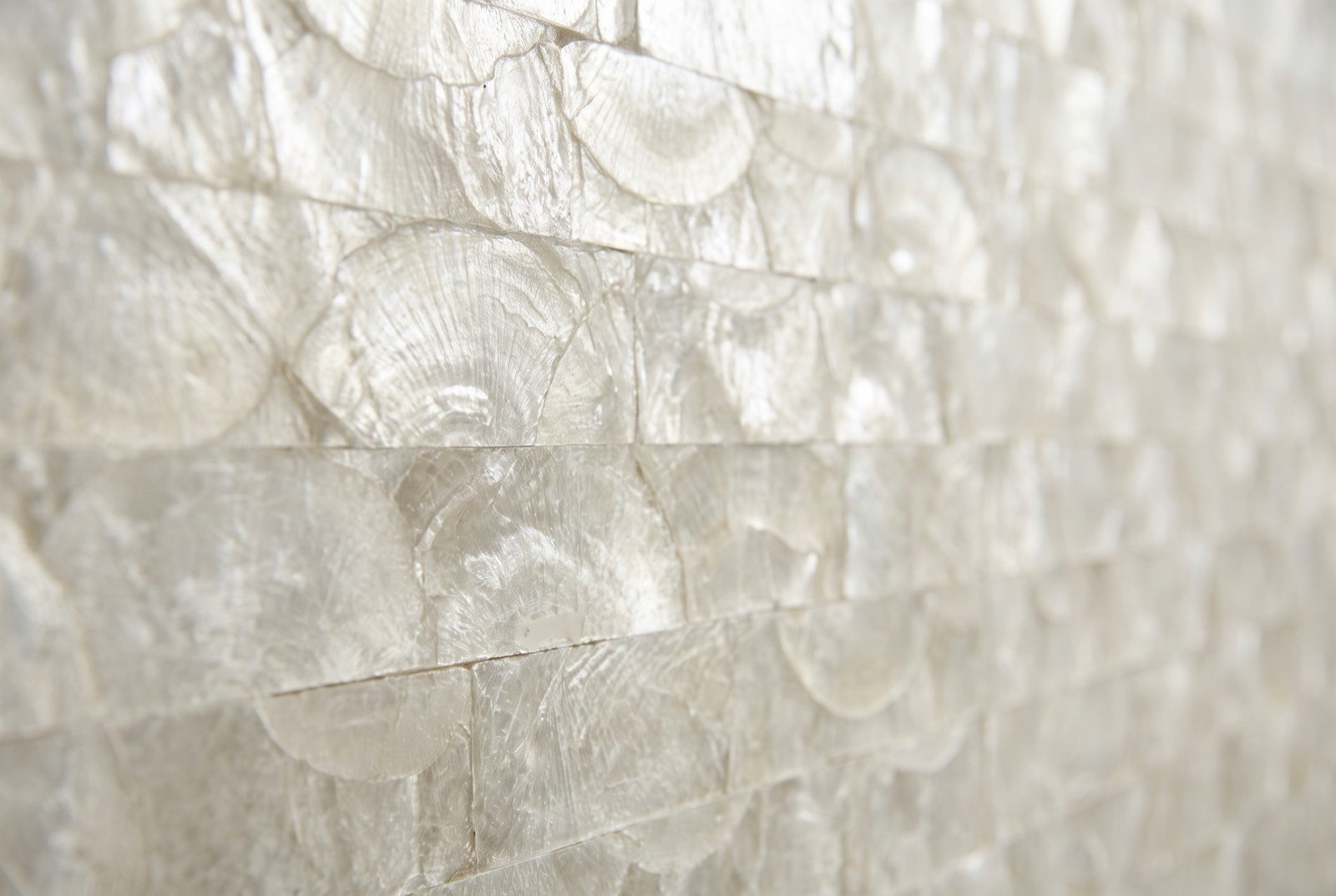
Shell tile
Tiles about 24 in by 12 in, pre-trimmed. The back of each tile is pasted and relaxes for about two minutes. The guide recommends laying them in brick fashion.
 03
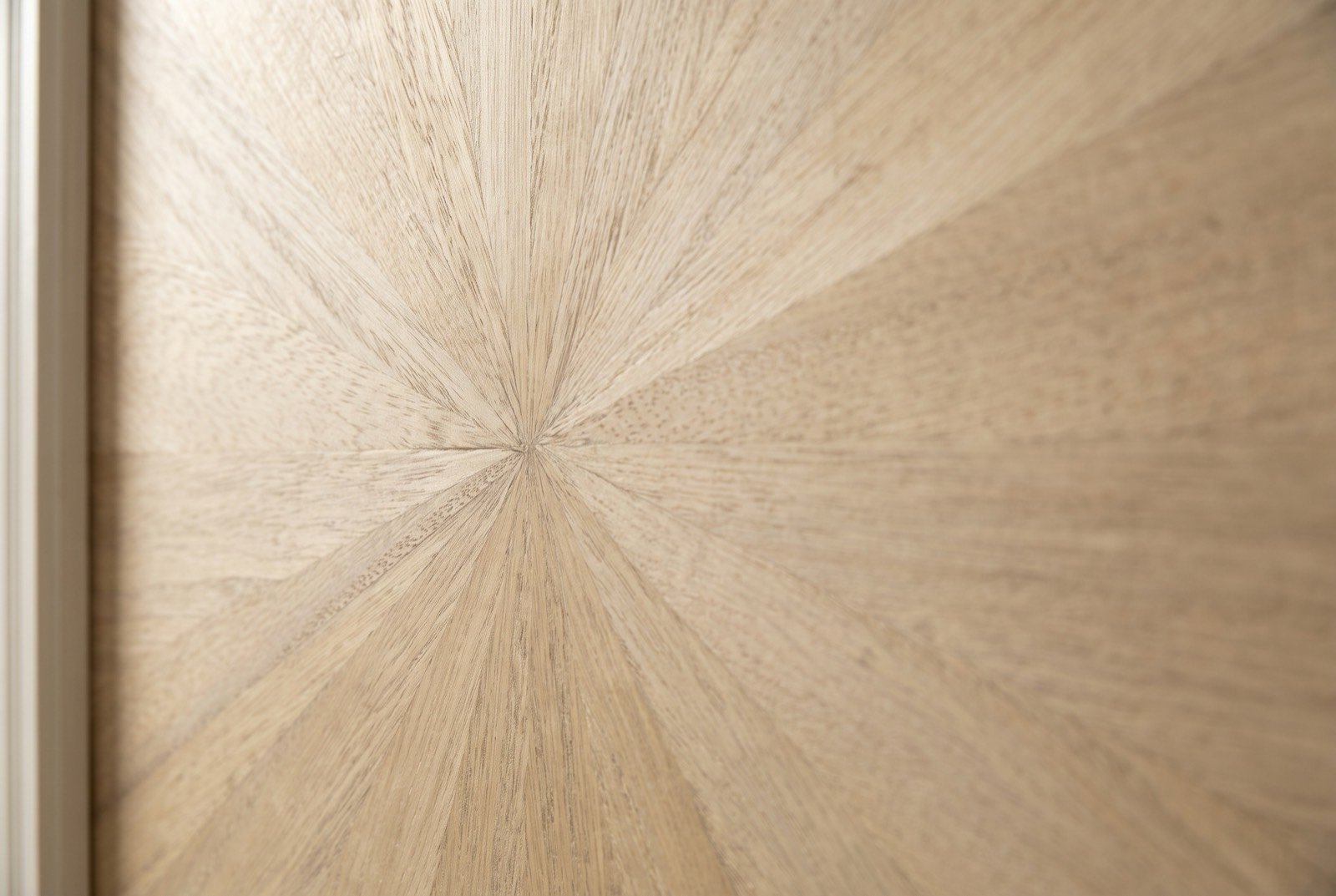
Wood veneer
Untrimmed: the factory edge is not for seaming. Face and back are dampened and left to relax, then the roll is table trimmed or double-cut on the wall.
The six guides read for this page share a short list of rules. Each asks that nothing be installed until it has been read. The room is held near 70°F at 50 to 55 per cent relative humidity, the wall is completely dry and free of sealing primer, the wallcovering is never folded or creased, and each cut takes a new single-edge razor blade. Paste on the face is wiped at once with a soft, damp cloth, never scrubbed. The goods are inspected as they go up: the house makes no allowance after three drops of a roll product are installed, or after four tiles of Mother of Pearl.
What they are known for
Six from one catalogue. The guide that ships with the goods decides the adhesive, the trimming, and the seam.
| Line | Material | Backing | Rooms | At the wall |
|---|---|---|---|---|
| Beadazzled | Genuine glass beads, handcrafted in the Skokie studio. The house calls it the first of its kind. | Non-woven paper | Dining rooms, dressing rooms, ceilings | Pre-trimmed at about 28.5 in (72.4 cm). Adhesive MR-RA-838 or comparable, on a pre-pasted wall. Never double-cut on the wall, never reverse hung. A ceiling takes a two-person team. |
| Mother of Pearl | Capiz shell, inlaid by hand in one-inch strips. Tiles about 24 in by 12 in (61 by 30.5 cm). | Non-woven paper | Primary bedrooms, dining rooms | Adhesive MR-RA-555 or comparable on the back of the tile. Laid in brick fashion. Directional, never reverse hung. |
| Ajiro Sunburst | Paulownia wood veneer, inlaid by hand, in 15 in or 18 in sunbursts. | Non-woven paper | Studies, bedrooms, columns | Face and back dampened before pasting. Table trimmed or double-cut on the wall. Adhesive MR-RA-838 or comparable. The side match is approximate. |
| Precious Metals | Metal leaf, applied by hand to paper and sealed under a top coat. | Paper | Dining rooms, lounges | The house strongly recommends a non-woven wall liner. About 1 in is table trimmed from each edge. Adhesive MR-RA-888 or comparable. |
| Weathered Walls | Paper painted by hand with dyes in the Skokie studio. | No additional backing | Entry halls, libraries | Lining paper recommended. Table trimmed about 1.5 in per edge, or double-cut. Directional, no side match. The relaxing time is set by series. |
| Palazzo Plaster Malta | A compound trowelled by hand onto paper for a Venetian plaster finish. Released in May 2026. | Non-woven paper | Living rooms, stair halls | Table trimmed or double-cut on the wall. Adhesive MR-RA-838 or comparable, relaxing about seven minutes. Hung straight or at random, never reversed. |
Reading the label
A Maya Romanoff item number is a run of groups joined by hyphens. What follows is read from the house's product pages and its care guide on 30 September 2026. Every item on the site begins MR, and so do the house's own adhesives. The letters after it are the series, and the series names the collection: the care guide prints the key, with BD for Beadazzled, MP for Mother of Pearl, AS for Ajiro Sunburst, PM for Precious Metals, and B-37 and W-37 for Weathered Walls. The installation guides are titled by the same code.
The number after the series is the colour, and it can carry across collections: 1519 is Bianca in Beadazzled, and 1554 is Metallic Taupe in both Beadazzled and Geode. A letter may follow the number for a finish variant, as MR-AS-3604 is Maple and MR-AS-3604-X is Polished Maple. The house does not publish what those letters stand for, and we do not guess. That is why we ask for the full item number, not the pattern name, before a quantity is derived: the series decides which guide the crew reads.
If you are new to the house
Designers and homeowners who want a wall made of a material and not of a print. The house describes its artisans working glass beads, gold leaf, seashells, and wood with pigments and dyes, and its Skokie studio colours many of its handcrafted lines to order.
At the house's two flagship showrooms: 3435 Madison Street in Skokie, Illinois, where it offers tours of the studio, and the New York Design Center at 200 Lexington Avenue. Samples are requested through the collection pages on the house's site. See a sample in the room's own light before the order: beads, shell, and leaf change with every lamp.
Through the house's showrooms and sales representatives, which its site lists by region. A homeowner who is not working with a designer is referred to a retailer named on the house's consumer page. Goods are sold as rolls, tiles, or panels, in set increments. Mancini does not sell or source it; send us the item number and our work begins when the goods arrive.
Bought through a showroom, a representative, or a designer: the same measurement, the same preparation, and the same crew.
The wall, before and after
Drag the line. The guides ask for drywall that is completely dry and free of sealing primer: no eggshell, satin, or semi-gloss paint beneath the wallcovering.
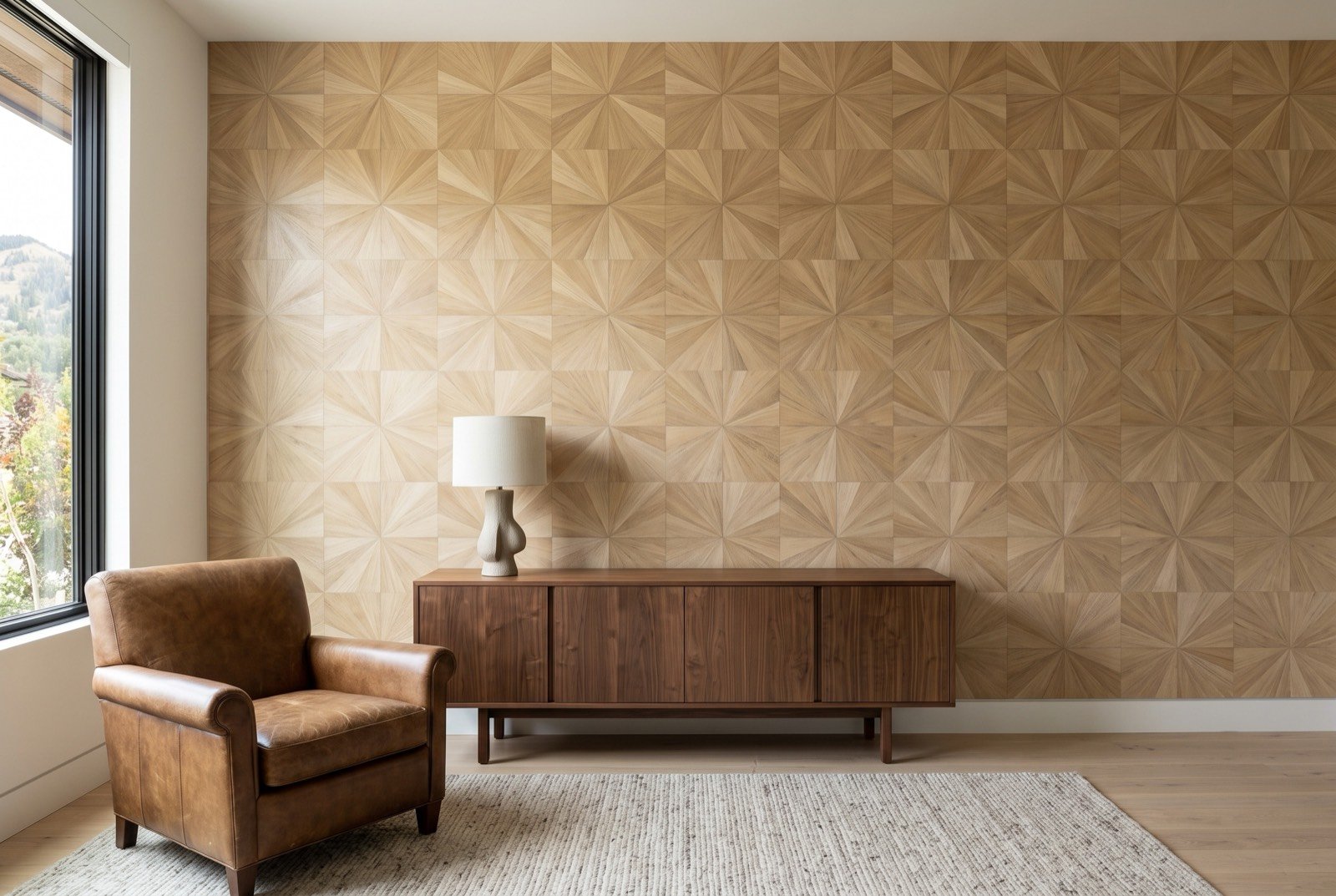
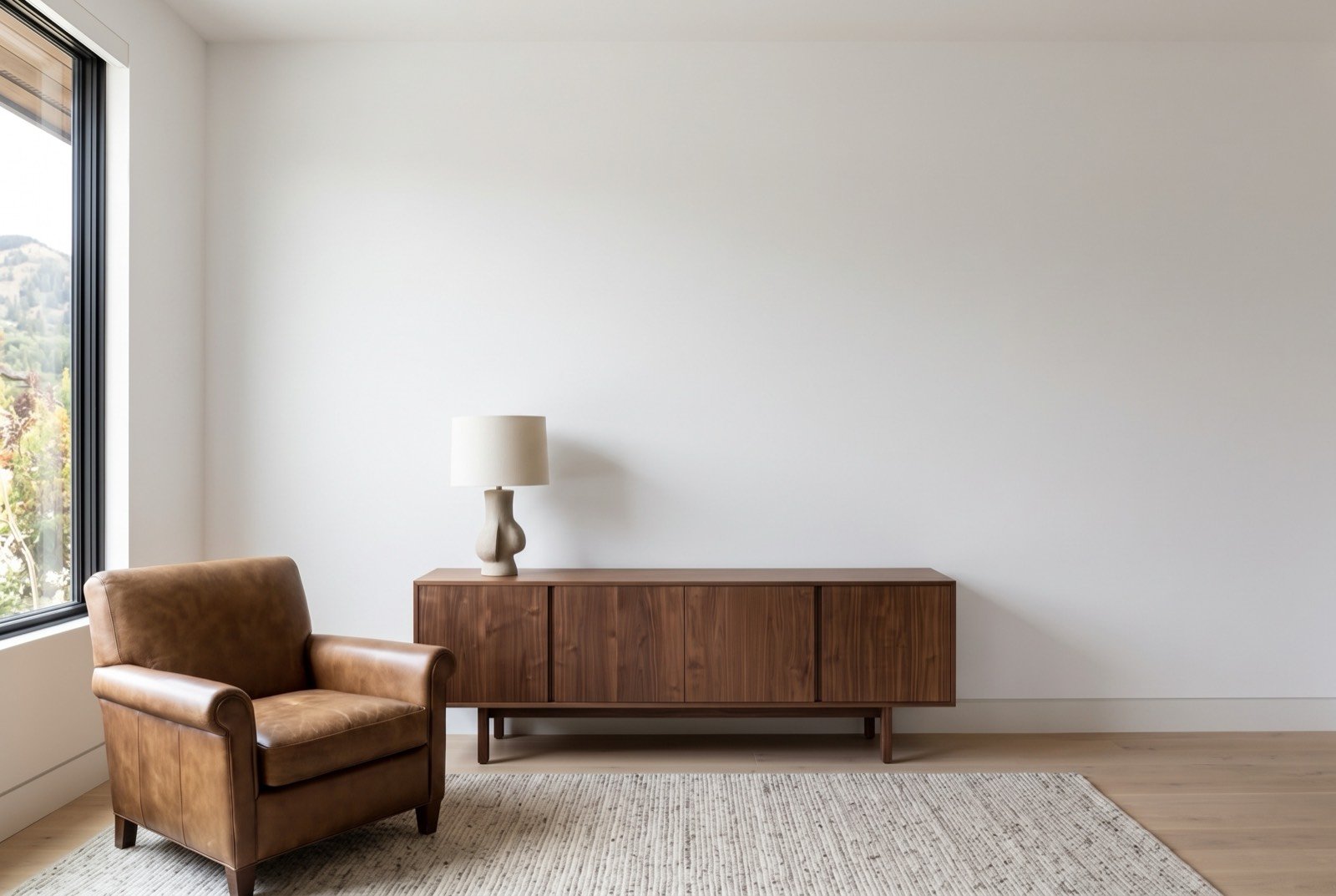
Ajiro Sunburst in Maple, shown in a study
Installed to their specification
Maya Romanoff publishes an installation guide for each collection, posts it on the collection's page, and wraps the instructions with every roll it ships. Each line below names the product its instruction belongs to.
The line that decides most on a Maya Romanoff job is the room. Every guide read for this page asks for a climate-controlled space at an approximately constant 70°F and 50 to 55 per cent relative humidity, for walls that are completely dry, and for finished lighting: the house allows no claim where the lighting in the room is not fully installed. The guides are written for drywall, and ask that the house's client services be consulted before any other surface. The wall arrives prepared to the guide, and the crew confirms it before the first roll is opened.
The second is the clock. The guides give each product its own relaxing time: five to eight minutes for Beadazzled, about two for a Mother of Pearl tile, five to seven for Ajiro Sunburst, after a dampened rest of fifteen to twenty minutes, five to ten for Precious Metals, and eighteen to twenty-two for the B-37 series of Weathered Walls, which is pasted twice. The quantity on our proposal comes from the measurement, the roll's trimmed width, and the roll's length, line by line.
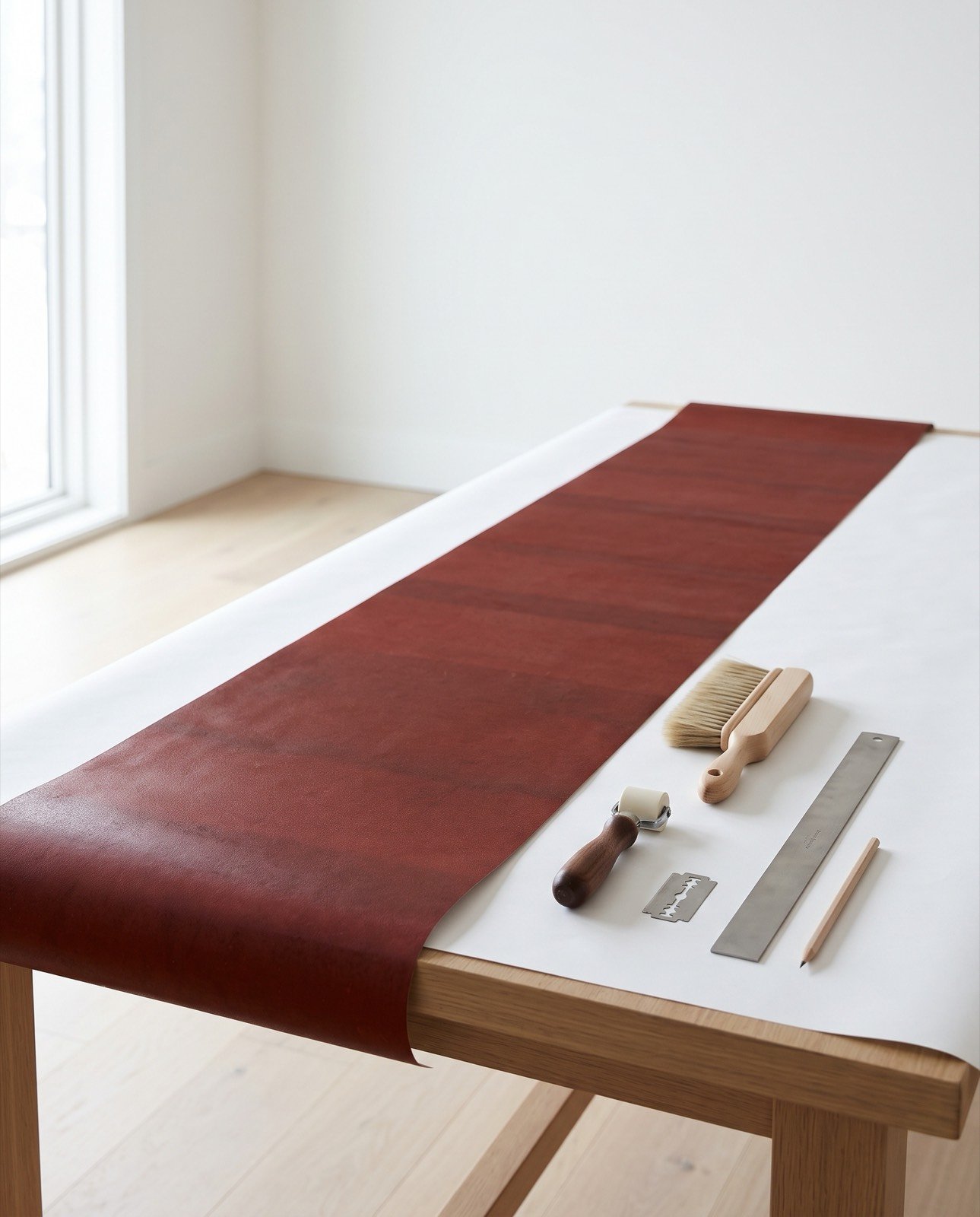
The Mancini standard
Whichever house is on the roll, the work follows one sequence. It is the reason the wall reads as the designer drew it.
A member of our team walks the space and measures every wall. Fractions of an inch round up, heights round up to the next half-foot, and each wall gains three inches per side.
The roll count comes from the measurement, the repeat, and the roll's yield. The written proposal shows the arithmetic, in metric and imperial.
The installation guide, the grading label, and the dye lot are read before the first cut. One room, one dye lot.
Four crews and twelve trained installers. The match is set at the table, every seam is made as the house's guide for that product directs, and the rolls rest in the room before anything is cut.
For designers who specify it
Glass bead for a dining room, shell for a bedroom wall, veneer for a study: the specification belongs to the designer or the homeowner, and the installation follows the house's guide for that product.
Maya Romanoff is sold through its showrooms and sales representatives. Whichever way the goods are ordered, our part is the same: a measurement in person, a written proposal with the quantity shown, and a crew that reads the guide before the first cut. We name a designer here only with their written consent.
Our work
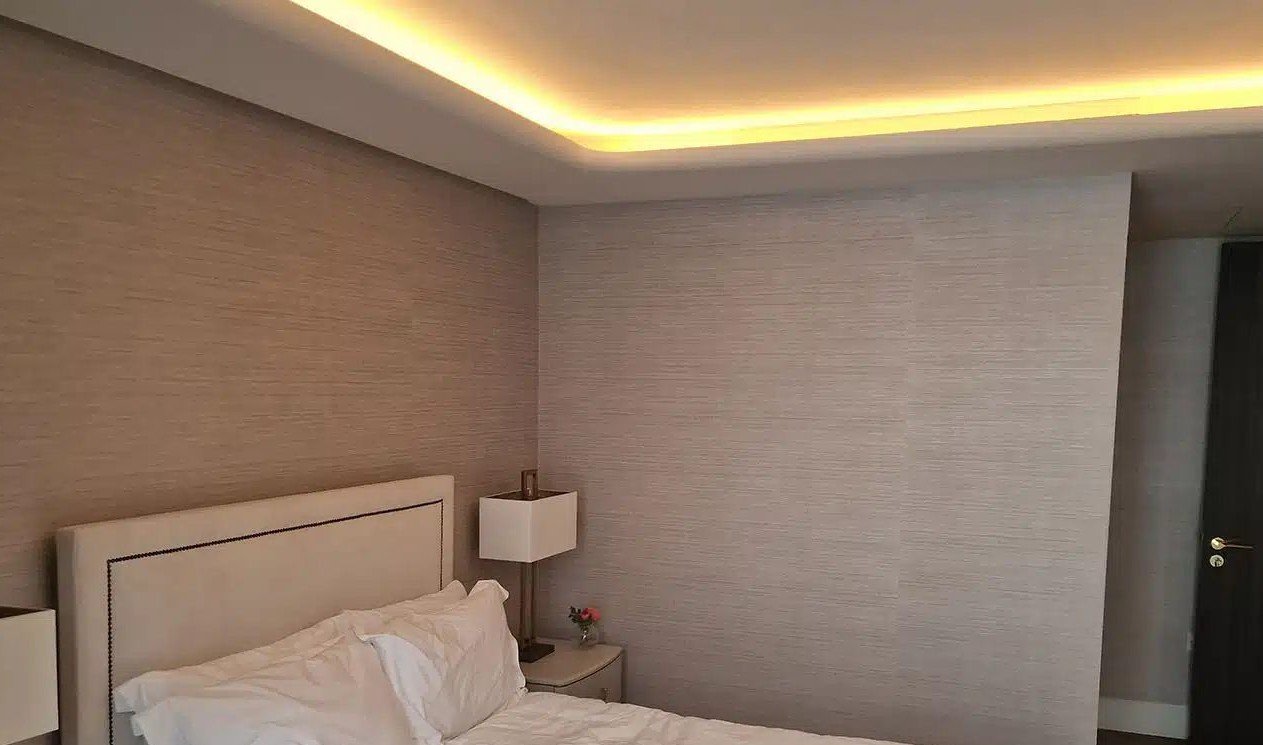
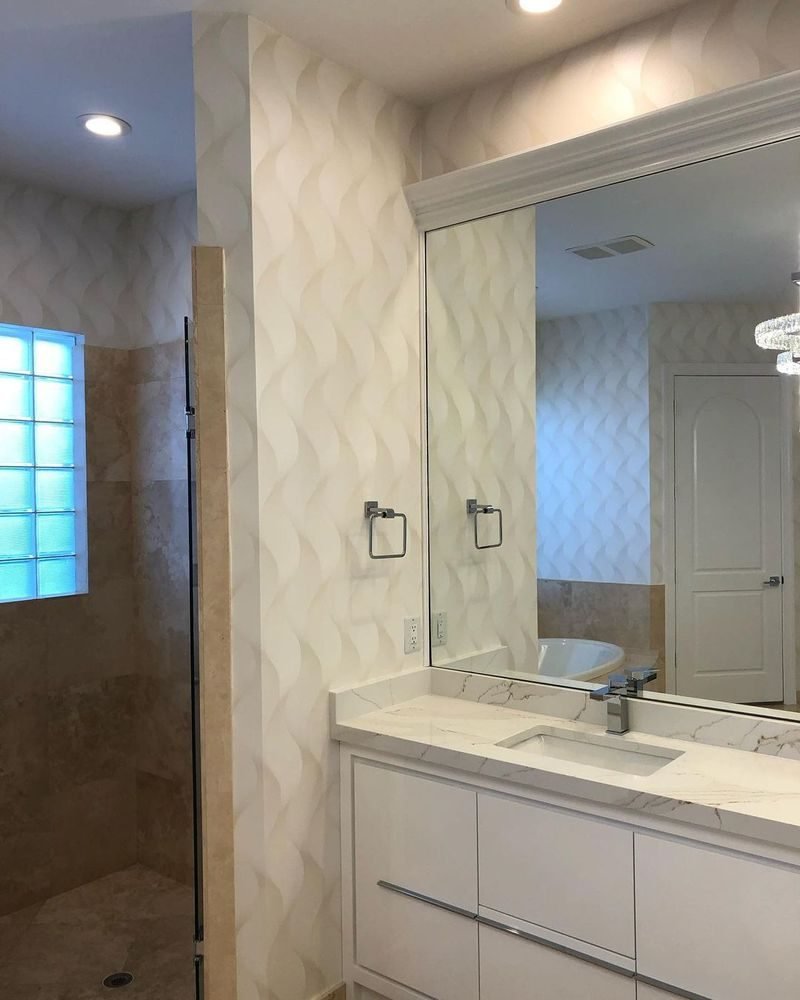
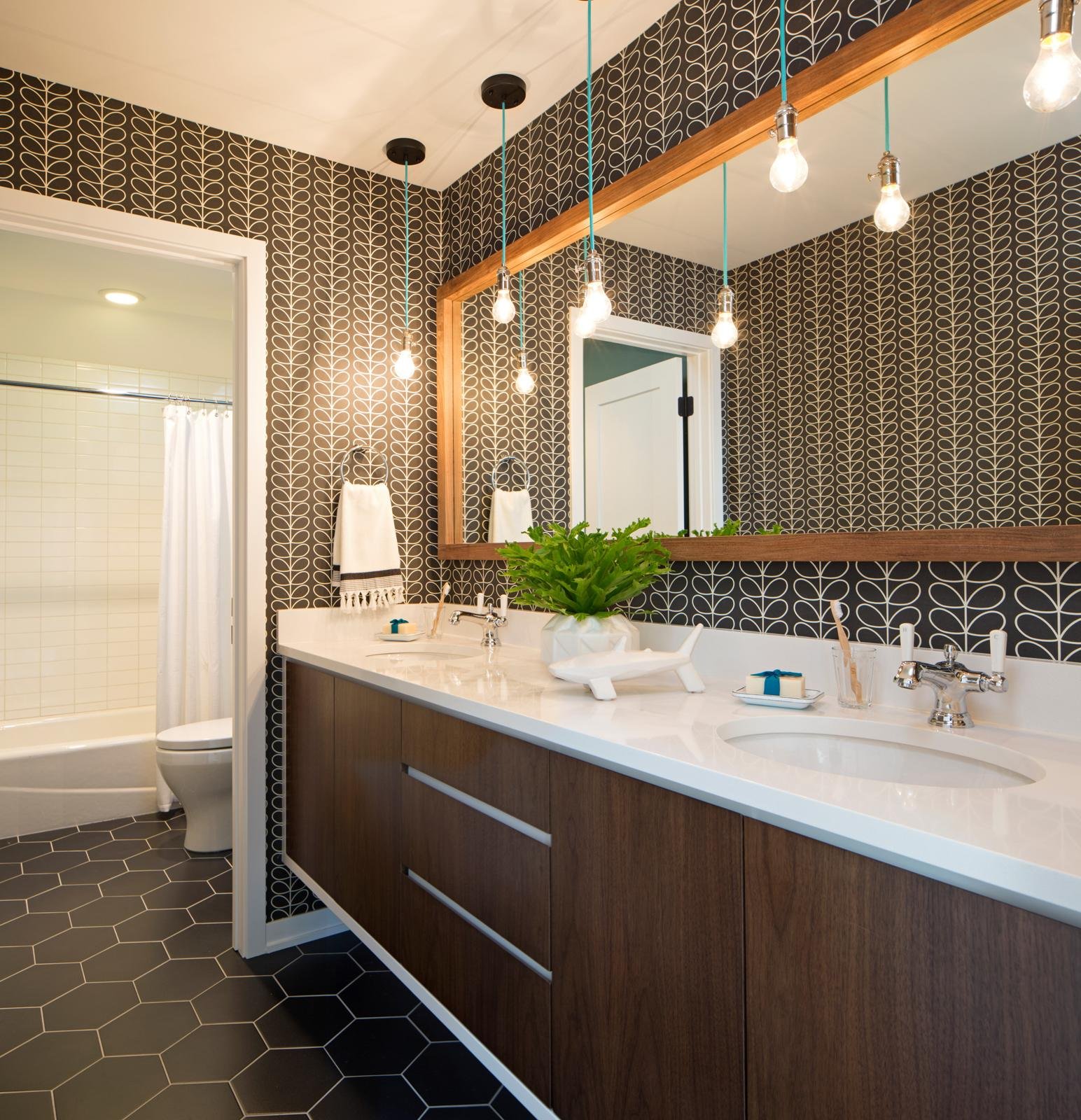
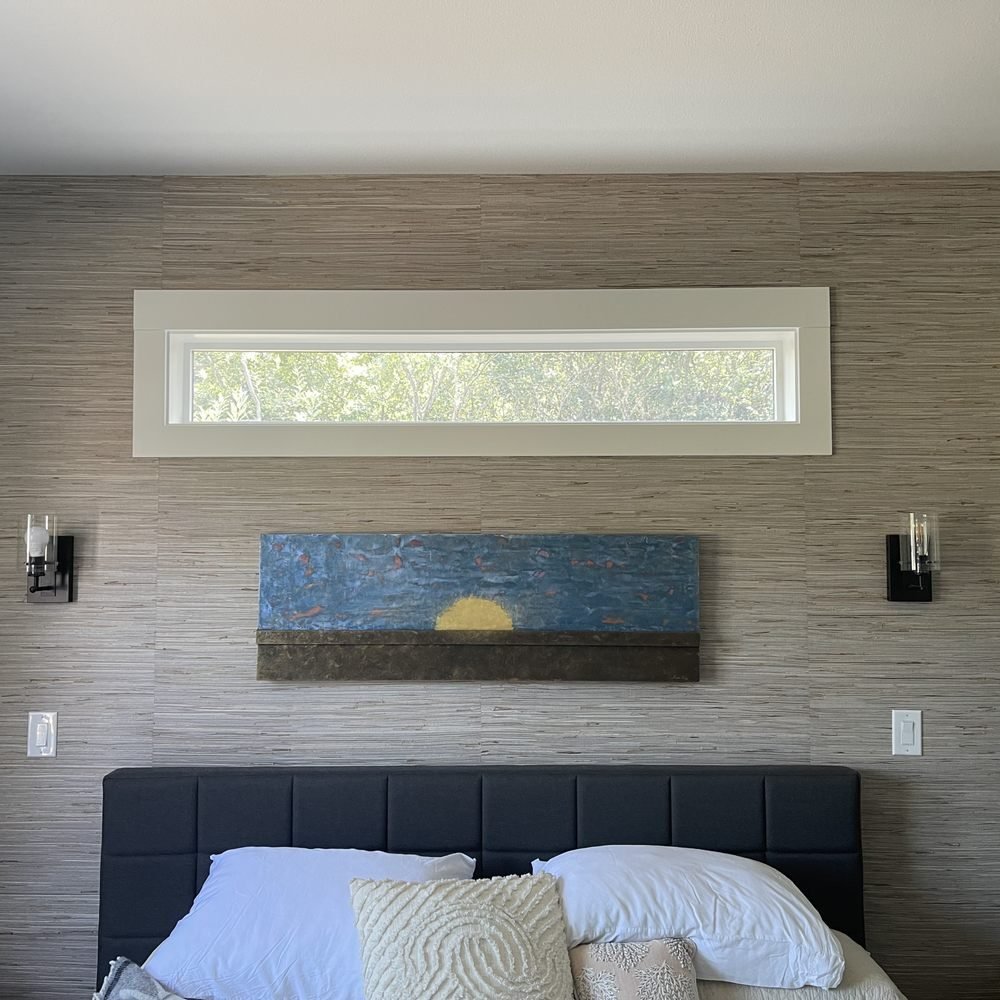
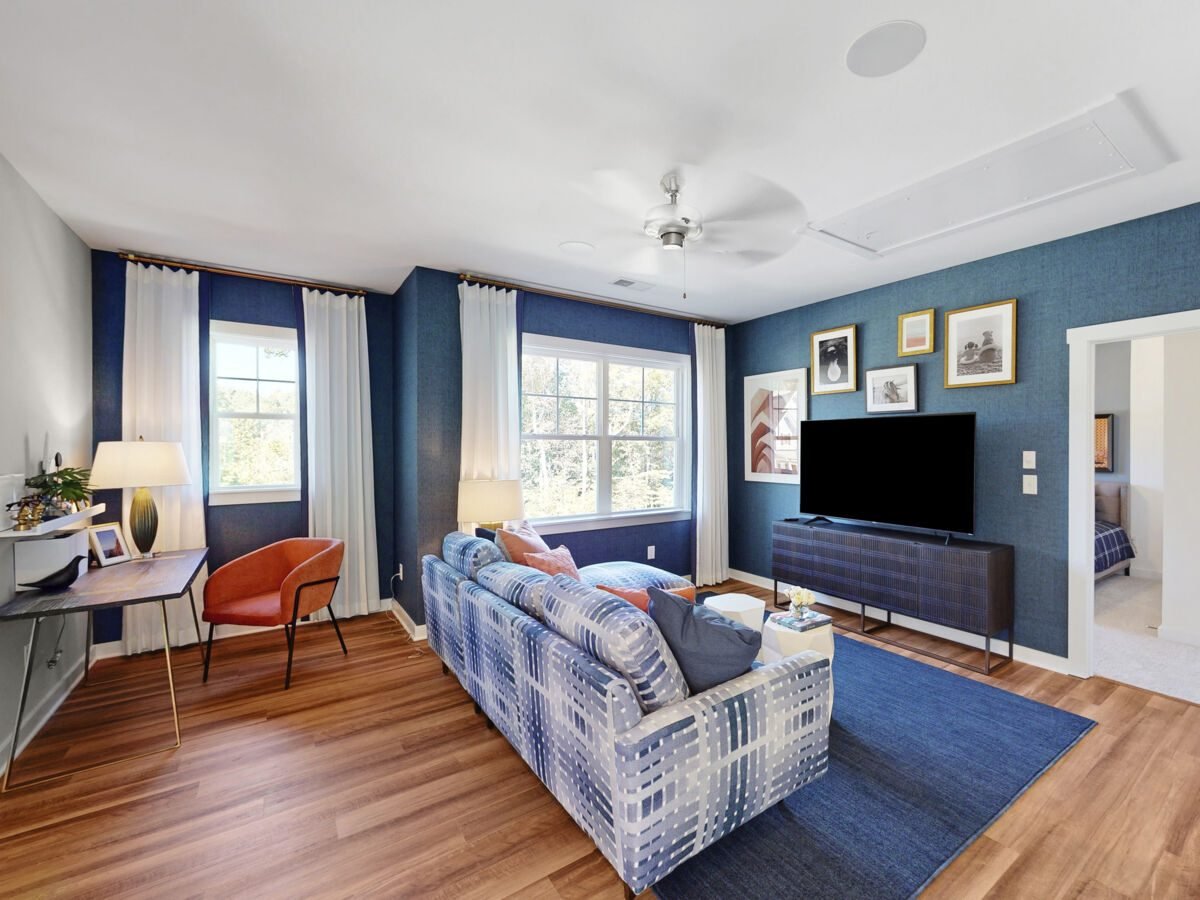
Glass beads across a dressing room, shell along a dining room wall, veneer sunbursts in a study: whichever Maya Romanoff wallcovering arrives, the guide the house wraps with it decides how it is hung.
Materials we install from Maya Romanoff
The construction on the label tells us which set of rules to bring. Each of these pages goes deeper on the material itself.
Glass bead, capiz shell, and wood veneer: Beadazzled, Mother of Pearl, and Ajiro. Each has its own adhesive and its own seam.
Material pagePrecious Metals: metal leaf on paper. The house strongly recommends a wall liner, and warns that a crease will not come out once the roll is hung.
Material pageWeathered Walls: paper painted by hand with dyes. Directional, no side match, and a relaxing time set by series.
Material pageThe house keeps more than 100 Type II vinyl items in stock, by its own count. The guide for the line is read before anything is cut.
Material pageThe wall the guides assume: drywall, completely dry, and free of sealing primer and of eggshell, satin, or semi-gloss paint.
Material pageDesign house and manufacturer names referenced on this page are the property of their respective owners. They identify materials we install and completed project history. Mancini Wallpapers holds no partnership, certification, or endorsement from any house named, and installs every product to the instructions its manufacturer publishes.


