
House · Installed in Park City and across Utah
Mancini Wallpapers is a wallcovering installation contractor headquartered in Park City, Utah. We install Gracie wallpaper, the hand-painted scenic panels, the silk and tea-leaf grounds, and the printed panels among them, across Park City, Deer Valley, the Heber Valley, and the Salt Lake Valley, in the numbered order the panels carry and to the instructions that arrive with the order. We hold no partnership or certification from Gracie.
The house
Gracie was founded in New York in 1898 and is still owned by the Gracie family; its contact page lists the fourth, fifth, and sixth generations at work today. The house describes what it offers as hand-painted scenics, antiques, and lacquer, and its line on the wallpaper is short: each room is a unique work of art.
The hand-painted panels are made in China, by a studio the family has worked with for over fifty years, and the house holds its stock and keeps its flagship showroom in New York. The collection today runs from Scenic Florals, Landscapes, and Japanese Designs to silk, tea-leaf, and papier chinois grounds, a Modern Collection, the printed Gracie Prints, and Paradiso, a vinyl.
What arrives on a job is a run of numbered panels or a roll, three feet wide. The house publishes trimming notes for some of its goods and no hanging instructions for its hand-painted papers. When the panels arrive, the crew reads the instructions that arrive with the order before anything is trimmed, and the sequence before the first panel is pasted.
Since 1898
Gracie dates itself to 1898 in New York City. By the 1920s the firm had widened its offering to Chinese and Japanese furniture, screens, and porcelain, and in 1927, by the account the family gave the trade press, it began working with a hand-painted wallpaper studio in Beijing. The house describes itself as the first company to import hand-painted wallpapers to the United States since the 1700s.
The orders are part of the record. The house's own history shows an original purchase order of 1938 for Elsie de Wolfe, and in 1943 Gracie was hired to take down the wallpaper in Condé Nast's apartment. Brian Gracie, now chairman, bought the business in the 1970s, and on 10 September 2024 Rizzoli published The Art of Gracie.
A founding, a studio, an order, a ballroom, a purchase, and a book
A curiosity from the archive
In 1943 Gracie was hired to dismantle the ornate wallpaper in Condé Nast's apartment. About seventy years later, by the house's account, the family found a few of the remaining panels still preserved in storage, and they now hang in Michael S. Smith's dining room. One design in the collection today, Ming Garden, SY-705, is based on that paper.
The house has dealt in antique papers as well as painting new ones. In the 1950s it bought the panels of Ashburnham Place in East Sussex, which went on to the Lee Drawing Room at Blair House; SY-905 reproduces them. An eighteenth-century paper it sourced in the 1960s is still in the Garden Room of Winfield House in London, and SY-900 reproduces that one.
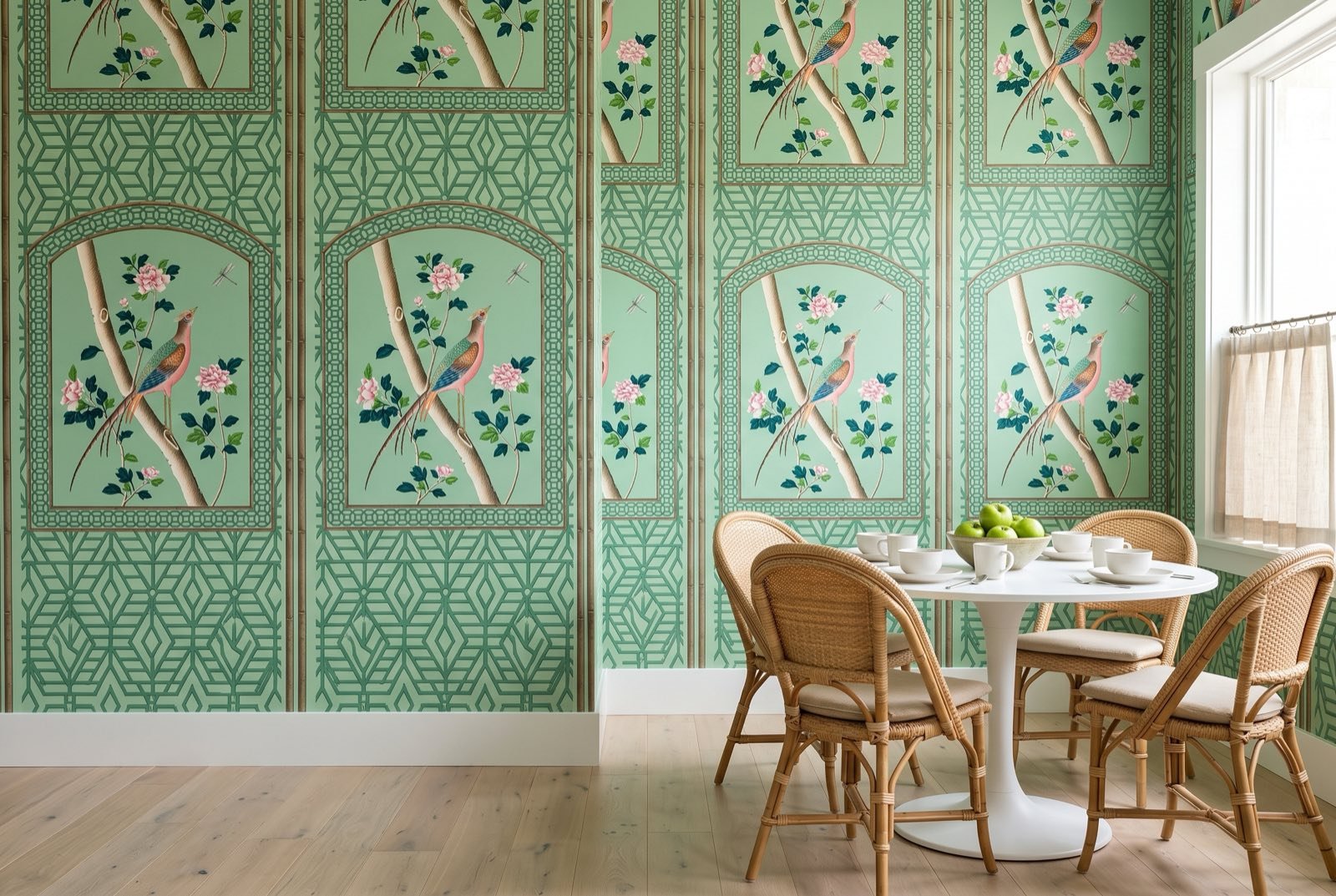
Paradiso Birds in green, shown in a breakfast room
Where it comes from
Gracie's hand-painted panels are made in China. The house says each panel is still crafted by hand there, by the same studio the family has worked with for over fifty years. It does not publish the studio's city, so this map does not plot it. The pin marks the company's address at 47-25 34th Street in Long Island City, New York, the point its shop delivers from, about 1,950 miles from Park City.
The house keeps three showrooms of its own, in New York, Dallas, and Los Angeles, and lists six representatives, from Chicago to Singapore. Stock designs are held in New York, and the shop ships anywhere in the United States. The last leg is ours. When the panels arrive, the crew lays them out in their numbered order and reads every note in the order before anything is trimmed.
The savoir-faire
A Gracie scenic begins with a choice. The house invites a client to choose a design and a colour palette from the collection, or to customise one, and then a ground: silk, metallic tea leaf, or pieced paper, which it calls papier chinois and describes as designed to mimic the way wallpaper panels were made in the early eighteenth century. Samples come before the final design is approved, the family told Business of Home in 2025.
Then the panel is painted by hand in China. The same interview puts the work at about 80 to 120 hours a panel, taken in the order the commissions arrive. The finish is part of the craft: the house writes of rice paper wrinkled to give an aged effect and of glazes that build a patina. What reaches the wall is a run of numbered panels three feet wide. For the installer the lesson is in the surface: a painted face is handled clean, and paste never reaches it.
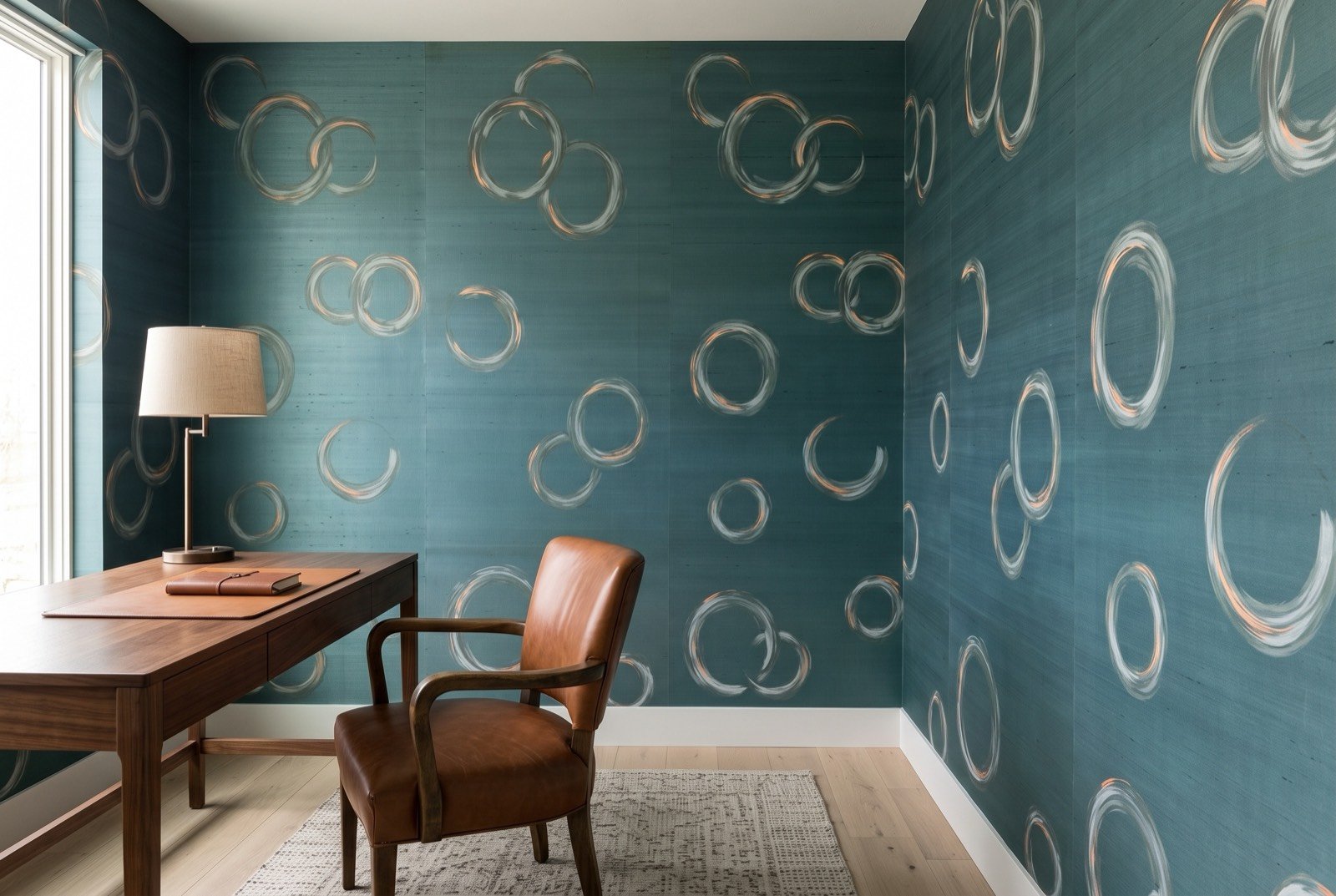
Emerald Rings, painted on emerald silk, shown in a study
What arrives on the job
Gracie ships three kinds of goods. The hand-painted scenics arrive as panels: the stock designs are 3 feet wide and 10 feet high, and the house's shop states that panels are trimmed and joined during installation. The grounds, papier chinois, silk, and tea leaf among them, are sold by the roll at 3 feet wide by 24 feet long. The printed lines are sold by the panel: Gracie Prints, printed from the house's own hand-painted artwork, and Paradiso, a vinyl with a printed trellis and hand-painted vignettes of birds and flowers.
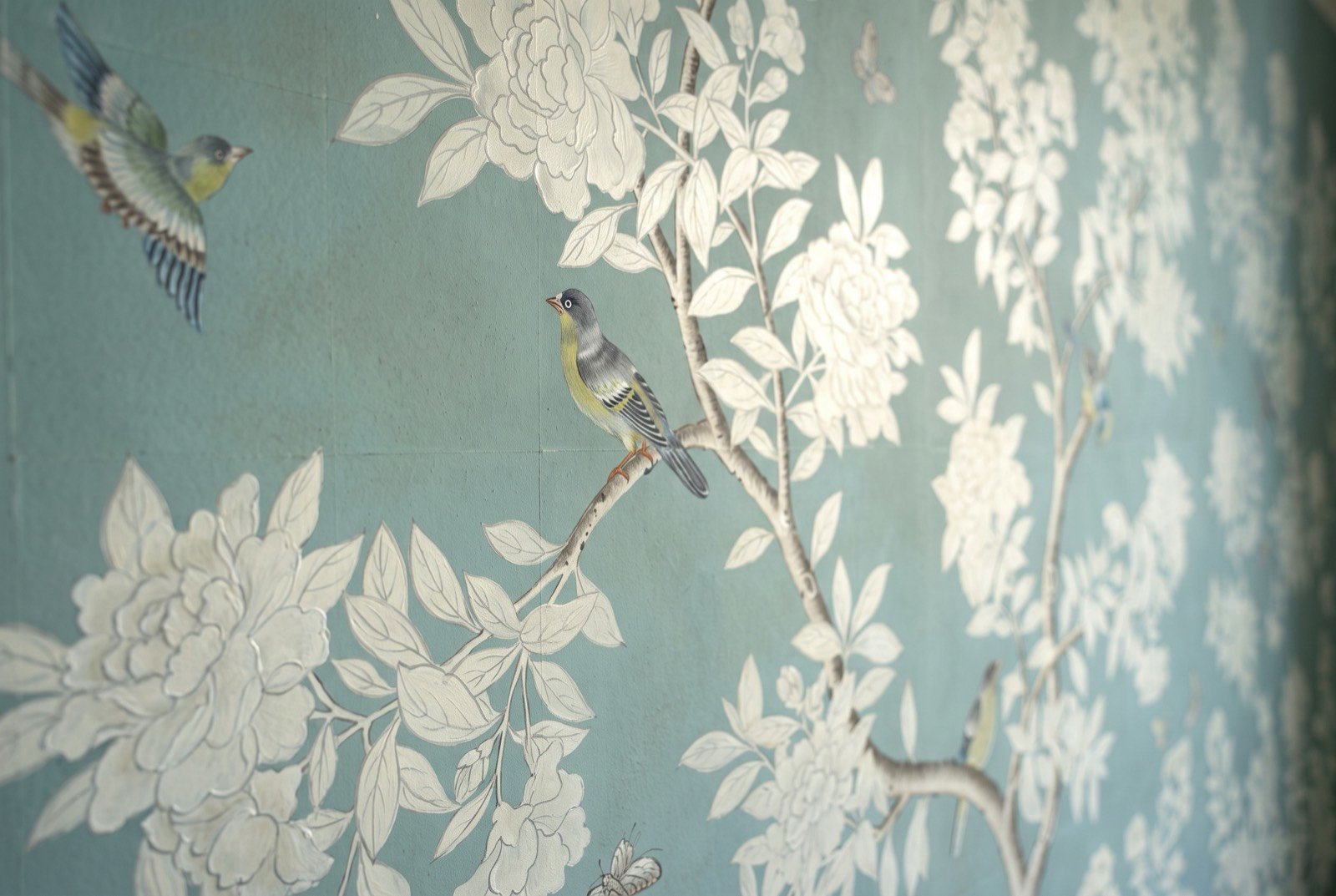 01
Pieced, antiqued paper
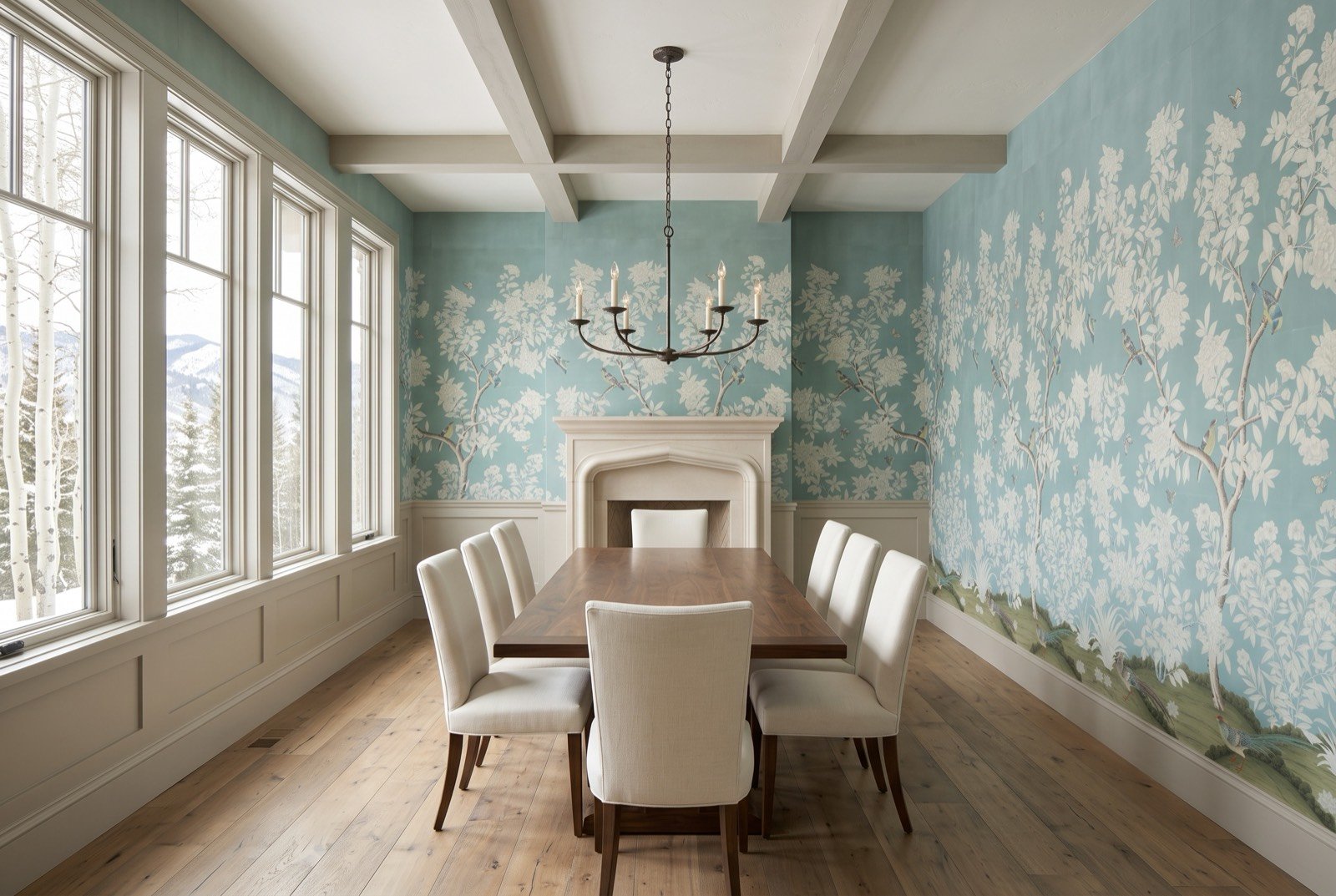
Hand-painted on a pieced and antiqued ground. Stock panels are 3 ft by 10 ft, and the painting stops at 7 ft 6 in, leaving plain ground above to use or discard.
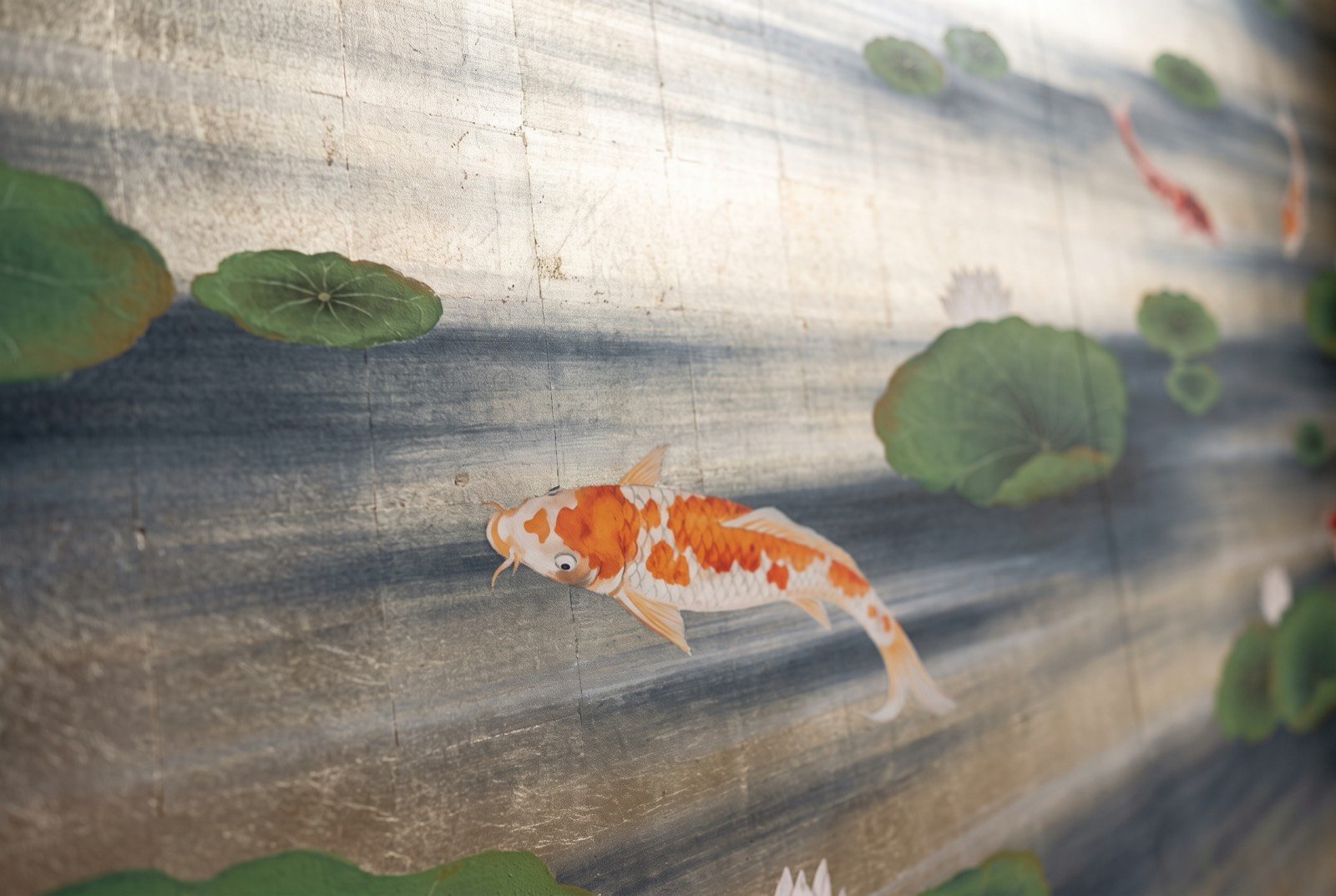 02
Metallic tea leaf
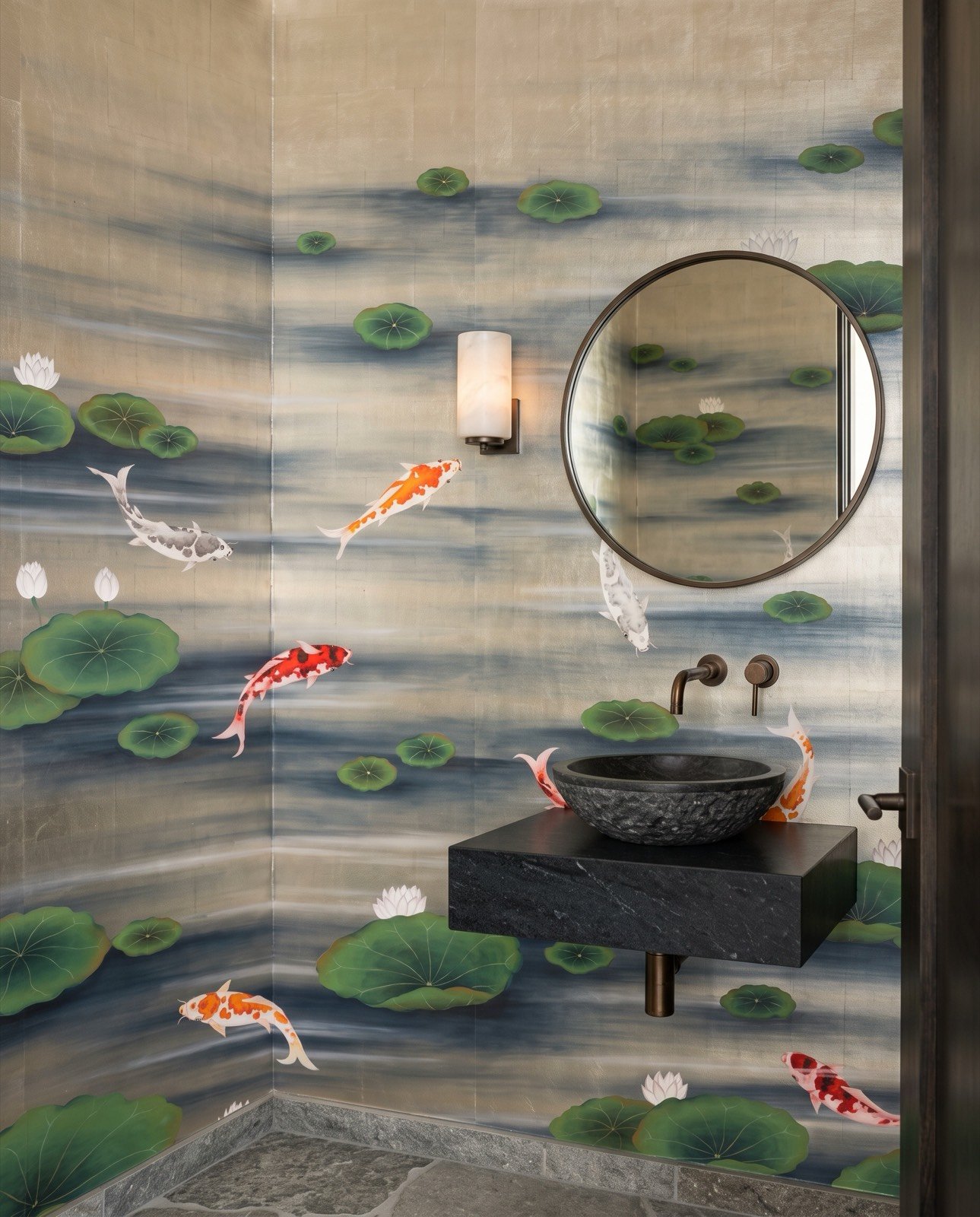
Hand-painted on silver tea leaf, antiqued. The house states that this mural design does not repeat, so every panel has one place on the wall.
 03
Silk, by the roll
Rings painted on emerald silk. Sold by the roll, 3 ft by 24 ft, with no repeat. The house notes that slubs are evident and inherent in its handmade silk paper.
The house publishes no hanging instructions for its hand-painted papers, its silks, or its tea-leaf grounds: no primer, no paste, and no seam method is stated on its site, its shop, or its tear sheets. What it does publish concerns trimming. Linda's Garden stock panels are intended to be trimmed all the way around, the Belton prints are designed to be trimmed from the top, and the Paradiso vinyl carries printed trim lines that bring a 44-inch panel to 36 inches. For everything else, the crew follows the instructions that arrive with the order.
What they are known for
Seven from one collection. The ground and the panel numbers decide the sequence, the trim, and the handling.
| Line | Material | Backing | Rooms | At the wall |
|---|---|---|---|---|
| Scenic Florals | Hampton Garden, SY-237: flowering trees, birds, and butterflies, painted by hand. | Pieced, antiqued paper. Backing not stated by the house. | Dining rooms, entry halls | Stock panels 3 ft by 10 ft. The painting stops at 7 ft 6 in; the plain ground above is used or discarded. |
| Japanese Designs | Koi Pond, SY-805: koi and lily pads, painted by hand. | Silver tea leaf, antiqued. Backing not stated by the house. | Powder rooms, studies | The house states the mural does not repeat. Panels go up in their numbered sequence. |
| Gracie Prints | Blue Belton, SYP-151: printed from the house's own hand-painted artwork. | Not stated by the house | Bedrooms, entry galleries | Panels 3 ft by 10 ft. Six panels make the full repeat, 18 ft wide, and panel 6 connects to panel 1. Height is trimmed from the top. |
| Modern Collection | Emerald Rings, MC-12: rings painted on emerald green silk. | Silk. The house describes its Silks line as paper-backed. | Studies, primary suites | Sold by the roll, 3 ft by 24 ft, with no repeat. |
| Paradiso | Paradiso Birds, SY-TREL-703: a printed trellis with hand-painted birds and flowers. | Vinyl | Breakfast rooms, garden rooms | A 44 in panel, trimmed to 36 in on the printed trim lines. Height is taken from the top, the bottom, or both. |
| Papier Chinois | Pieced paper grounds, PC numbers, designed to mimic early eighteenth-century panels. | Pieced paper | Any room a scenic is painted for | Sold by the roll, 3 ft by 24 ft. A custom scenic pairs a design number with a ground number. |
| Alexa Hampton for Gracie | The house's first designer collection, ten designs today. | Read from the order | Libraries, dining rooms | The pattern rolls AH-4 and AH-5 measure 3 ft by 24 ft after trimming. |
Reading the order
A Gracie number names one thing at a time. SY and a number is a hand-painted scenic design: SY-237 is Hampton Garden, SY-805 is Koi Pond. A second family of codes names the ground it is painted on, each sold by the roll: PC for papier chinois, GS for silk, GT for tea leaf. A custom order pairs the two, and the house's own custom gallery labels a room as SY-234 design on PC-16 background paper.
The rest is observation across the 328 wallpaper records on the house's site on 30 September 2026, not a rule the house states. A suffix marks a variant of the same drawing: SY-801 is Waves, and SY-801-V is the same design on vinyl. The 800s are the Japanese designs, and the 900s reproduce historic papers. Other prefixes name the line: SYP for Gracie Prints, MC for the Modern Collection. We ask for both numbers, the design and the ground, before a panel count is derived.
If you are new to the house
Homeowners and designers who want a room painted by hand. The house's own line is that each room is a unique work of art, and the collection runs from scenic florals and panoramic landscapes to Japanese designs, a Modern Collection, printed panels, and a vinyl.
At the house's three showrooms: the flagship at 979 Third Avenue in New York, and those in Dallas and Los Angeles; through its six representatives; and on its own site and shop. See a panel at full scale before the order: a scenic reads differently across a wall than on a sample.
Through the showrooms and representatives, or from the house's online shop, which ships anywhere in the United States. Stock designs are sold by the panel and the grounds by the roll; a custom scenic is painted to order, and the family put that at 14 to 16 weeks in a 2025 interview. Mancini does not sell or source it; send us the design number and our work begins when the panels arrive.
Bought through a showroom, a representative, or the shop: the same measurement, the same preparation, and the same crew.
The wall, before and after
Drag the line. The house publishes no wall specification for its panels; the wall shown arrives smooth, sound, and primed before the crew opens the first one.
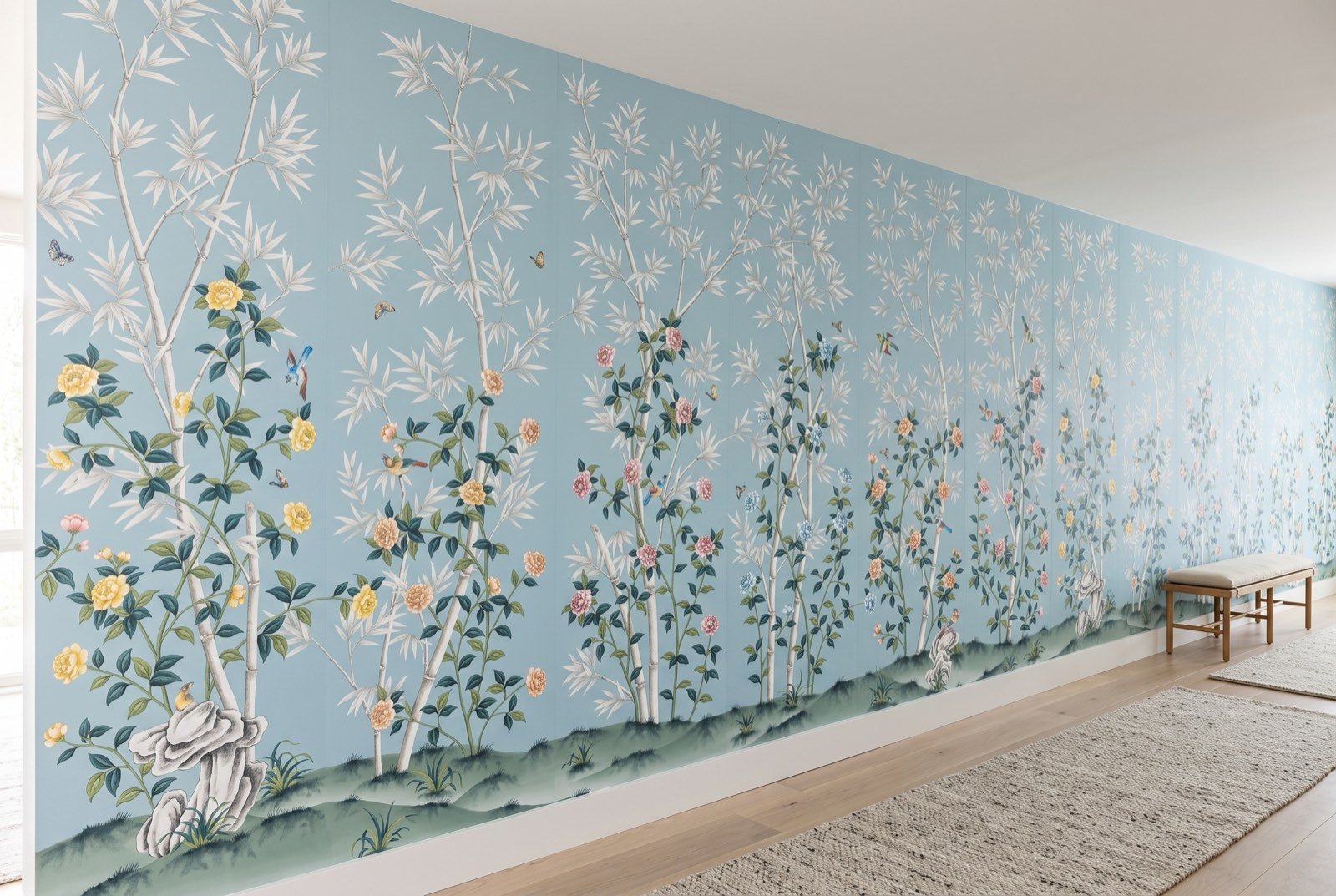
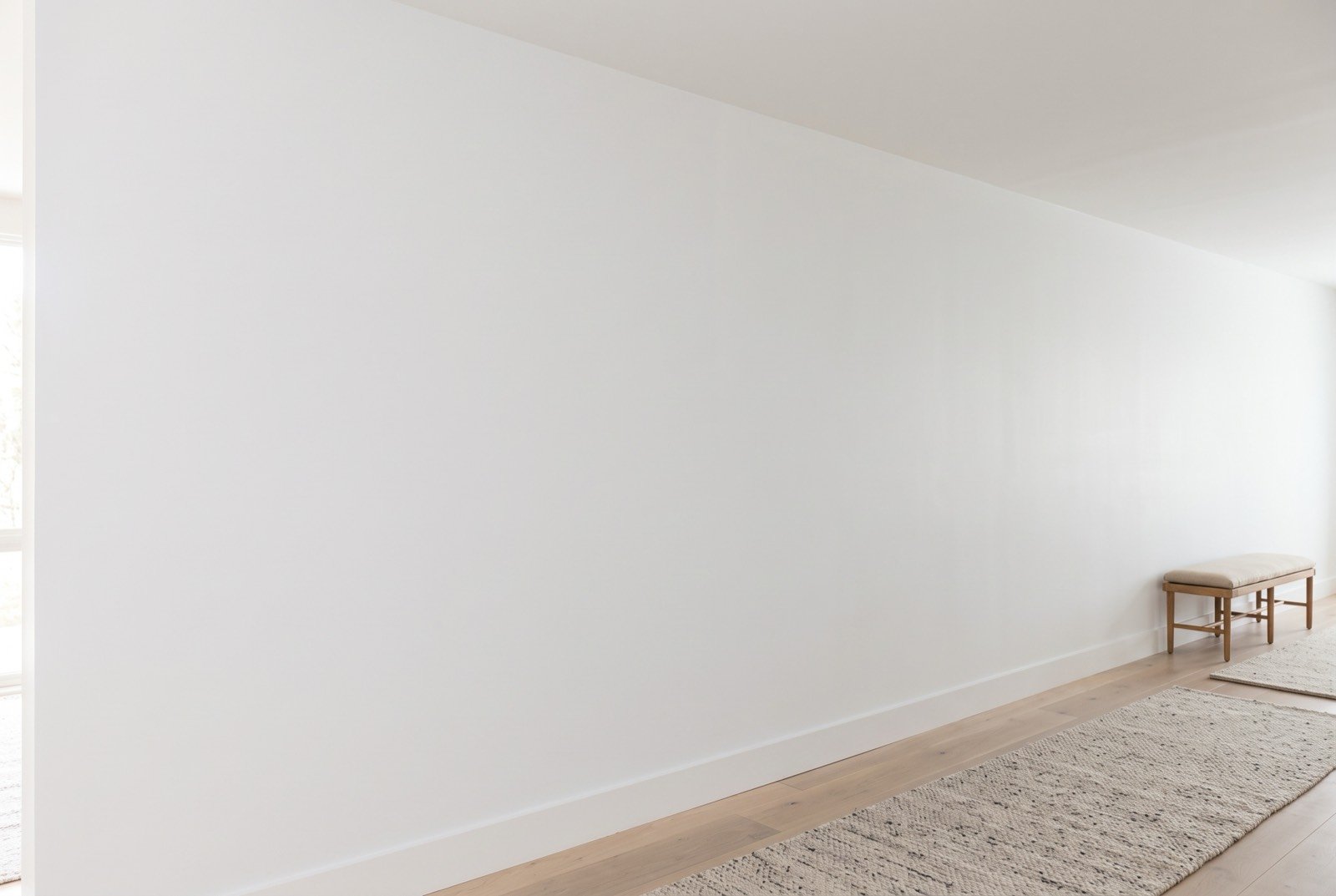
Blue Belton on sky blue, shown in an entry gallery
Installed to their specification
Gracie publishes trimming notes for its stock and printed panels and an instruction sheet for the Paradiso vinyl. For its hand-painted goods it publishes no hanging instructions. Each line below says which is which.
The line that decides most on a Gracie job is the sequence. Panels within a scenic are numbered, the house sells its stock by panel number, and its tear sheets state that the mural does not repeat. The printed Belton panels run in a set of six, 18 feet wide, with panel 6 connecting to panel 1. The crew lays the panels out in order and reads the whole wall before the first one is trimmed.
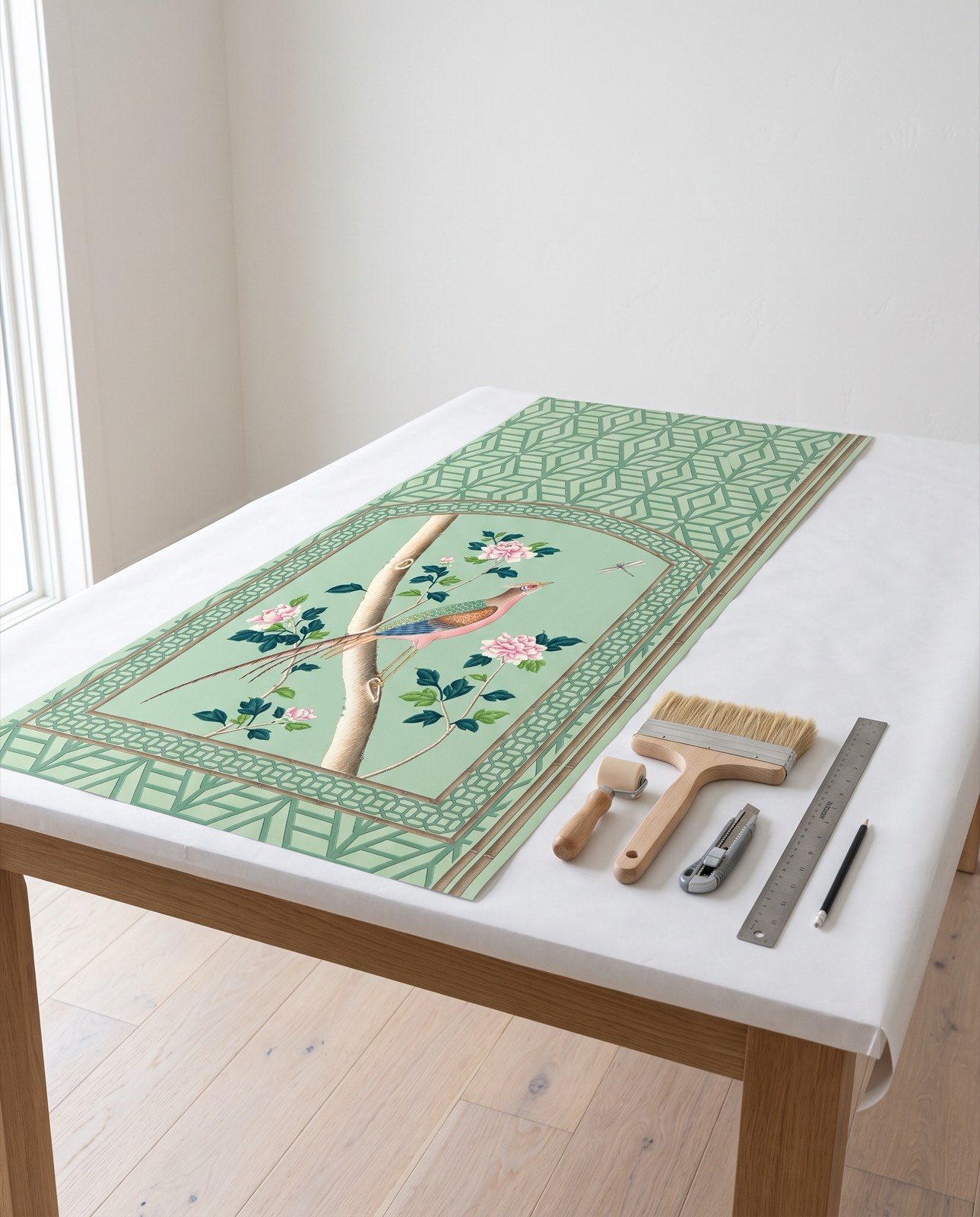
The second is height. A stock panel is 10 feet high. Hampton Garden stops its painting at 7 feet 6 inches and leaves plain ground above; the Belton prints are designed to be trimmed from the top; Paradiso gives up its height at the top, the bottom, or both. The quantity on our proposal comes from the measurement and the panel width, line by line.
The Mancini standard
Whichever house is on the roll, the work follows one sequence. It is the reason the wall reads as the designer drew it.
A member of our team walks the space and measures every wall. Fractions of an inch round up, heights round up to the next half-foot, and each wall gains three inches per side.
The roll count comes from the measurement, the repeat, and the roll's yield. The written proposal shows the arithmetic.
The instructions that arrive with the order, the label, and the batch reference are read before the first cut. One room, one batch.
Four crews and twelve trained installers. The panels are set dry at the table, every join is made as the house's instructions for that design direct, and the panels rest in the room before anything is cut.
For designers who specify it
A scenic for a dining room, a tea-leaf ground for a powder room, a silk for a study: the specification belongs to the designer or the homeowner, and the installation follows the instructions that arrive with the order.
Gracie is bought through its showrooms, its representatives, and its own shop. Whichever way the panels are ordered, our part is the same: a measurement in person, a written proposal with the panel count shown, and a crew that reads the order before the first cut. We name a designer here only with their written consent.
Our work
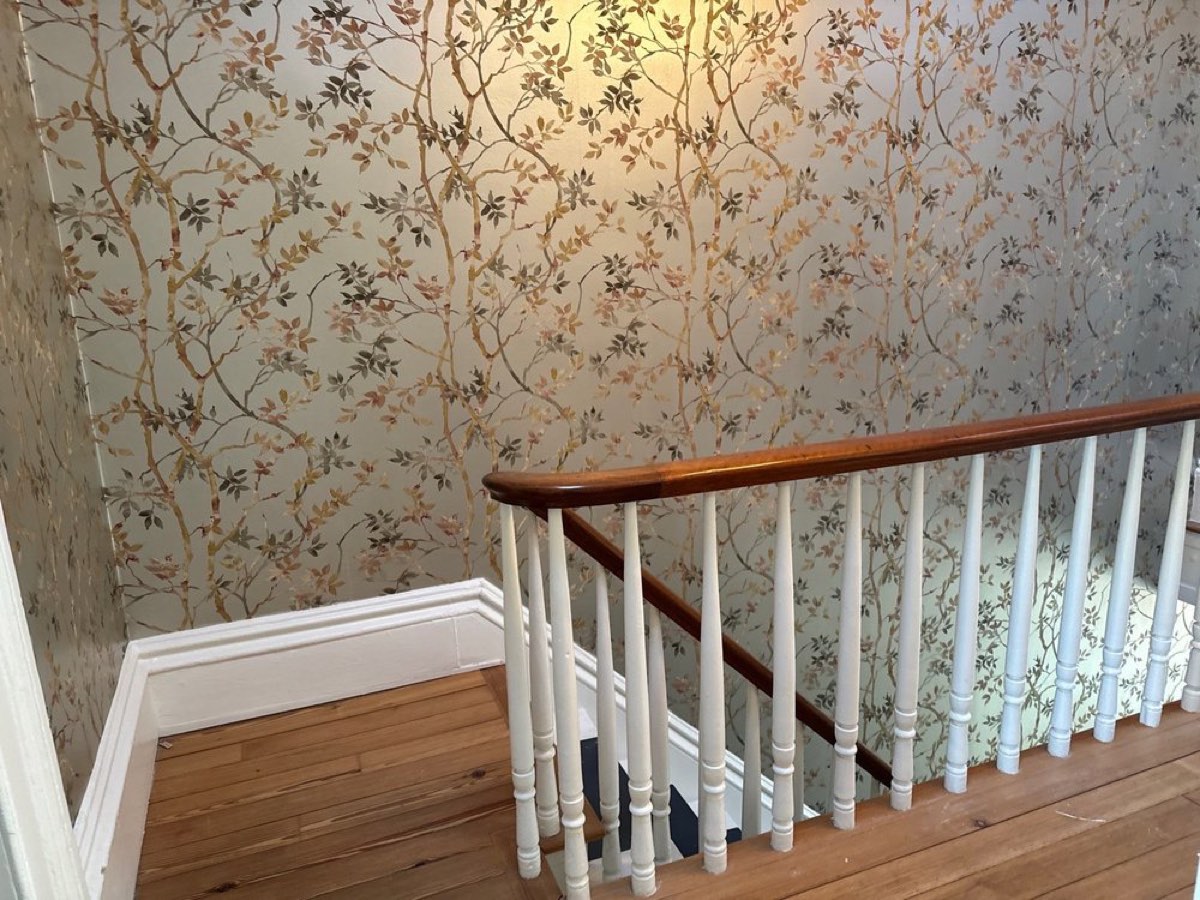
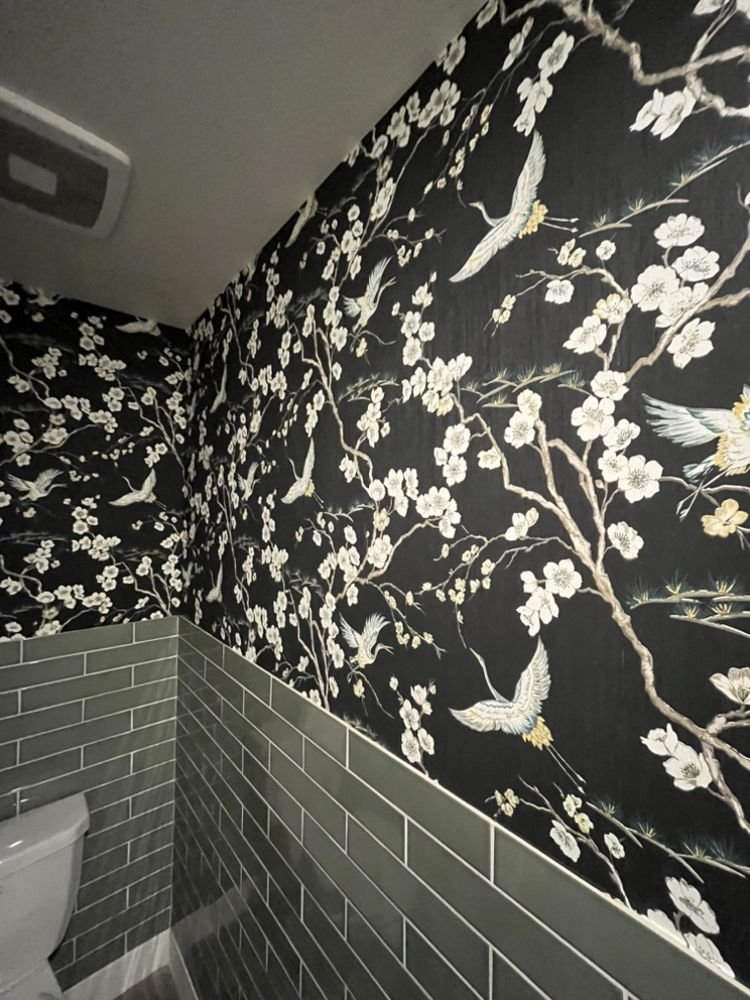
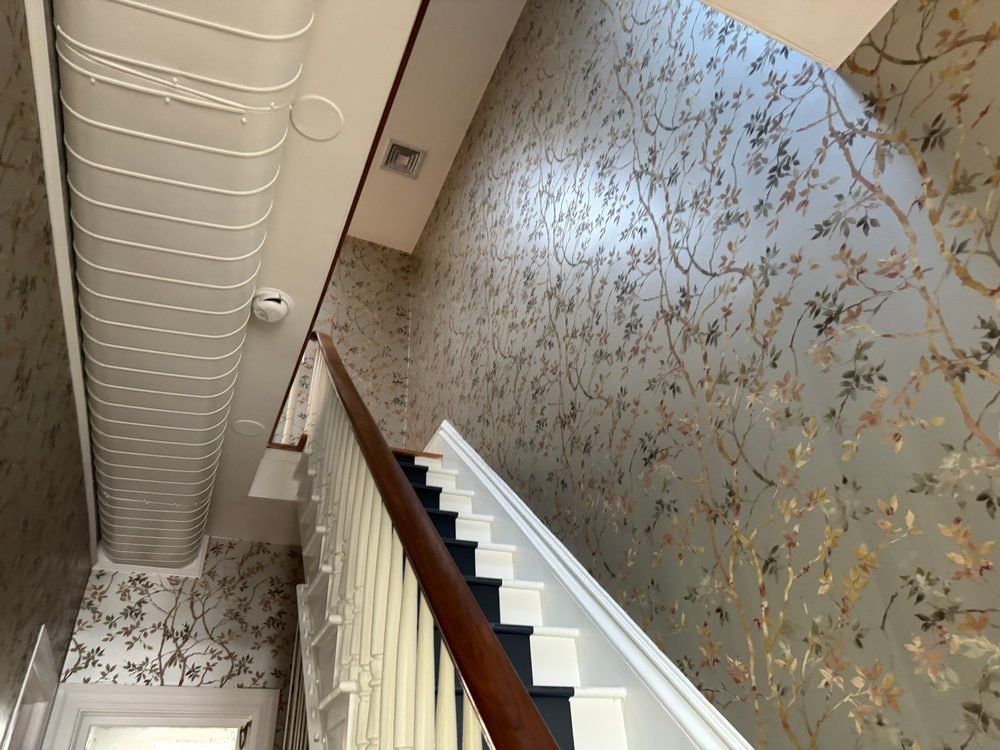
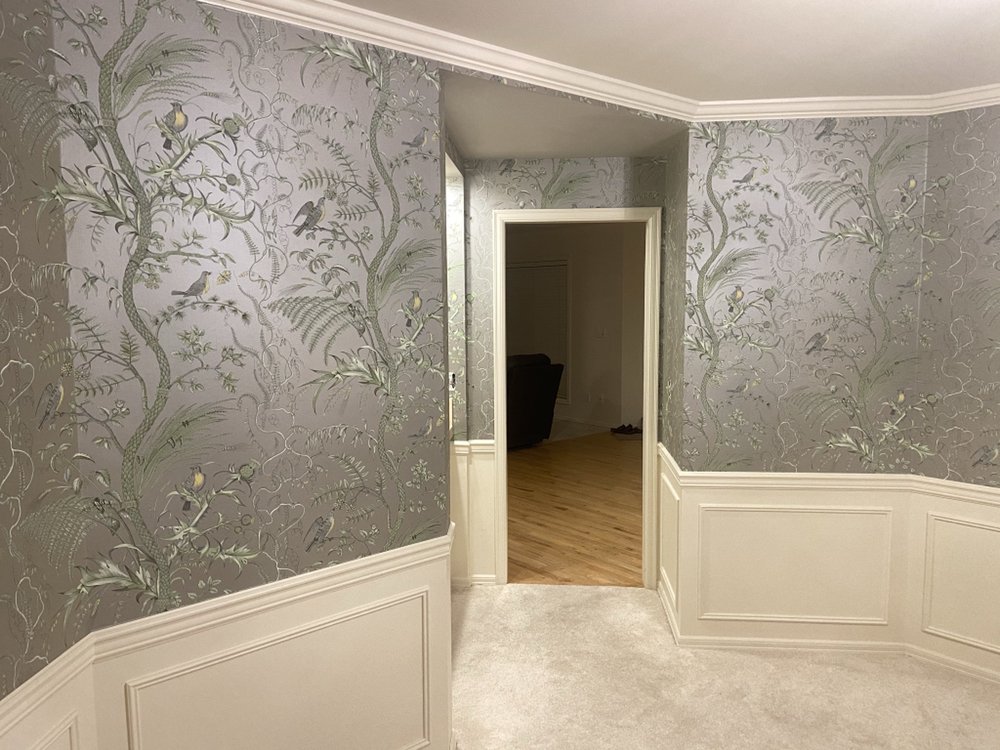
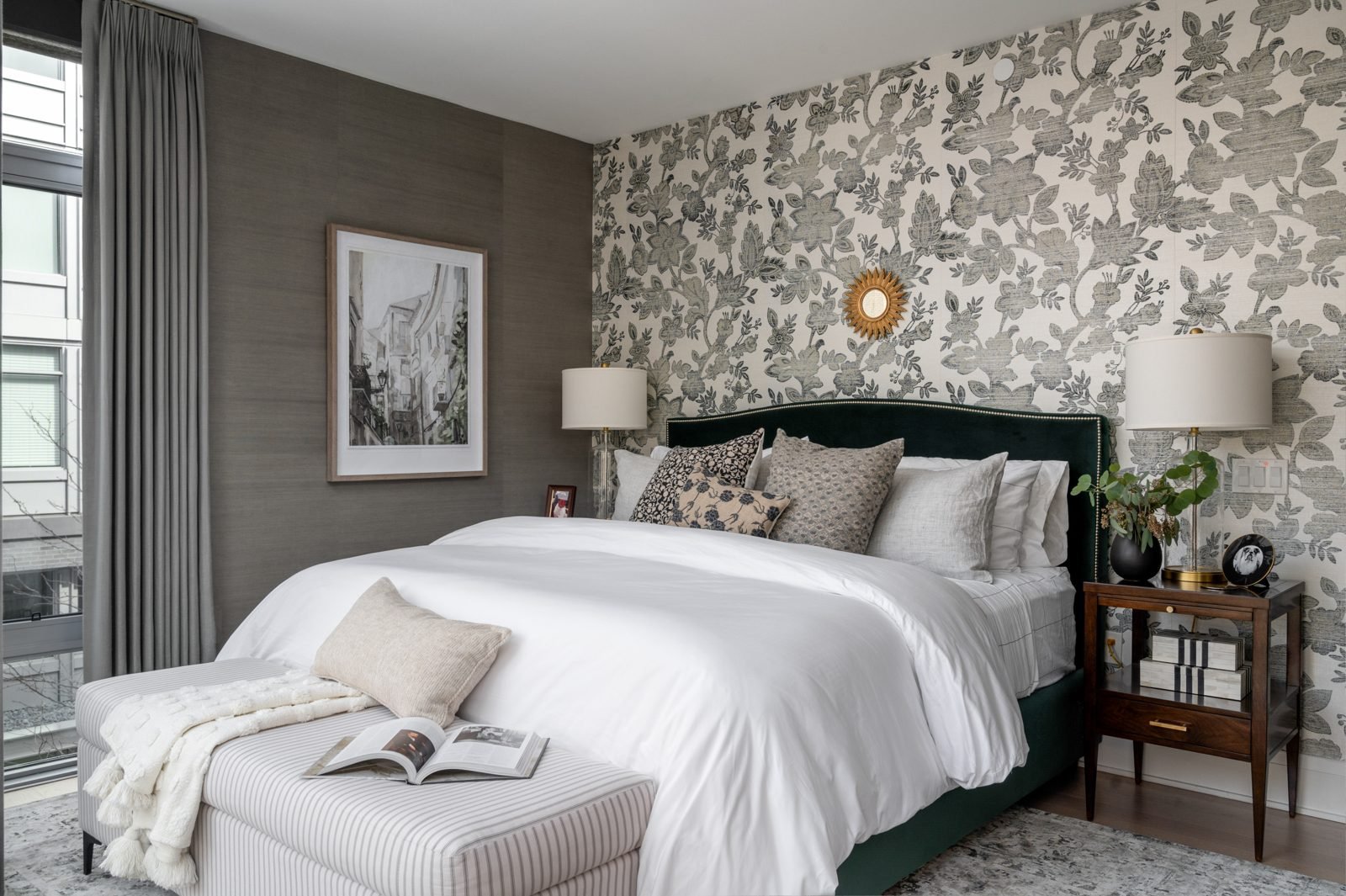
A garden around a dining room, koi on silver leaf, rings on emerald silk: whichever Gracie panel is on the table, it goes up in its numbered order, to the instructions that arrive with the order.
Gracie, by material
The ground on the panel tells us which set of rules to bring. Each of these pages goes deeper on the material itself.
The scenic panels: painted by hand, numbered in sequence, trimmed and joined on site.
Material pageThe silks, sold by the roll. Slubs are inherent, by the house's own note, and paste never reaches the face.
Material pageThe tea-leaf grounds, plain and flecked. A leafed face is handled clean and kept dry.
Material pageThe panoramic landscapes and the six-panel Belton prints. The panels are sequenced before the first is hung.
Material pageParadiso: a vinyl panel cut on its printed trim lines, from 44 inches to 36.
Material pageThe wall a painted panel is owed: smooth, sound, dry, and primed before the crew arrives.
Material pageDesign house and manufacturer names referenced on this page are the property of their respective owners. They identify materials we install and completed project history. Mancini Wallpapers holds no partnership, certification, or endorsement from any house named, and installs every product to the instructions its manufacturer publishes.


