
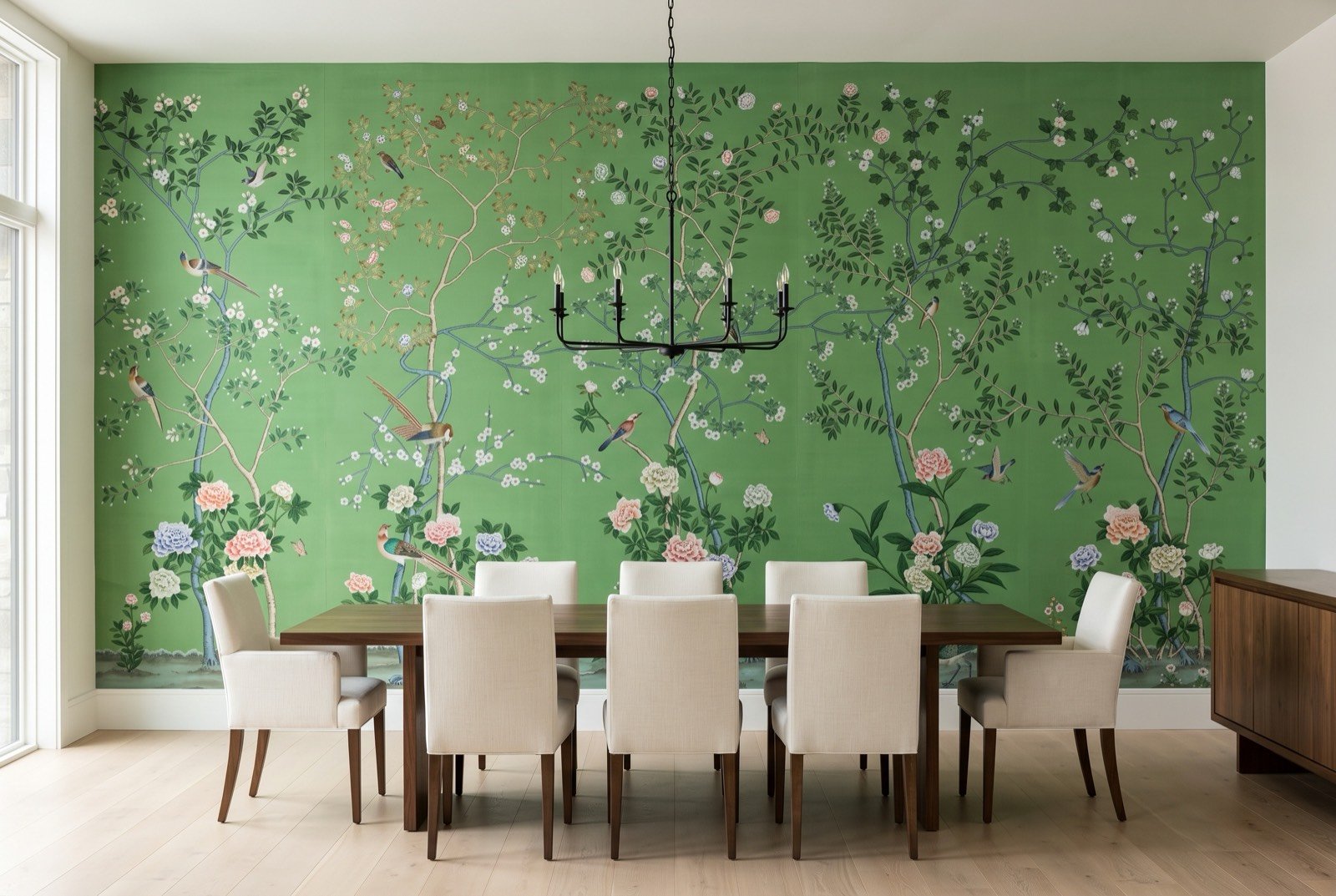
House · Installed in Park City and across Utah
Mancini Wallpapers is a wallcovering installation contractor headquartered in Park City, Utah. We install de Gournay hand-painted wallpaper, the Chinoiserie, the panoramics, and the Japanese and Korean designs among them, across Park City, Deer Valley, the Heber Valley, and the Salt Lake Valley, to the hanging instructions the house publishes. We hold no partnership or certification from de Gournay.
The house
de Gournay was founded by Claud Cecil Gurney, and the name is his surname in its original French spelling. The house describes itself as established in China in the mid-1980s, and its own site gives 1984 as the founding year. It remains a family business: the founder's daughters, Hannah and Rachel, are directors alongside him.
The house describes itself as a creator of hand-painted wallpapers and hand-embroidered fabrics. The painting is done in China by the house's own artists, each of whom, by its account, is trained by de Gournay and works for it full-time. The head office and London showroom are at 112 Old Church Street in Chelsea.
What arrives on a project is not a roll. The house paints numbered panels to the room: the standard panel is 915 millimetres wide, which we record as 36 inches, and the height is tailored to the wall. For a tailored room the house draws the panel set from the elevations, and every panel is numbered on the reverse. The crew reads the drawing and the numbers before the first panel is pasted.
The house in dates
In 1984 Claud Cecil Gurney travelled to China to scout the possibilities, and the house describes itself as established there in the mid-1980s. De Gournay Limited was incorporated in the United Kingdom on 29 May 1992. In 2012 the house opened a flagship showroom in New York's design district.
The later dates are a collaboration, a book, and a change at the wall. Anemones in Light, the design made with Kate Moss, launched in 2017. Rizzoli published the house's first book, de Gournay: Hand Painted Interiors, in October 2020. And wallcoverings made after 1 January 2026 are pre-trimmed in the studio, which changes what the paperhanger does before the first panel goes up.
A journey, a company, a showroom, a collaboration, a book, and a trimmed edge
A curiosity from the instructions
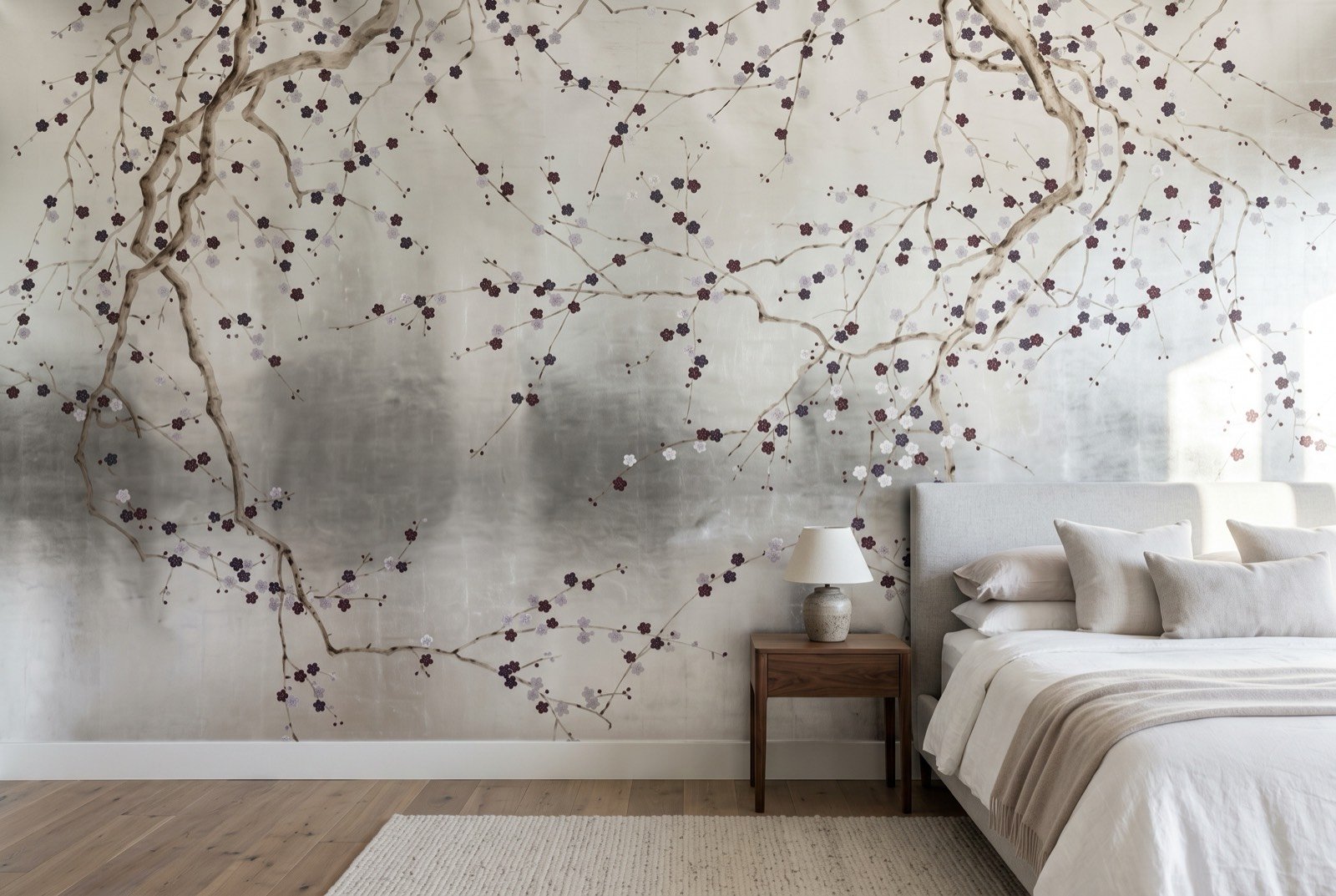
On de Gournay's gilded grounds the background is metal. For gilded paper, by the house's description, metal leaf is laid by hand over a smooth paper surface and burnished. The hanging instructions then carry a line few wallpapers need: metal-leaf grounds are to be kept electrically isolated from metal switch and socket plates, other metal fittings, and metal wall structures, to prevent premature electrolytic tarnishing.
The same chemistry decides the paste. The house does not use a strongly alkaline adhesive on gilded grounds, because it can promote tarnishing, and it warns that alkaline surfaces will tarnish any metal leaf in its products. Gilded constructions are glazed as standard to control tarnishing, and the house's listing of gilded grounds marks the leaf: (P) for grounds made from precious metals, (TR) for leaves that will not tarnish.
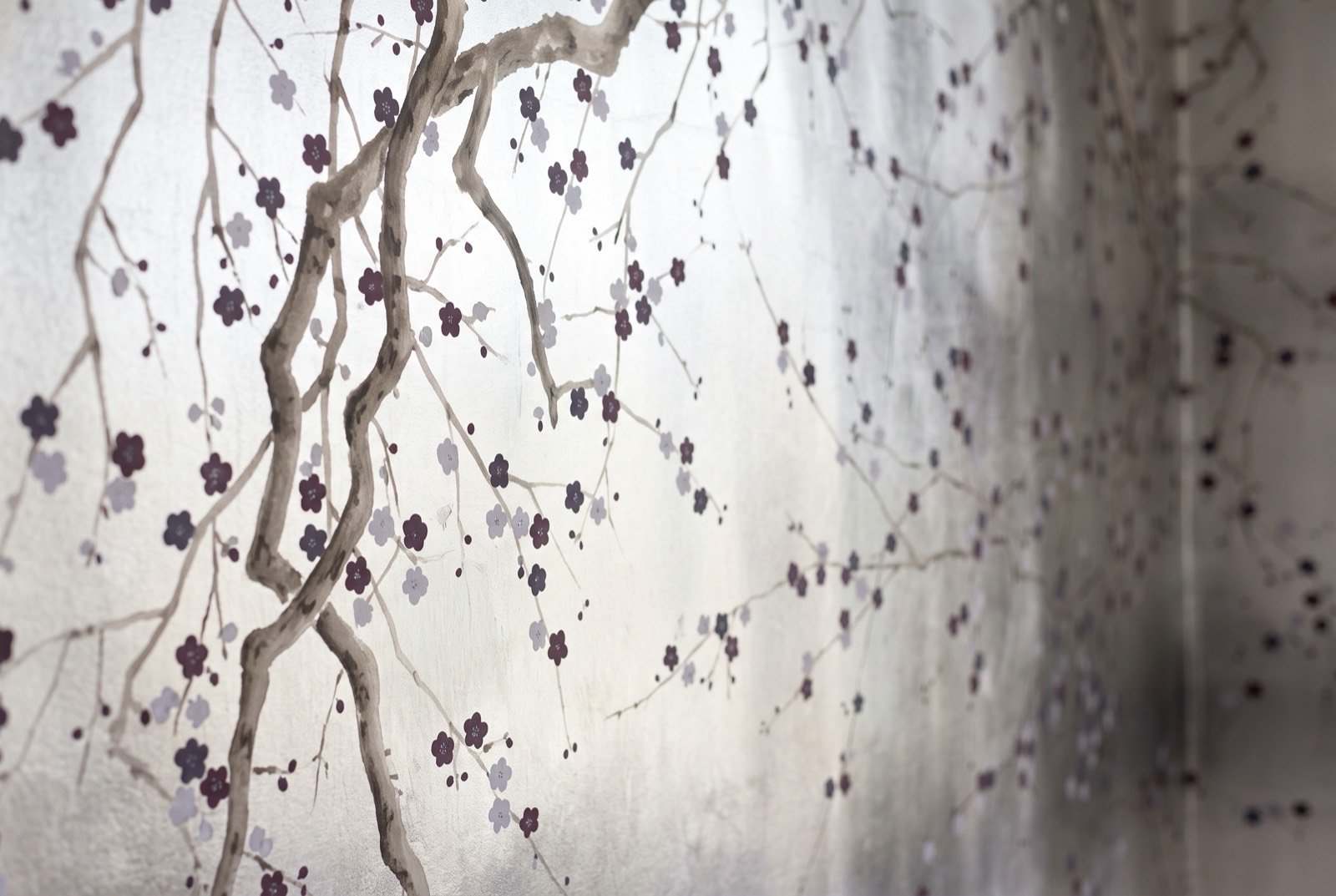
Plum Blossom in Lavender on Tarnished Silver gilded paper, shown in a primary bedroom
Where it comes from
de Gournay's head office and London showroom are at 112 Old Church Street, Chelsea, London SW3, about 4,850 miles from Park City. The pin on this map marks that address. The house describes itself as established in China, and its wallcoverings are painted there by its own artists, but it names no studio town, so the map plots the head office and nothing else.
A panel set reaches Utah through the house itself: orders are placed with its showrooms or its local representatives, and its product pages state that most products are made to order, with lead times typically 16-20 weeks. The last leg is ours. When the panels arrive, the crew sets the numbers on the reverse against the layout drawing and inspects every panel before anything is trimmed or pasted, because the house accepts no return of an order once it has been trimmed, pasted, or installed.
The savoir-faire
A tailored de Gournay room begins as a drawing. The client supplies accurate elevations and floor plans, and the house plans the design across them in scale elevational drawings that show the adapted design and the layout of the panel joins. A large sample section of the design is made for approval before production begins.
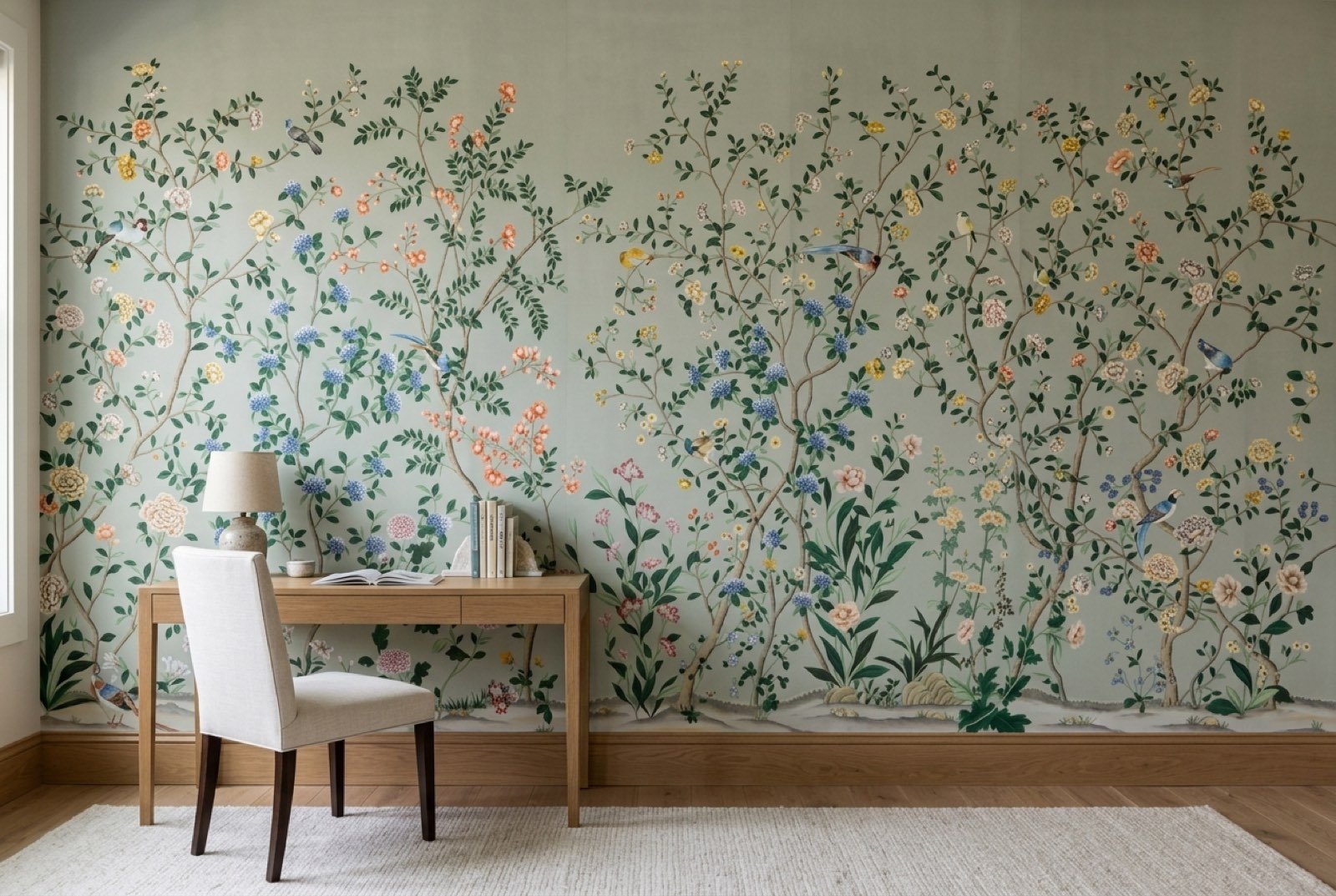
Then the ground is made, and the design is painted onto it by hand. Silk grounds are hand dyed and paper-backed. India tea paper is built from handmade sheets that overlap, so each panel carries its own vertical and horizontal seams. The paints on the Chinoiserie designs are translucent, and the ground colour shows through them. Before delivery the joins are checked more than once, and each panel is numbered and bar-coded on the reverse. The ground decides the handling: the house asks the installer to know which product is on the order and to test an offcut first.
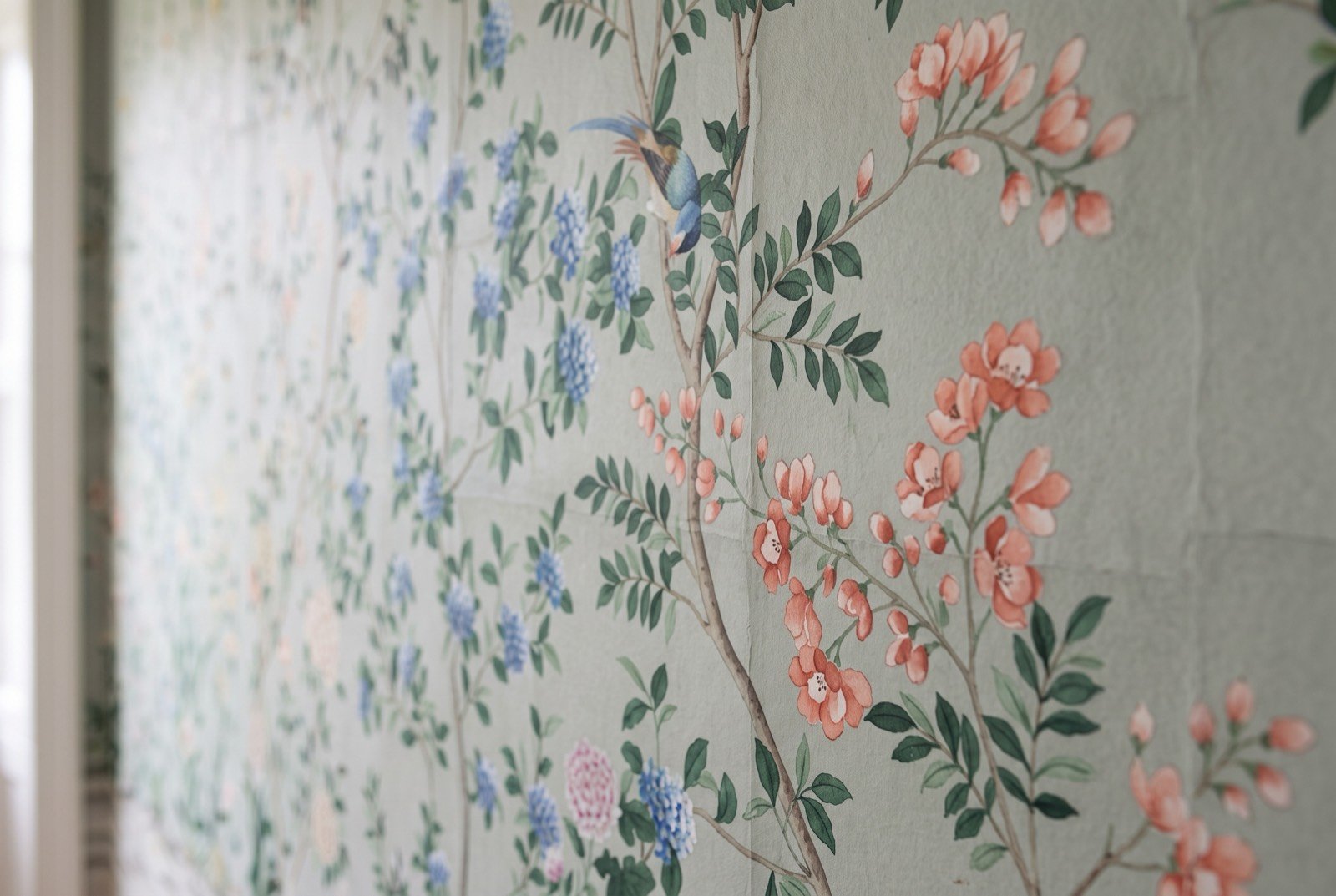
Erdem in colourway SC-317 on Adam Grey India tea paper, shown in a study
What arrives on the job
The house lists seven wallpaper grounds: dyed silk, India tea paper, slub silk, gilded grounds, metallic silk, Williamsburg, and tobacco. The ground, more than the design, decides how a panel is handled. The standard panel is 915 millimetres wide, recorded as 36 inches. India tea paper and metallic silk are also made at 1220 millimetres, recorded as 48 inches, and slub silk at 1.3 metres, recorded as 51 inches.
 01
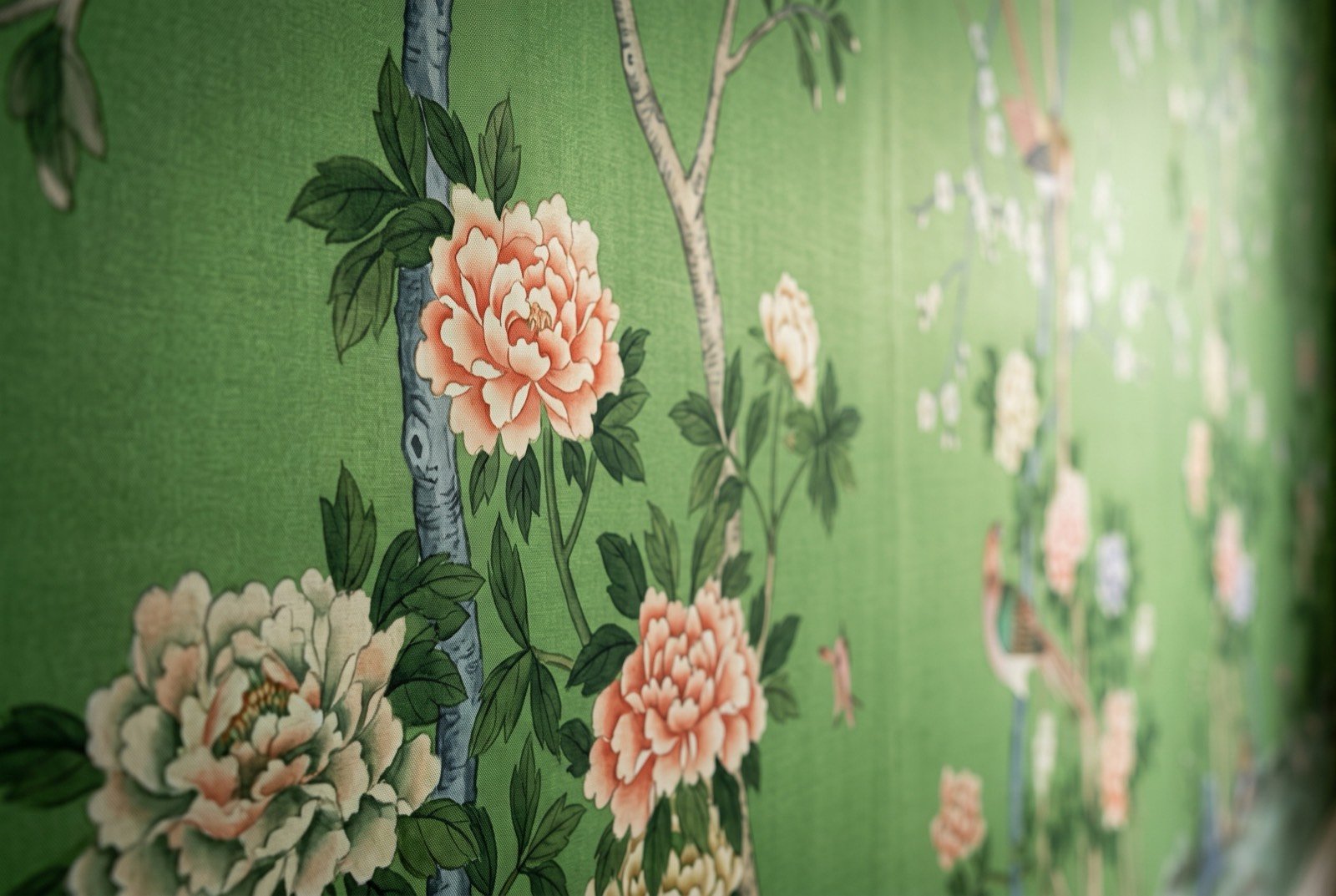
Dyed silk
Hand-dyed silk, paper-backed, 915 mm (36 in) wide in any length to 5.65 m (18½ ft). The house notes that dye lots vary, and that a silk panel worked too long can delaminate.
 02
Gilded paper
Metal leaf laid by hand over smooth paper and burnished. Kept electrically isolated from switch and socket plates, and hung without a strongly alkaline adhesive.
 03
India tea paper
Handmade sheets overlapped into a panel, so every panel carries its own seams. 915 or 1220 mm wide (36 or 48 in), in lengths up to 4.6 m (15 ft).
The wide and the delicate constructions carry rules of their own. For panels 1220 and 1300 millimetres wide, for very long panels, and for every silk damask, the house asks for a team of at least two installers. Where silk is laminated to a traditional backing paper, the panel is ready to hang almost as soon as it is pasted and booked, with up to ten minutes of working time. The crew reads the hanging instructions and the layout drawing before anything is pasted.
What they are known for
Six from one catalogue. The ground on the order decides the paste, the handling, and the care.
| Line | Material | Backing | Rooms | At the wall |
|---|---|---|---|---|
| Chinoiserie Collection | Hand-painted garden scenes of birds and flowers, based on Chinese wallpapers that became popular in the palaces and grand houses of the West, principally between 1750 and 1850. Earlham and Erdem belong here. | Paper-backed dyed silk for Earlham as shown; India tea paper for Erdem | Dining rooms, stair halls, primary suites | Tailored to the room from the elevations. Design heights from 152 cm to 366 cm (5 ft to 12 ft). Panels are hung in numbered sequence. |
| Papiers Peints Panoramiques | Panoramic scenes painted by hand in the style of the original block-printed wallpapers. L'Eden reproduces a mural designed by Joseph Fuchs in the late nineteenth century. | Scenic paper | Entry halls, dining rooms, great rooms | The first panel goes to a plumb line and sets the design height for the room. The surface may be sponged gently with clean water, never rubbed. |
| Japanese & Korean Collection | Designs inspired by the Edo period. Plum Blossom was inspired by a painted white silk kimono of the late Edo period. | Gilded paper as shown: metal leaf on paper | Primary bedrooms, powder rooms | Metal-leaf grounds are kept electrically isolated from switch and socket plates, and no strongly alkaline adhesive is used. |
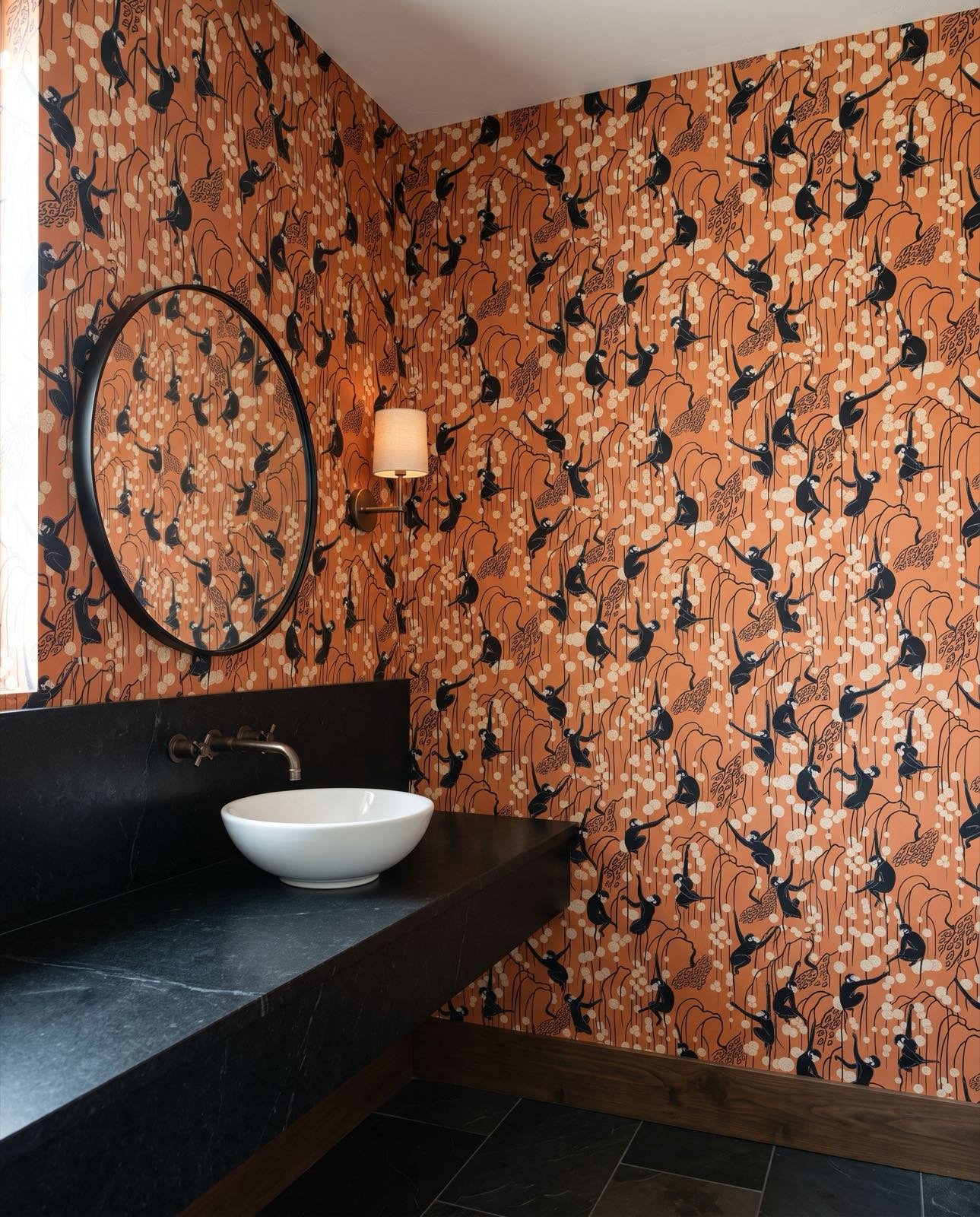
| Eclectic Collection | Designs inspired by contemporary decorating. Deco Monkeys, after a textile of the 1920s, repeats horizontally as well as vertically. | Dyed paper | Powder rooms, studies, home bars | Sold by the panel, at wall height plus 60 cm (24 in). Consecutive panels stagger by half a repeat, and odd-numbered panels start on a full repeat. |
| Plain Textured Wallcoverings | Gilded paper, Williamsburg, and the other grounds without a painted design. Williamsburg takes the look of an eighteenth-century hand-painted, dead flat distemper ground. | Read from the order | Libraries, dining rooms | Still numbered, and all hung in the same direction. Gilded wallcoverings are sold by the panel, each 915 mm (3 ft) wide. |
| Silk damask | Paper-backed silk damask. The Pineapple design has a vertical repeat of 1040 mm (41 in). | Paper-backed silk | Dining rooms, drawing rooms | Trimmed on both vertical edges before pasting, matched at eye level, and hung by a team of at least two. |
Reading the order
A de Gournay product is identified by a description, not a coded number. Each product page gives a design, a colourway, and a ground: Earlham, Standard colourway, on Emerald Green dyed silk. The colourway is Standard, a named palette such as Lavender or Terracotta, or a numbered Special Colourway such as SC-317. The ground is a colour name followed by a construction. The page also carries a six-digit Ref, 730485 for this Earlham. As observed on 30 September 2026, its digits show no collection, ground, or colour meaning, so we ask for the Ref and the full description together.
The numbers that matter at the wall are on the panels. Each panel is numbered on the reverse, the lower number always matching on its right-hand side to the next one up, and each carries a bar-code label at one end of the reverse, which is trimmed off or removed. A tailored order comes with a layout drawing, the EDM, which the house says forms part of the instructions. Its abbreviations are the house's own: WH for the full wall height to be covered, VDH for the visible design height, PH for the full panel height at delivery, FPW for the finished panel width, P# for the panel number.
If you are new to the house
Homeowners and designers who want a room composed as one painting. The house offers three routes: designs held in stock, designs made to measure and fitted to the room, and bespoke work. Its collections run from Chinoiserie gardens and hand-painted panoramas to Japanese and Korean designs and the repeating patterns of the Eclectic collection.
At the house's own showrooms, London, Paris, New York, and San Francisco among them, and through its representatives worldwide; the contact page directs an enquiry to the nearest one. Every product page carries an enquiry form. For a tailored room the house makes a large sample section of the design for approval before production.
Through the house's showrooms and representatives, by the panel. For a tailored room the client supplies accurate elevations and floor plans, and the house calculates the panel requirement and draws the room. Most products are made to order, and the product pages give lead times as typically 16-20 weeks. Mancini does not sell or source it; our work begins when the panels arrive.
Ordered through a showroom or through a designer: the same measurement, the same preparation, and the same crew.
The wall, before and after
Drag the line. The house asks for every wall to be lined with plain white lining paper, 1000 or 1200 grade, with no primer on top of it.
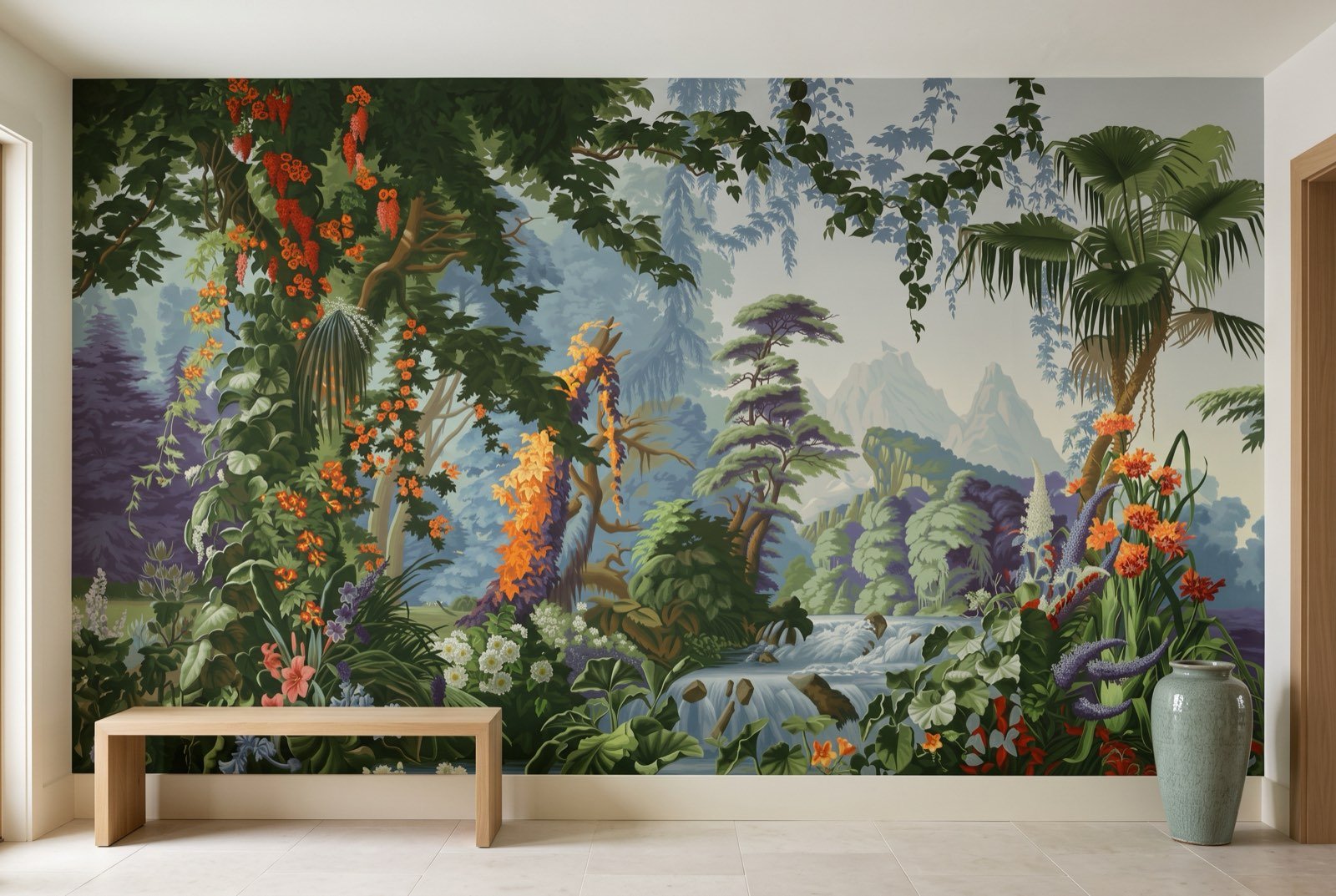
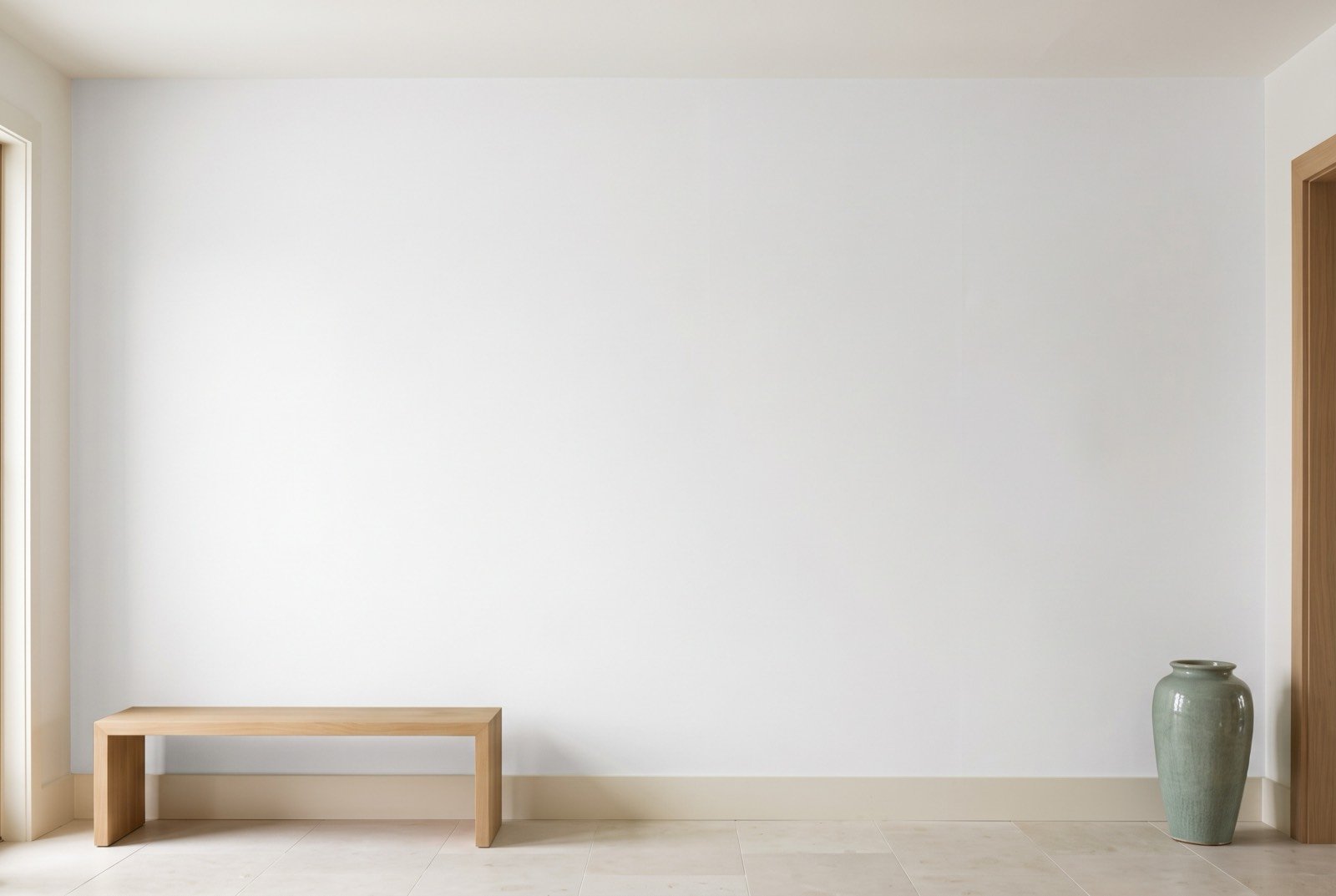
L'Eden in the Eden colourway on scenic paper, shown in an entry hall
Installed to their specification
de Gournay publishes its hanging instructions in two sheets, one for wallcoverings made after 1 January 2026 and one for those made before, with care and protective-finish sheets beside them. These are the lines that matter most in a Utah house.
The line that decides most on a de Gournay project is the lining. The house asks for a surface that is dry, smooth, flat, and free of loose material, and for every wall to be lined with plain white lining paper, hung with the same adhesive as the panels, its joints firmly butted. It asks that the lining be kept free of pencil and other marks, because many of its wallpapers are semi-translucent. In dry climates it recommends sizing the lining paper with paste, which slows the drying of the final panels. A Park City winter runs dry, and that line is read closely here.
The second is the sequence. Panels are delivered numbered and hung in that order, plain grounds all in the same direction. On a mural the first panel goes to a plumb line, and the height at which it is hung sets the design height for the whole room. The house asks that seams be kept off outside corners and exposed positions. Our proposal shows the panel count beside the measurement, wall by wall, with the metric figure and the imperial figure side by side.
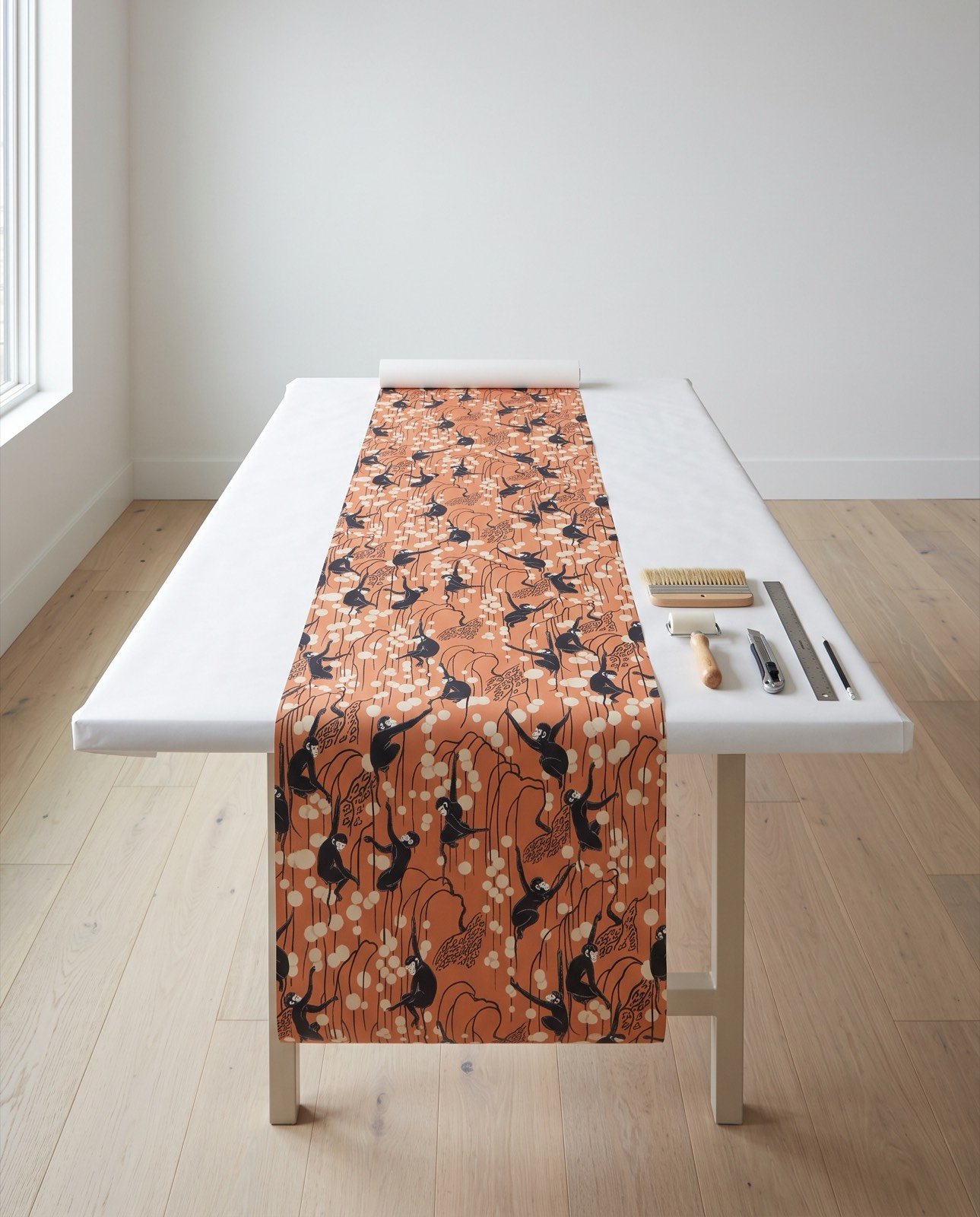
The Mancini standard
Whichever house is on the roll, the work follows one sequence. It is the reason the wall reads as the designer drew it.
A member of our team walks the space and measures every wall. Fractions of an inch round up, heights round up to the next half-foot, and each wall gains three inches per side.
The roll count comes from the measurement, the repeat, and the roll's yield. The written proposal shows the arithmetic, in metric and imperial.
The hanging instructions, the layout drawing, and the panel numbers are read before the first cut. One room, one batch.
Four crews and twelve trained installers. The match is set at the table, every seam is butted, and the rolls rest in the room before anything is cut.
For designers who specify it
A Chinoiserie garden for a dining room, a panorama for an entry hall, plum blossom on silver leaf for a bedroom: the specification belongs to the designer or the homeowner, and the installation follows the house's instructions.
de Gournay is ordered through the house's own showrooms and representatives. Whoever places the order, our part is the same: a measurement in person, a written proposal with the panel count shown, and a crew that reads the hanging instructions and the layout drawing before the first cut. We name a designer here only with their written consent.
Our work
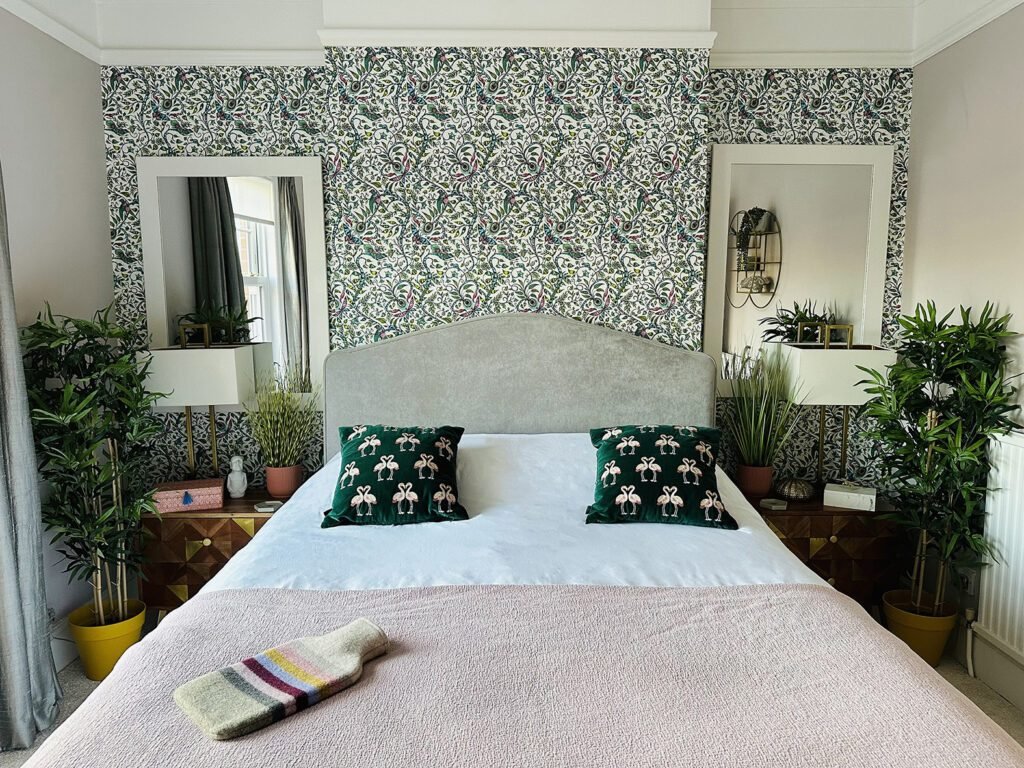
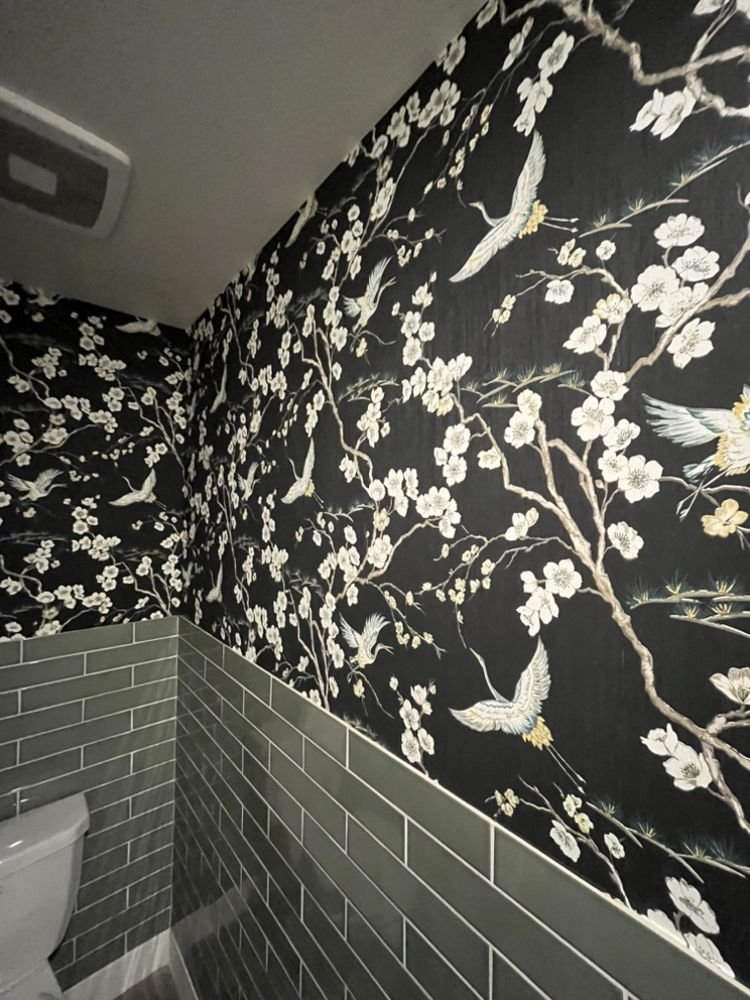
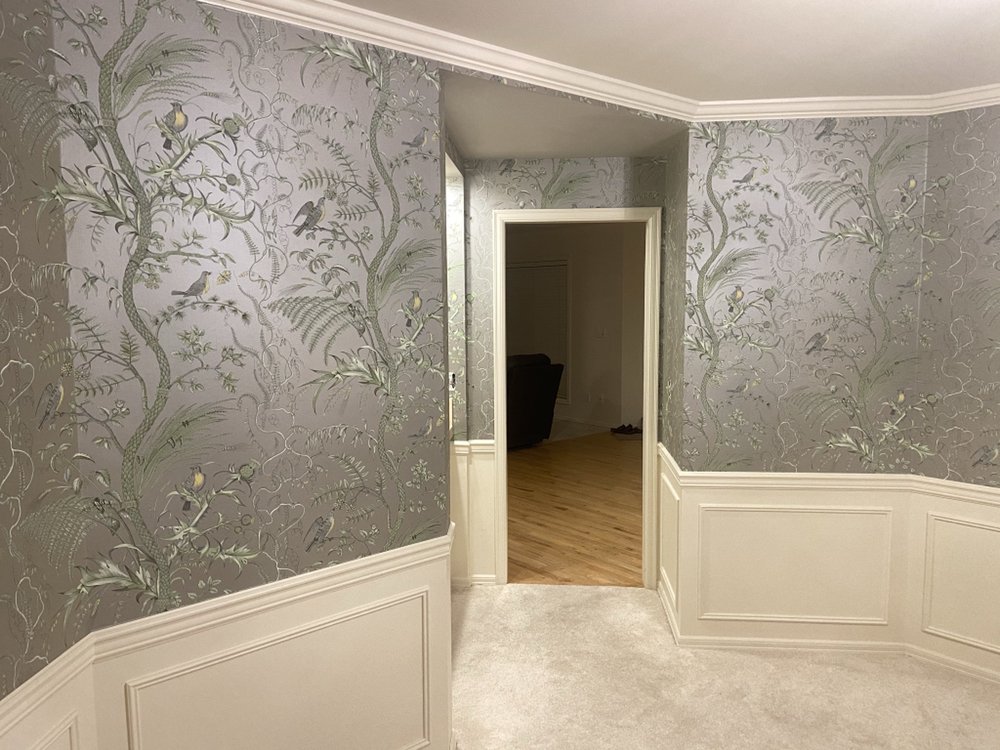
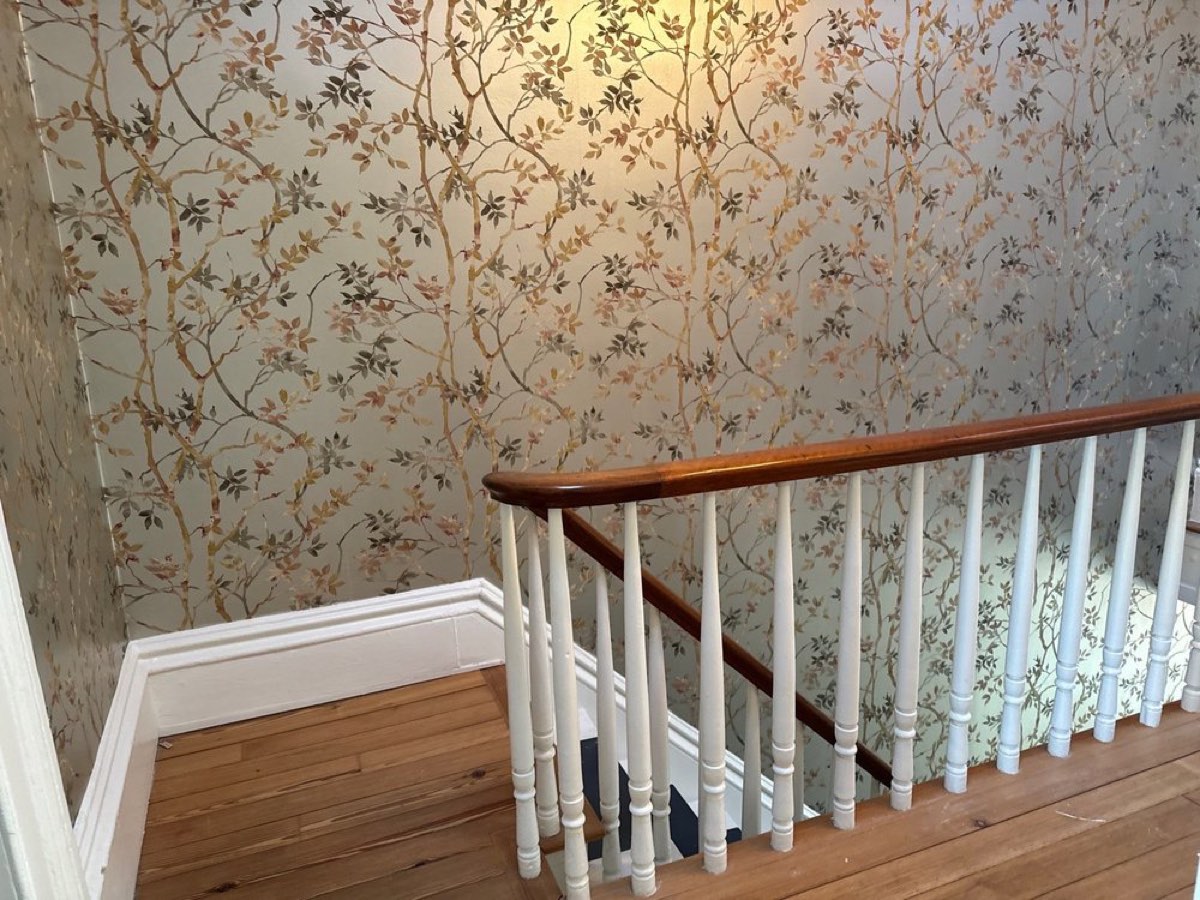
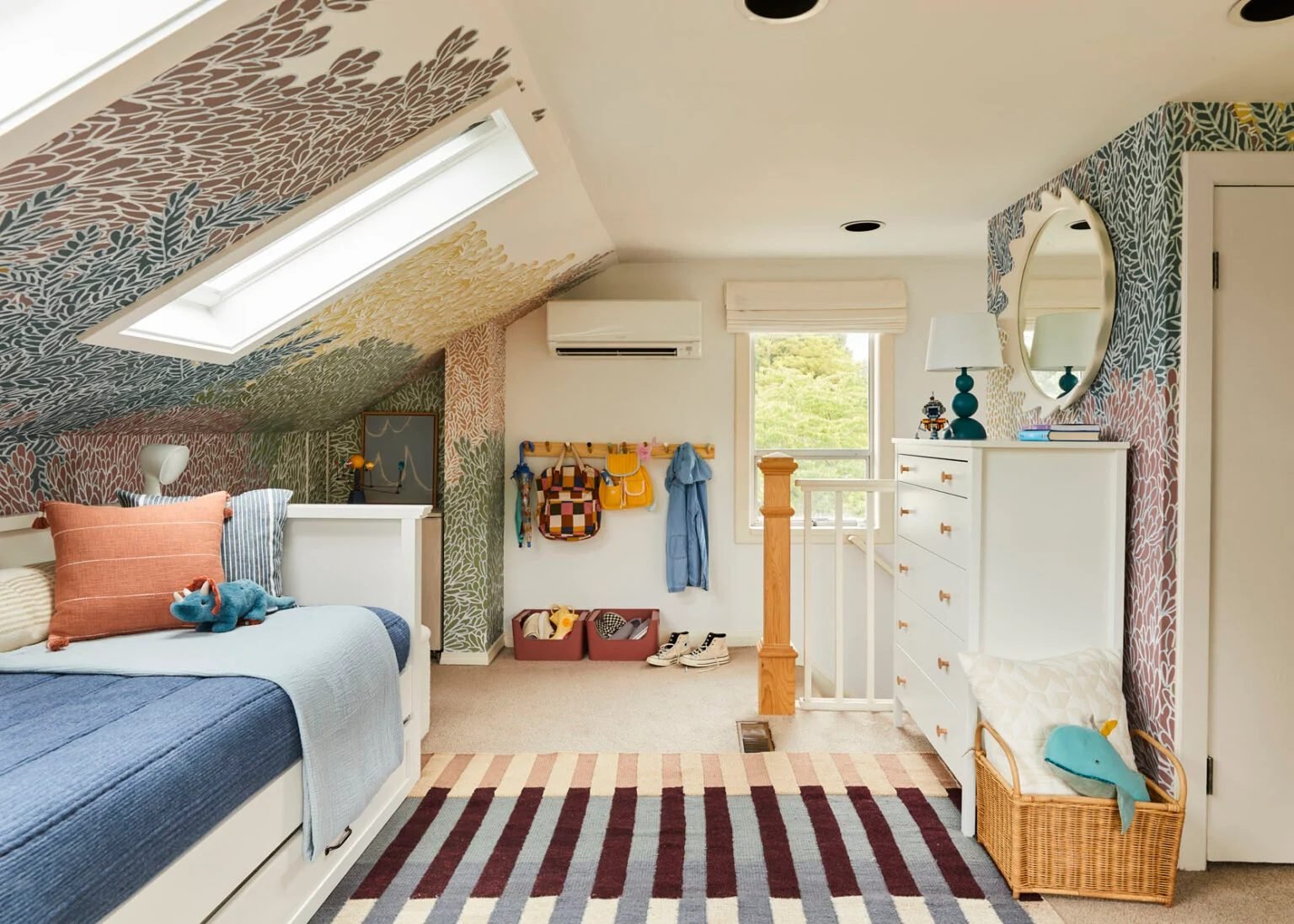
A garden on silk in a dining room, a panorama down an entry hall, plum blossom on silver leaf behind a bed: whichever de Gournay design is on the panels, it is hung to the instructions the house publishes.
Materials we install from de Gournay
The ground on the order tells us which set of rules to bring. Each of these pages goes deeper on the material itself.
Numbered panels painted to the room and hung in sequence from the layout drawing. The first panel sets the design height.
Material pageHand-dyed silk, paper-backed. Dye lots vary, and a silk panel is not worked for long once it is pasted.
Material pageMetal leaf laid by hand. Kept electrically isolated from switch plates, and hung without a strongly alkaline adhesive.
Material pageThe Papiers Peints Panoramiques: scenes painted by hand in the style of block prints. The measurement is the installation.
Material pageThe wall the house's instructions assume: dry, smooth, flat, and lined with plain white lining paper.
Material pageDesign house and manufacturer names referenced on this page are the property of their respective owners. They identify materials we install and completed project history. Mancini Wallpapers holds no partnership, certification, or endorsement from any house named, and installs every product to the instructions its manufacturer publishes.


