
Material · Specialty surfaces
Cork, bamboo, reed, wood veneer, glass bead, capiz, mother-of-pearl, and leather, installed to the specification each house publishes. Adhesive confirmed before the order. Substrate finished to the material. Heavy tiles set on true lines. Installation-only, headquartered in Park City.
What specialty surfaces are
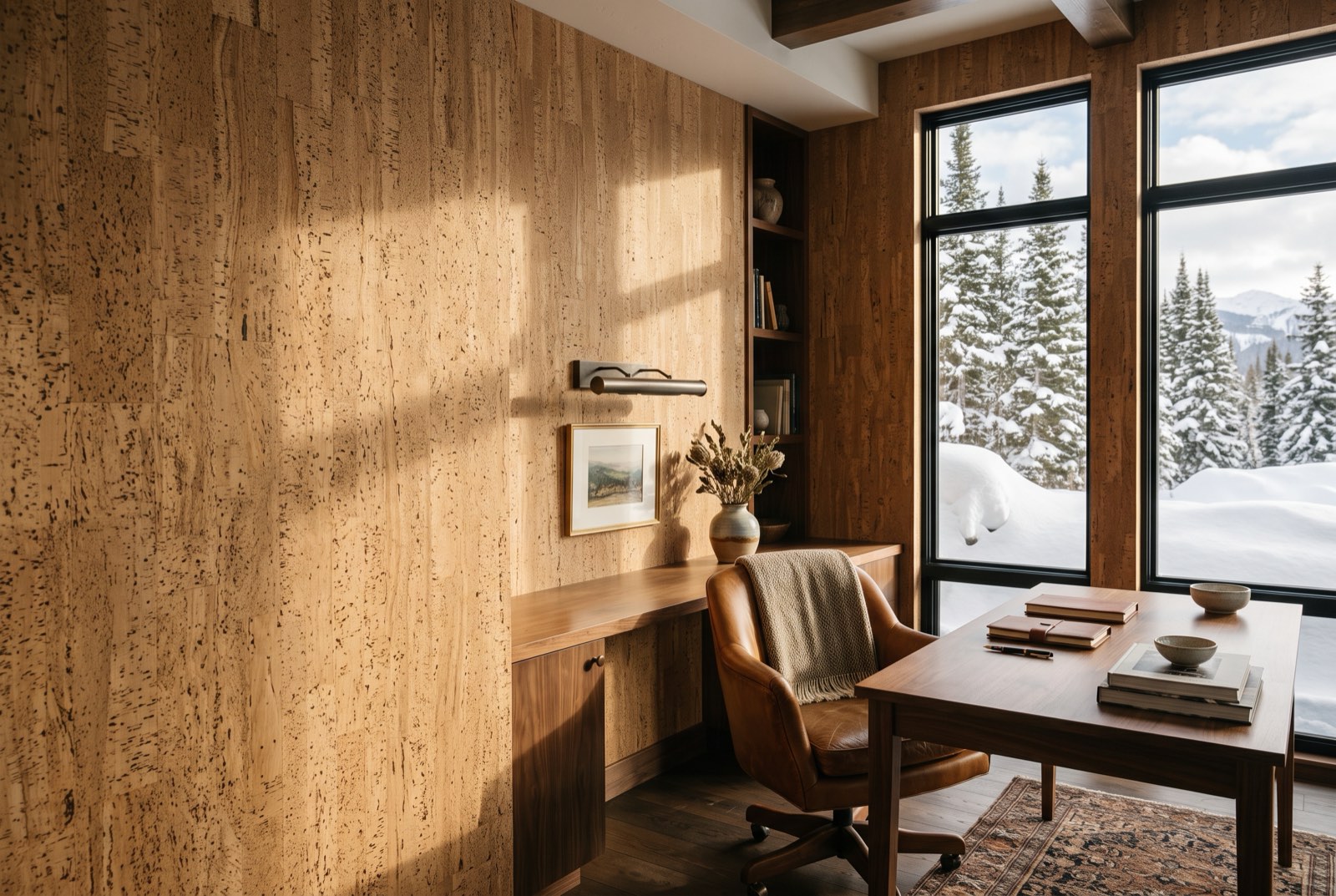
Wallcoverings made from something other than paper, fibre, or vinyl: sliced cork, woven bamboo and reed, real wood veneer on a paper back, hand-set glass beads, capiz shell and mother-of-pearl, and leather tiles. They are chosen for the rooms where a wall is meant to be touched and looked at closely, and they are the most varied group of materials we install.
Each has its own weight, its own adhesive, and its own way of failing when installed as if it were paper. Cork stains, veneer curls when it is over-wetted, shell cracks under a roller, and leather sags off an adhesive that was chosen for paper. The material is correct more often than the installation, and on this page the installation is a different job for every row of the guide.
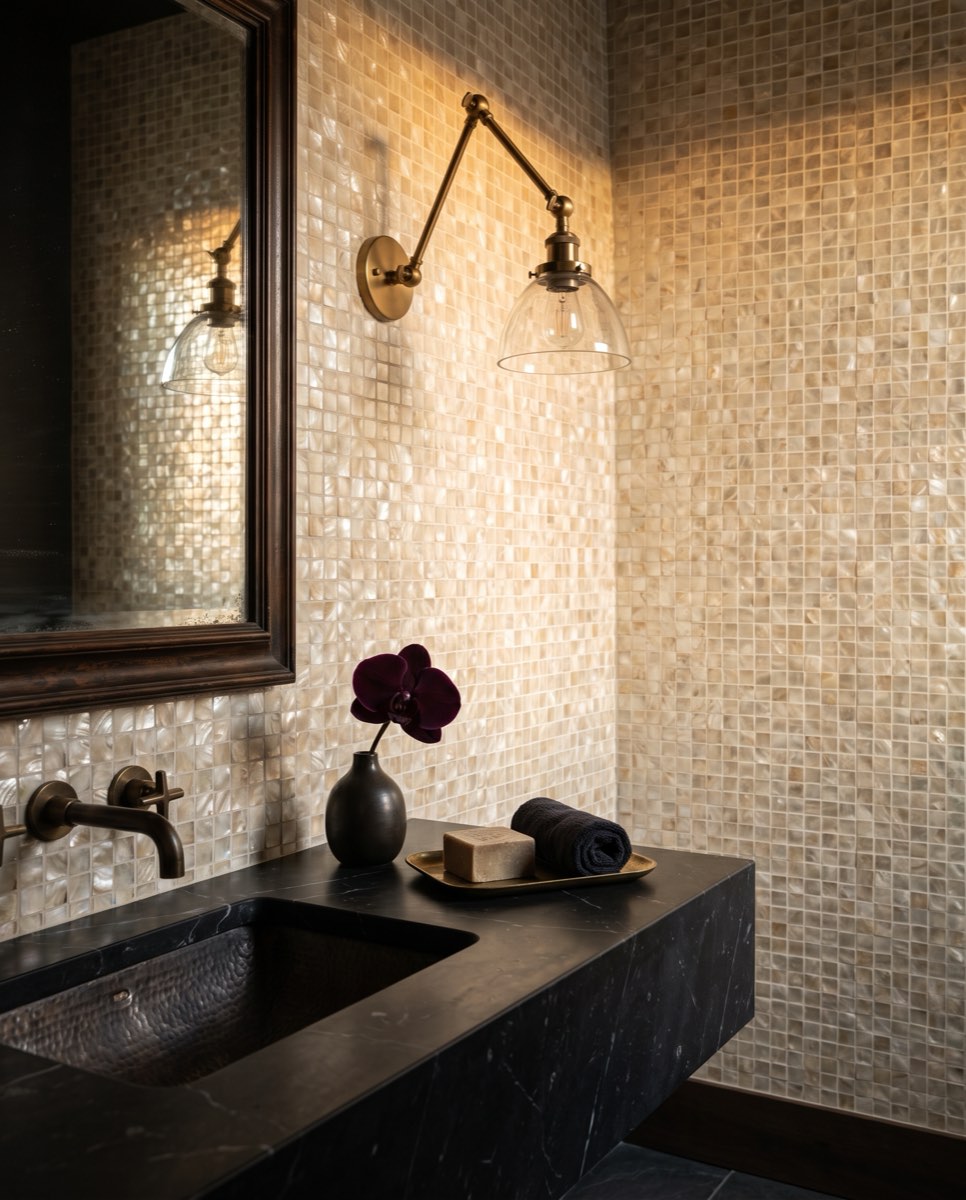
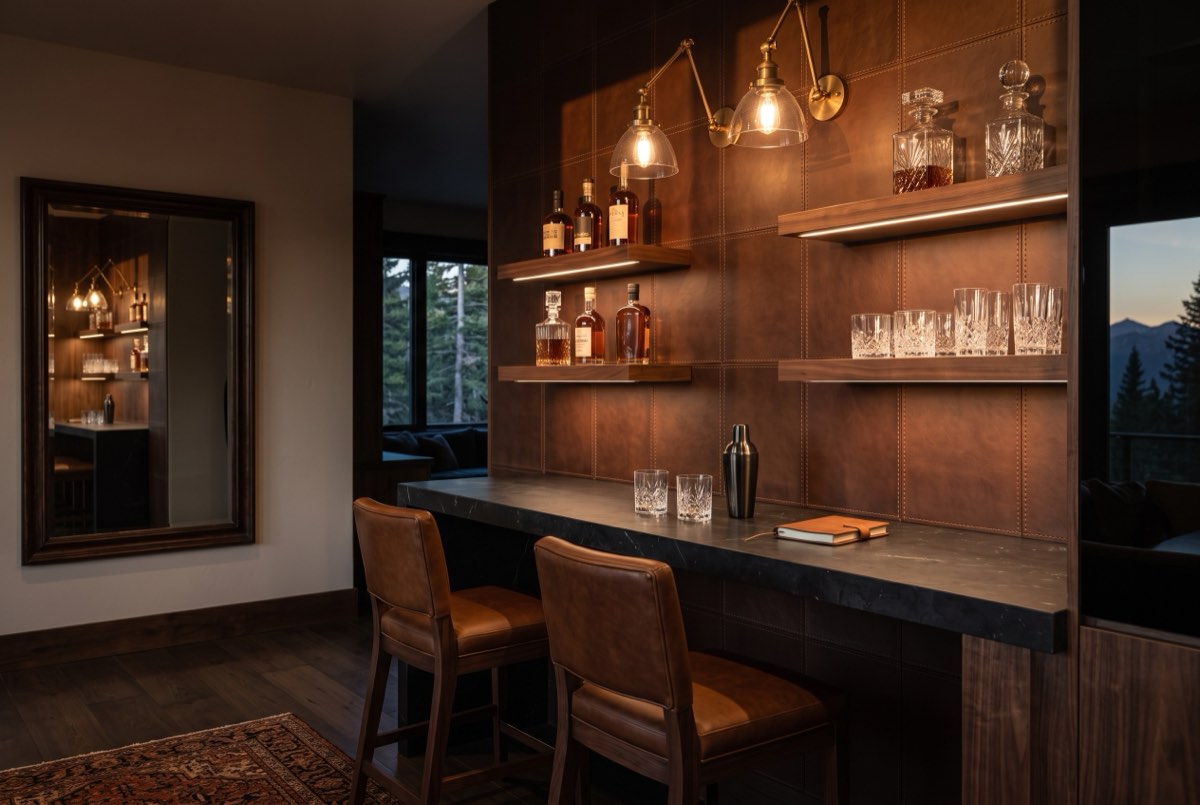
Specialty surfaces are specified across Park City and Deer Valley for powder rooms, bars, dressing rooms, and executive offices, and they are installed by the crews that carry our grasscloth, silk, and metallic work, to the handling protocol each house publishes.
Four materials
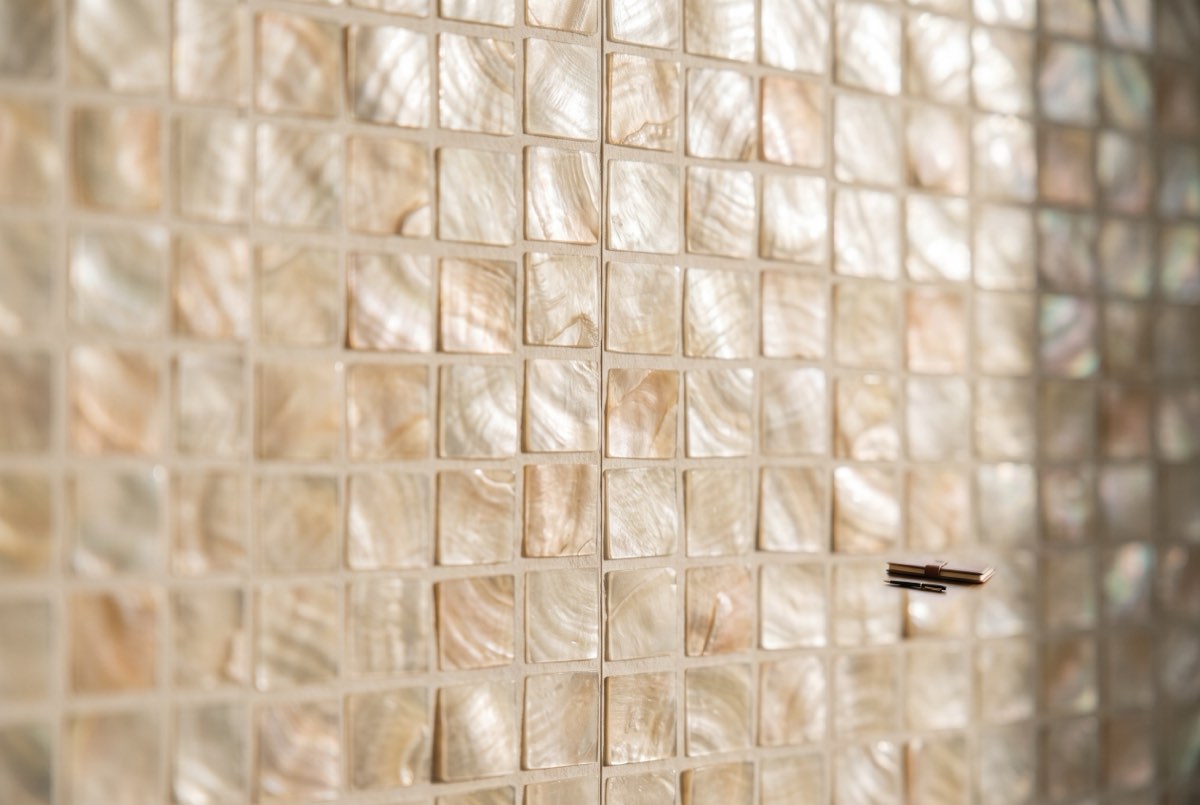
Cork is sliced bark laminated to paper, warm and irregular, and it marks and stains. Wood veneer is real wood, paper-backed and often book-matched, and it curls and lifts its grain if the backing is soaked. Capiz and mother-of-pearl are shell tiles hand-set on paper, and they crack under a roller. Leather is hide on a rigid or felt back, heavy, and it moves with humidity.
Bamboo and reed behave like grasscloth and are handled that way: dye lots mapped, seams choreographed. Glass bead follows the metallic protocol: gloves throughout, never rolled. What the group shares is that none of it forgives a paper installation, and that every house publishes the adhesive, the substrate, and the handling for each product.
Specialty guide
Specialty covers eight different materials that share almost nothing at the wall. Each asks its own adhesive, its own substrate, and its own handling.
| Material | Construction | Adhesive | Substrate | Handling | Best rooms |
|---|---|---|---|---|---|
| Cork | Sliced bark on paper | Clear or clay, per house | Sealed, flat | Gloves; sealed after where allowed | Studies, offices, media rooms |
| Bamboo and reed | Woven strips on paper | Clear, as grasscloth | Sealed, flat | Dye lots mapped; seams choreographed | Entries, dining, corridors |
| Wood veneer | Real wood on paper, often book-matched | Heavy-duty clay or contact, per house | Level 4–5, sealed | Never over-wetted; paste to the wall | Dressing rooms, boardrooms, libraries |
| Glass bead | Beads set in adhesive on paper | Clear, per house | Level 5, sealed | Gloves; never rolled; seams bridged | Powder rooms, bars |
| Capiz and shell | Shell tiles hand-set on paper | Heavy-duty clay, per house | Level 5, sealed | Never rolled; seams set by hand | Powder rooms, feature walls |
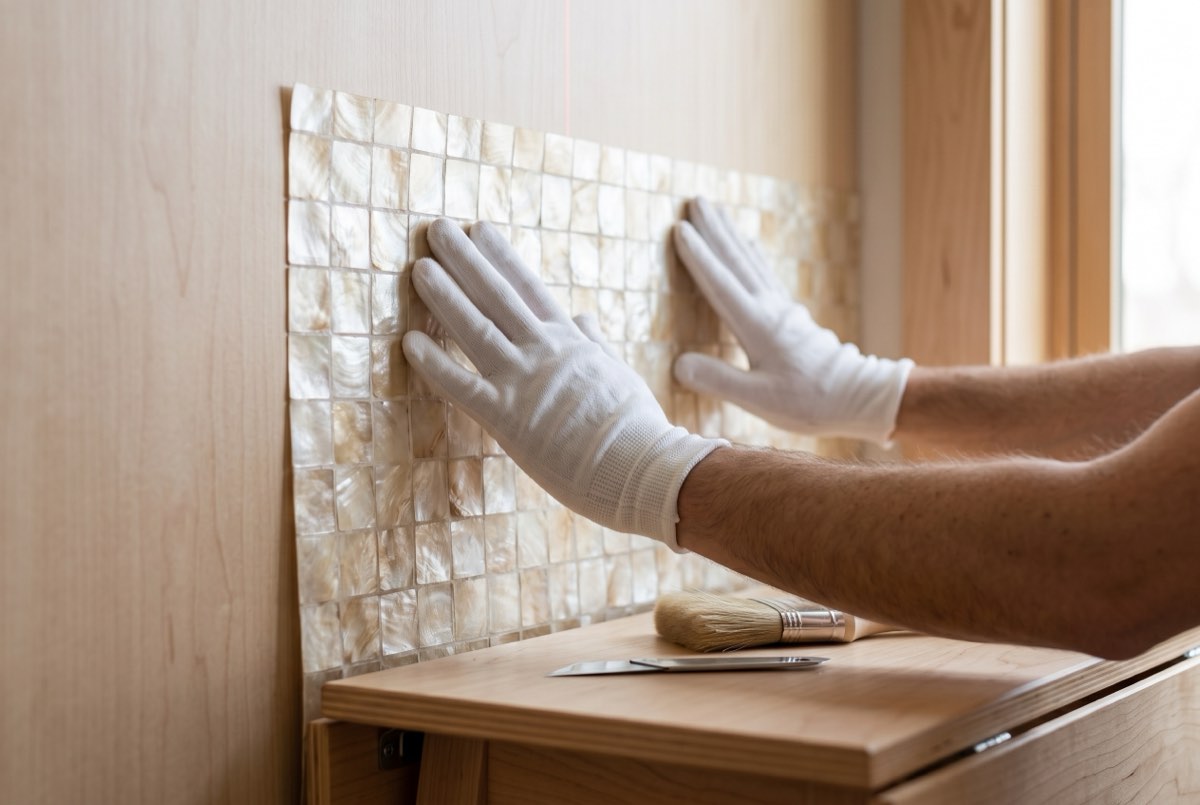
| Mother-of-pearl | Pearl tiles on paper or mesh | Heavy-duty clay, per house | Level 5, sealed | Never rolled; laser-set | Powder rooms, bars, ceilings |
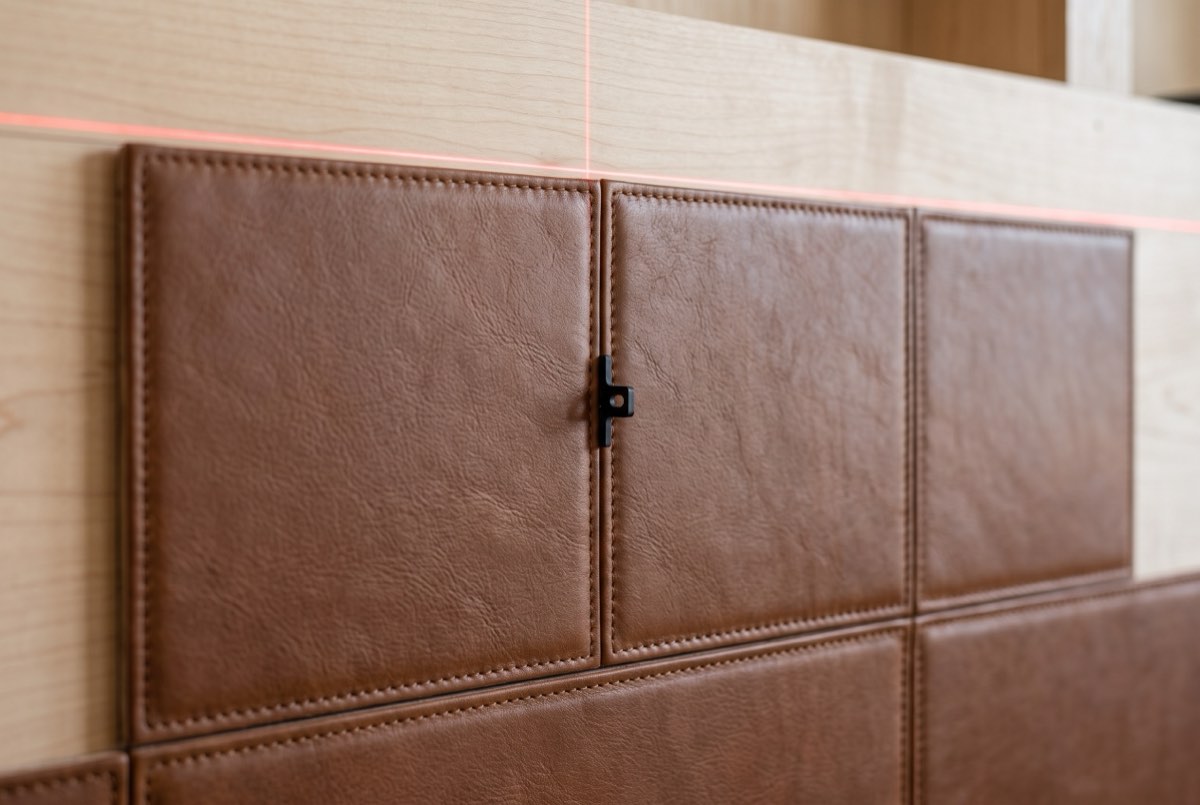
| Leather tile | Hide on a rigid or felt back | Contact, construction, or epoxy, per house | Flat, sealed, blocked where heavy | Acclimated 48 h; laser-set; fresh blade | Bars, studies, executive offices |
| Wood and stone veneer tile | Thin wood or stone on a flexible back | Construction or epoxy, per house | Flat, primed for the adhesive | Laser-set; full course at eye level | Feature walls, fireplaces, offices |
Where specialty performs
What specialty demands at the wall
The material is correct more often than the installation. These are the steps that close the gap.
No single paste serves this group. The product's data sheet names the adhesive, and the crew confirms it with the house before the order. The wrong family shows through, lets go, or stains the face.
Level 5 for anything with sheen, proven under a raking light. Sealed and flat for everything. Blocking behind the drywall where the tiles are heavy.
Beaded and shell surfaces are never rolled. Veneer is never over-wetted. Leather and cork are acclimated in the room before they are cut. Gloves for anything with sheen.
Laser-set lines at eye level, the layout centred, cuts matched end to end. A tile a millimetre off its line shows in every joint beside it.
Each house's installation instruction is read before the order is placed, and the wall is measured to it. Overage, direction, and sequence follow the house.
The adhesive
A paper-backed cork takes a clear or a clay paste, like a heavy paper. A wood veneer takes a heavy-duty clay or, for some houses, a contact adhesive, because the backing must never be soaked. Shell and pearl take a heavy clay that holds weight without wetting the face. Leather tiles take a contact, a construction adhesive, or an epoxy, because they are heavy and they move.
Choose wrong and the failure is specific: a clear paste under a leather tile lets go in a season; a wet clay under a veneer lifts the grain; a construction adhesive under a cork shows through as shadow. So the adhesive is never assumed. The product's data sheet names it, and the crew confirms it with the house before the order, in writing where the house offers it.
The layout
A tiled wallcovering is a grid, and a grid shows every error twice: once in the tile and once in the joint beside it. Leather, shell, pearl, and veneer tiles are set from a laser line at eye level, outward from a centre line, so the full course sits where the eye reads it and the cuts land at the floor, the ceiling, and the corners, the same size at both ends.
Outlets and sconces are moved to joints where the electrician allows it, so no tile is cut around a plate. The layout is drawn from James's measurement, agreed with the designer, and kept: a replacement tile years later goes back to the same line.
The handling
Shell, bead, and pearl crack under a seam roller, so their seams are set by hand and bridged rather than pressed. Veneer curls and lifts its grain if the backing is soaked, so the paste goes on the wall and the sheet is set from the top down without flooding it. Leather and cork move with humidity, and in a Wasatch Back winter at fifteen percent humidity a tile cut on arrival will not be the same size a week later, so they sit unboxed and flat in the room for two days before the first cut.
Cork takes a mark, and where the house's instruction allows it, a clear sealer goes on after installation. Gloves for anything with sheen. A fresh blade on every cut of veneer and leather. Nothing on this page is wiped; a mark is referred to the house's guidance. The protocol is published per product, and the crew reads it before the order.
Living with specialty surfaces
Real materials, treated as what they are.
Dust dry with a soft brush or a feather duster. Cork and leather take a barely damp cloth where the house allows; shell, bead, and veneer take none. No sprays, no solvents. A mark is referred to the house's guidance.
Cork darkens and leather fades under direct, sustained sun; shell and pearl hold. Walls that take the sun are identified at the measurement, and the specification follows the room.
Leather and cork move with the seasons and settle; veneer holds on a sealed wall. Steam and wet rooms are declined at the measurement.
Leather and cork improve with a hand on them. Shell, bead, and pearl do not: they are placed above a chair rail or away from traffic, and treated like a mirror.
Installed on the right adhesive and a sealed wall, these materials serve for decades. Leather and cork age visibly and well; veneer and shell hold their look.
A single tile of leather, shell, or veneer can be replaced years later if the lot is kept and the layout drawing is on file. Keep the surplus flat, dry, and dark, and note the lot.
Why Mancini
Set on true lines. Seams by hand where the material asks. Fresh blade on every cut.
A specialty wall shows the hand that set it in every joint. The standard is measured in what you do not see: no tile off its line, no cracked shell, no lifted grain.
Installed to the instructions each house publishes, product by product.
Every house publishes the adhesive, the substrate, and the handling for each product. We read it before the order, confirm the adhesive with the house, and follow it at the wall. No shortcuts, no substitutions.
Four active crews. Twelve trained installers. Scheduling measured in weeks.
Multi-crew capacity means a specialty project moves on the designer's timeline, with acclimation and cure written into the schedule rather than skipped.
Specialty surfaces, installed
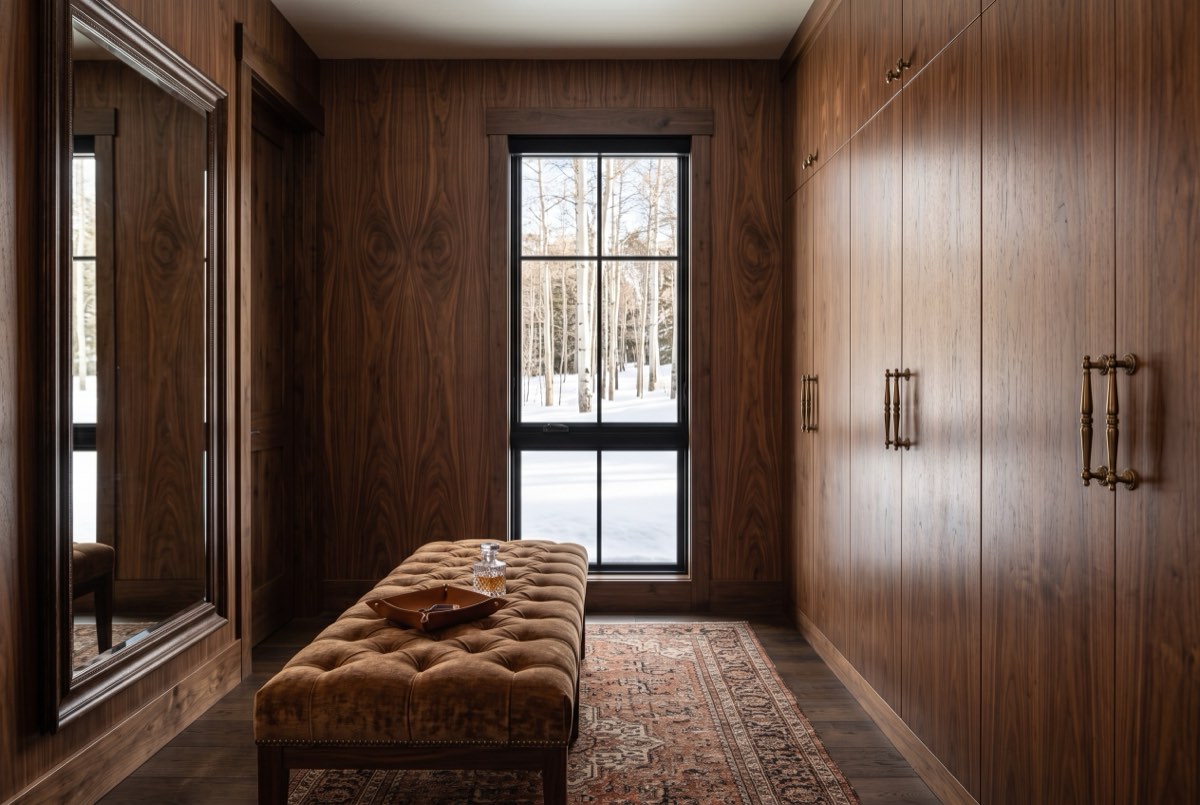
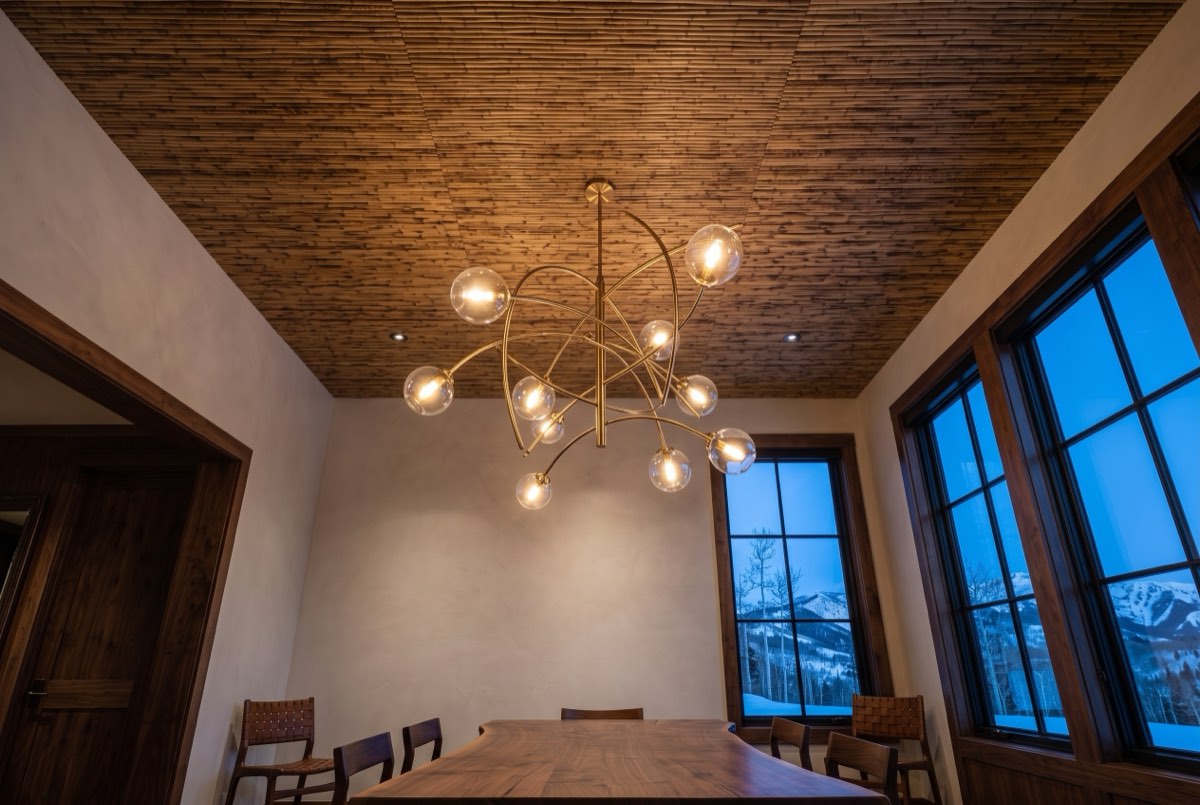
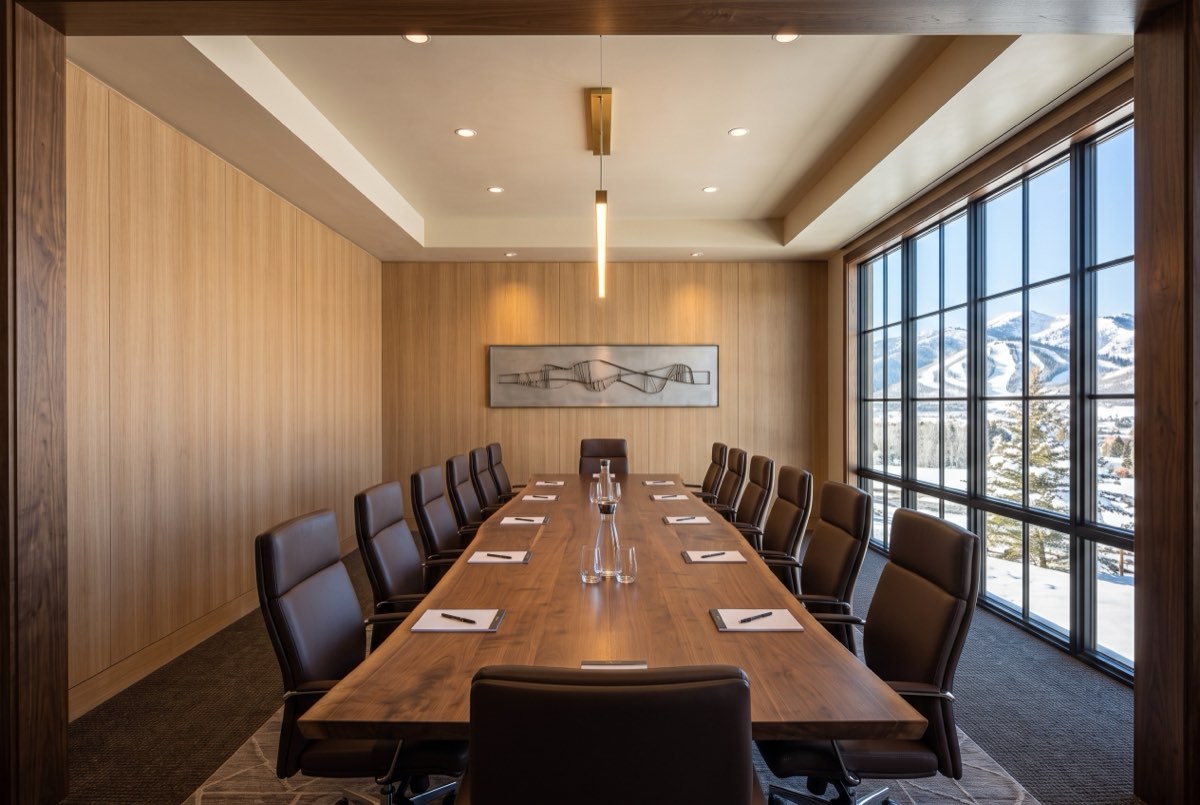
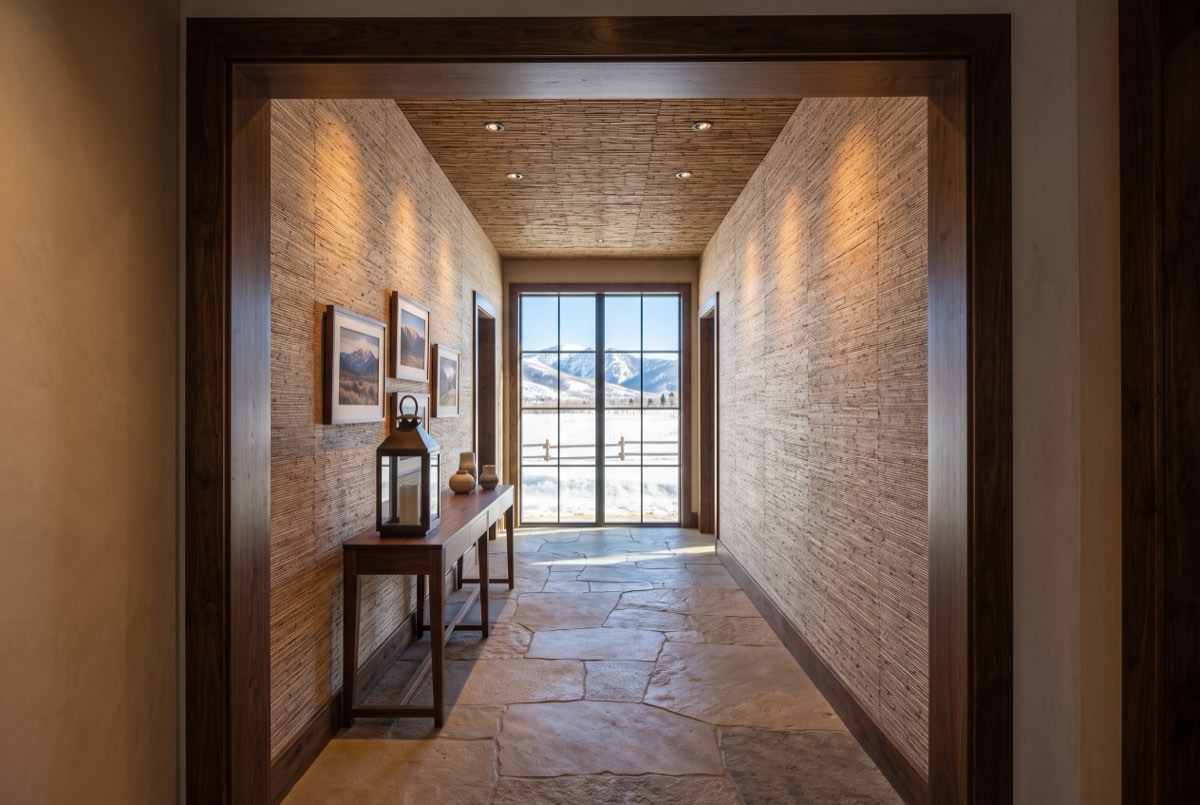
Specialty surfaces are installed by the crews that carry Mancini's grasscloth, silk, and metallic work across the Wasatch Back: four crews, twelve trained installers, fully insured and bonded, with 70+ five-star reviews.
The houses
Each house builds its specialty products differently and publishes its own handling protocol. These are the ones we install most, and what each asks for.
Chicago. Beaded, mother-of-pearl, capiz, wood veneer, and leather wallcoverings, each with its own published handling protocol. Shell and bead are never rolled.
Installation notesCork, bamboo, reed, and wood veneer alongside its grasscloths, with adhesive and seam instructions per collection.
Installation notesCork, veneer, leather, and specialty textures for residential and hospitality, with tested data per product.
Installation notesBelgian texture innovation, including cork, mica, and shell-effect collections sold by lot with collection-specific instructions.
Installation notesBelgian natural-material wallcoverings, cork and reed among them, with the paste following the backing.
Installation notesFrench contemporary specialty surfaces, cork and veneer included, often wide-width; wide goods change the seam count and the paste.
Installation notesLeather wall tiles and hides on rigid backs, acclimated in the room and set on laser lines to the maker's adhesive.
Installation notesSend the sample and the room. If it is a real material on a backing, we have installed something built the same way, and we confirm the adhesive with the house before the order.
Send the sampleDesign house and manufacturer names referenced on this page are the property of their respective owners. They identify materials we install and completed project history. Mancini Wallpapers holds no partnership, certification, or endorsement from any house named, and installs every product to the instructions its manufacturer publishes.