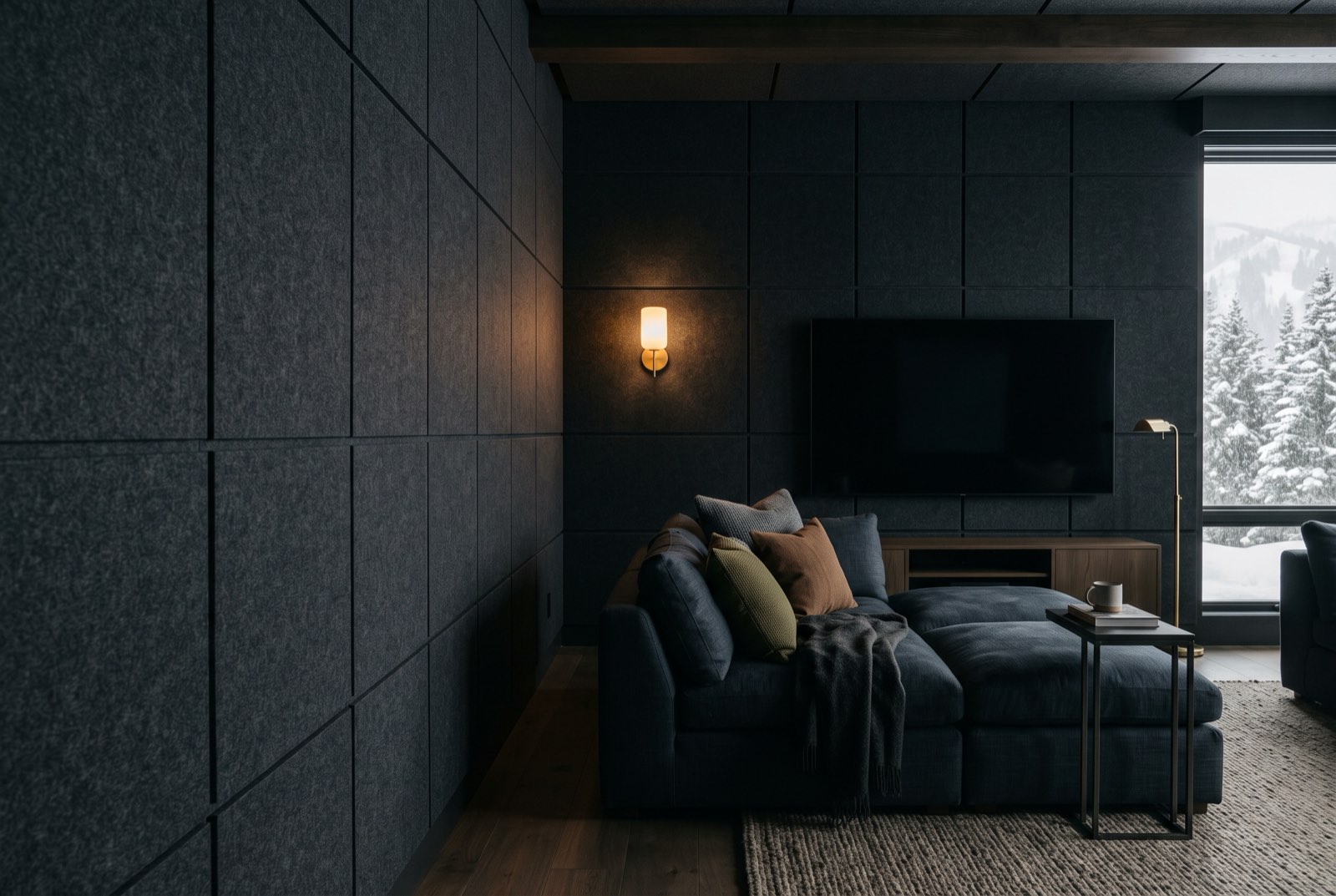
Charcoal wool felt acoustic panels with shadow-gap reveals across a media room, Park City, Utah
Park CityUtahFelt

Material · Felt and acoustic

Felt and Acoustic Wallcovering Installation in Park City and Across Utah

Wool felt and engineered acoustic textiles, as roll goods, cut tiles, and rigid panels, installed to the specification each maker publishes. Layout drawn to the millimetre. Fresh blade on every edge. Installation-only, headquartered in Park City.

What felt is

A wall that absorbs sound and takes colour like cloth

Wool felt and PET acoustic textile, supplied as roll goods, cut tiles, or rigid panels. They absorb sound, add depth, and take colour in ways paper cannot. A media room wrapped in felt stops ringing; a home office in felt tiles stops echoing on a call.

Felt does not reposition once set. The adhesive grabs on contact, and a panel a millimetre off its mark stays a millimetre off, and the reveal beside it shows the difference. The material asks for a layout drawn to the millimetre before the first panel touches the wall, and a fresh blade on every cut, because felt fuzzes on a dull one.

Felt and acoustic products are specified across Park City and the Wasatch Back for media rooms, home offices, libraries, and playrooms, and for conference rooms and lobbies in our commercial work, and they are installed by the crews that carry our textile wallcovering work.
Wool feltPET acoustic panelFelt tilesAcoustic bafflesFelt over slatsStretched textilePinboard feltAcoustic ceilings
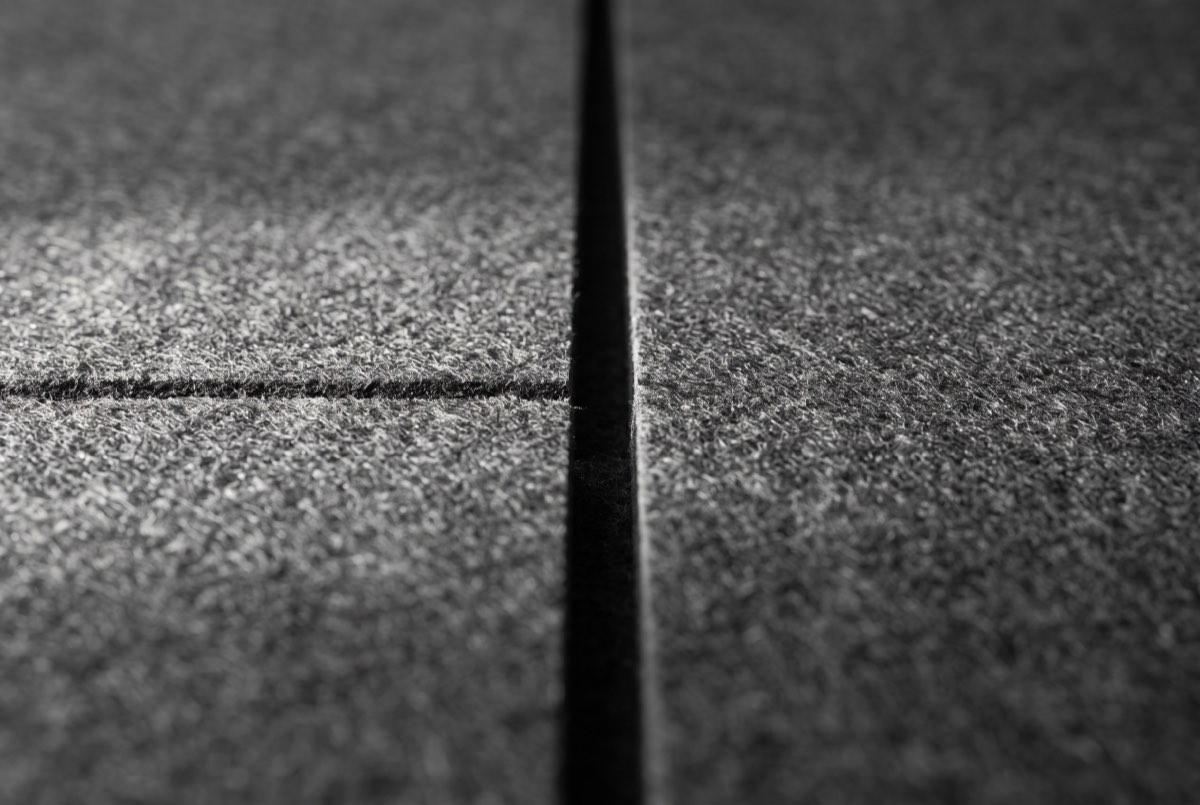
Wool felt panel edge and shadow-gap reveal, cut clean, close detail, Park City, Utah

Two materials

Wool felt and PET panel, and what each does to a room

Wool felt is pressed fibre, two to five millimetres thick, dense, and dyed through. It comes on the roll or as cut tiles, goes to the wall on adhesive, and reads as warmth: a textile with no weave. PET acoustic panel is bonded polyester fibre, nine to twelve millimetres, semi-rigid, and edge-cut. It reads as architecture, and it is the material behind slatted walls, ceiling baffles, and pinboard walls.

Both absorb sound the same way, by turning it into friction inside the fibre. Thicker absorbs more, and an air gap behind the panel absorbs more still. Neither repositions once it is set, which is why the layout comes first on this material and the installation follows a drawing.

  • Wool felt: roll goods and tiles, adhesive to a flat, sealed wall, colour sequenced across the run
  • PET panel: tiles, panels, and baffles, adhesive or mechanical clips, often over a gap
  • Both: cut from the face on a straightedge, blade changed every pass
Cross-sections of wool felt and PET acoustic panel, compared for thickness, density, and how each is fixed to the wall Wool feltPET acoustic panel Pressed wool fibre · 2–5 mm · denseRoll goods or cut tiles · adhesive to the wallBonded polyester fibre · 9–12 mm · semi-rigidPanels and tiles · adhesive or clips Both absorb sound by turning it into friction inside the fibre. Thicker and more open absorbs more, and an air gap behind the panel absorbs more still. Wool felt takes colour like a textile and reads as warmth. PET panel reads as architecture: flat, edge-cut, and often set behind slats or as baffles. Neither repositions once set. The adhesive grabs on contact, so the layout is drawn first and every panel goes to its mark.Felt fuzzes on a dull blade. The blade is changed every pass, and the cut is made from the face on a straightedge. Drawn to the millimetre · fixed to the specification · cut with a fresh blade
Wool feltPressed wool fibre · 2–5 mm · dense · dyed throughRolls or tiles · adhesive to the wall · reads as warmth PET acoustic panelBonded polyester · 9–12 mm · semi-rigid · edge-cutPanels, tiles, baffles · adhesive or clips · reads as architecture Both absorb by friction inside the fibre.Thicker absorbs more; an air gap behind absorbs more still.Neither repositions once set.Felt fuzzes on a dull blade. Drawn to the millimetre · fixed to spec · fresh blade
Cross-sections of wool felt and PET acoustic panel, with thickness, density, and fixing

Felt guide

Eight forms, eight behaviours

Felt and acoustic products arrive in very different forms. Each one asks something different of the wall, the fixing, and the layout.

FormMaterialFixingWhere it performsLayoutAt the wall
Felt roll goodsWool felt, 2–3 mmAdhesive, full spreadMedia rooms, corridors, officesSeams planned like a textileWall flat and sealed. Seams butted. Colour sequenced.
Felt tilesWool felt, 3–5 mm, die-cutAdhesiveOffices, playrooms, feature wallsGrid centred, reveals set with spacersNo repositioning. Marks laser-set.
PET acoustic panelBonded polyester, 9–12 mmAdhesive or clipsMedia rooms, conference roomsGrid or pattern from the drawingEdges cut clean; reveals equal to the millimetre.
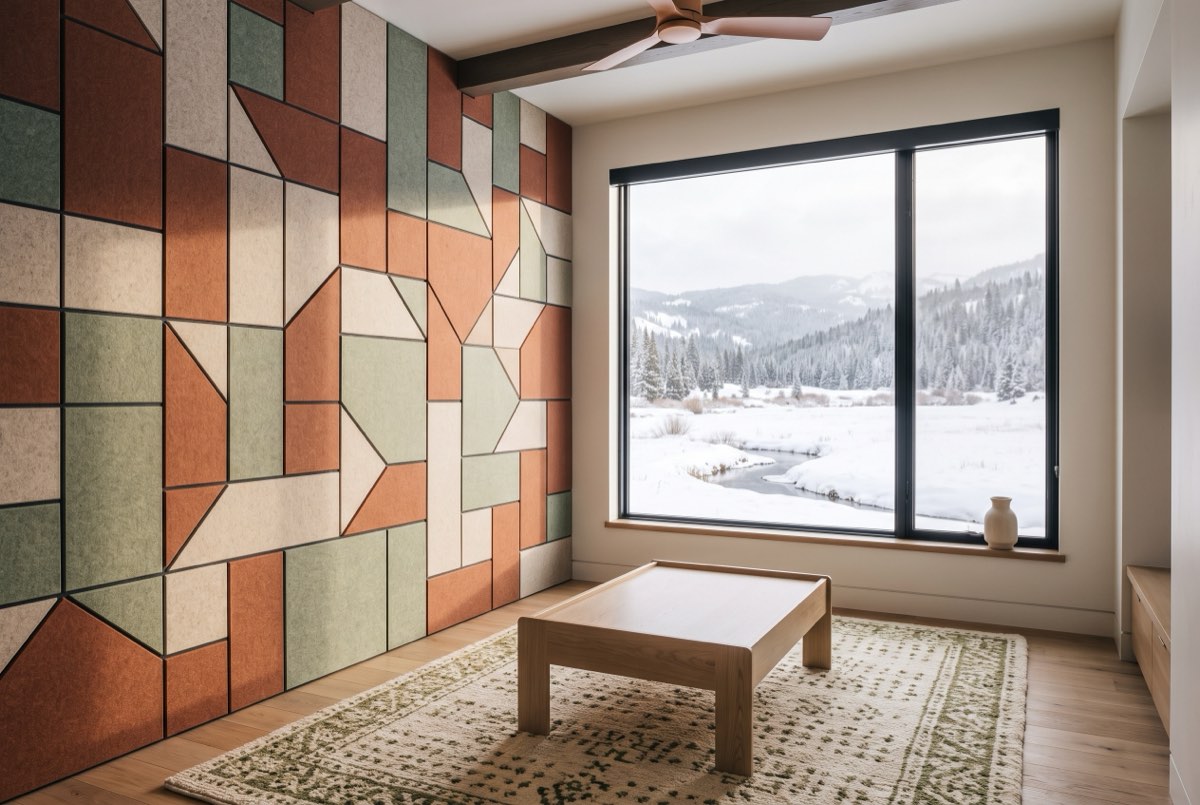
PET tiles and shapesPolyester, 9–12 mm, cut shapesAdhesivePlayrooms, lobbies, stair hallsPattern set out from a centre lineEvery piece to its mark; the pattern reads across the wall.
Felt over slatsPET backing behind timber slatsScrewed or clippedMedia rooms, offices, diningSlat module centred on the wallCoordinated with the millwork; blocking behind drywall.
Acoustic bafflesPET or felt fins, hungCeiling clips or cableGreat rooms, offices, lobbiesSpacing from the acoustician's drawingSet from a scaffold; every fin level and plumb.
Stretched acoustic textileFabric over infill on a trackTrack and tensionTheatres, listening roomsSeamless per wallInfill first, track second, fabric tensioned last.
Pinboard feltDense wool or PET, 6–12 mmAdhesiveOffices, studies, studiosFull wall or framed panelFlat substrate; edges finished or trimmed.

Felt roll goods

Material
Wool felt, 2–3 mm
Fixing
Adhesive, full spread
Where it performs
Media rooms, corridors, offices
Layout
Seams planned like a textile
At the wall
Wall flat and sealed. Seams butted. Colour sequenced.

Felt tiles

Material
Wool felt, 3–5 mm, die-cut
Fixing
Adhesive
Where it performs
Offices, playrooms, feature walls
Layout
Grid centred, reveals set with spacers
At the wall
No repositioning. Marks laser-set.

PET acoustic panel

Material
Bonded polyester, 9–12 mm
Fixing
Adhesive or clips
Where it performs
Media rooms, conference rooms
Layout
Grid or pattern from the drawing
At the wall
Edges cut clean; reveals equal to the millimetre.

PET tiles and shapes

Material
Polyester, 9–12 mm, cut shapes
Fixing
Adhesive
Where it performs
Playrooms, lobbies, stair halls
Layout
Pattern set out from a centre line
At the wall
Every piece to its mark; the pattern reads across the wall.

Felt over slats

Material
PET backing behind timber slats
Fixing
Screwed or clipped
Where it performs
Media rooms, offices, dining
Layout
Slat module centred on the wall
At the wall
Coordinated with the millwork; blocking behind drywall.

Acoustic baffles

Material
PET or felt fins, hung
Fixing
Ceiling clips or cable
Where it performs
Great rooms, offices, lobbies
Layout
Spacing from the acoustician's drawing
At the wall
Set from a scaffold; every fin level and plumb.

Stretched acoustic textile

Material
Fabric over infill on a track
Fixing
Track and tension
Where it performs
Theatres, listening rooms
Layout
Seamless per wall
At the wall
Infill first, track second, fabric tensioned last.

Pinboard felt

Material
Dense wool or PET, 6–12 mm
Fixing
Adhesive
Where it performs
Offices, studies, studios
Layout
Full wall or framed panel
At the wall
Flat substrate; edges finished or trimmed.

Where felt performs

The right rooms, and the wrong ones

Where it belongs

  • Media and theatre rooms
  • Home offices and studies
  • Libraries and reading rooms
  • Conference rooms and lobbies
  • Stair halls and corridors where sound carries
  • Playrooms and children's rooms

Where it does not

  • Baths, laundries, and any room with steam
  • Kitchens, behind a range or a sink
  • Walls in direct, sustained sun, for dyed wool
  • Substrates that are not flat: felt shows a wave as a shadow
  • Rooms where the fixing has not been confirmed against the wall
  • Anywhere a panel must be moved after it is set

What felt demands at the wall

Five disciplines before a felt wall reads as one

The material is correct more often than the installation. These are the steps that close the gap.

01

Layout drawn to the millimetre

The wall is measured, the module chosen with the designer, and the grid centred so the cuts at both ends match. Every reveal is set with spacers; every cut is drawn before the first panel is mounted.

02

Fixing matched to the product and the substrate

Adhesive or mechanical, per the maker's data sheet. Blocking, furring, and track are coordinated with the contractor before the drywall closes.

03

Fresh blade on every pass

Felt fuzzes on a dull blade. The blade is changed every pass, and the cut is made from the face on a straightedge.

04

Panels sequenced for colour

Dyed felt varies by lot. Panels are unpacked, laid out, and sequenced so the colour reads as one surface across the wall.

05

Substrate flat and sealed

Felt shows a wave as a shadow. The wall is skimmed flat, sealed, and checked before the layout is marked.

The layout

Centred, equal reveals, cuts drawn first

A felt wall is a grid, and a grid shows every error twice: once in the panel and once in the reveal beside it. So the wall is measured, the panel module is chosen with the designer, and the grid is centred so that the cuts at the two ends match. Every reveal is the same width, held with spacers as the panels go up.

Every cut at an outlet, a switch, a sconce, or a door head is drawn before the first panel is mounted. A felt panel cannot be nudged after it meets the adhesive, so the mark on the wall is the only chance. The marks are laser-set and checked against the drawing twice, and the designer signs the layout.

  • Module and reveal width chosen with the designer; twelve millimetres is the usual reveal on a panel wall
  • Outlets and switches moved to reveals where the electrician allows it, so no panel is cut around a plate
  • The drawing is kept for the client and for any future replacement panel
Elevation of a media room wall gridded for felt panels, showing equal reveals, a centred layout, and the cuts planned at the outlet and the door Door head outlet centre line 12 mm12 mm The wall is measured, the panel module chosen with the designer, and the grid is centred so the cuts at both ends match. Every reveal is the same width, set with spacers, and every cut at an outlet, a switch, or a door head is drawn before the first panel is mounted. A felt panel cannot be nudged after it touches the adhesive. The mark on the wall is the only chance, so the marks are laser-set and checked against the drawing twice. Centred grid · equal reveals · cuts drawn first · laser-set marks
Dashes · centre lines of the wallEqual reveals · 12 mm, set with spacersGrey panel · cut at the door head, drawn firstSmall block · outlet, moved to a reveal The grid is centred so the cuts at both endsmatch. A panel cannot be nudged after itmeets the adhesive, so the marks are laser-setand checked against the drawing twice. Centred · equal reveals · cuts drawn first
A media room wall gridded for felt panels: centred grid, equal reveals, the outlet and the door head planned

The fixing

Adhesive, clips, or track: the data sheet decides

Wool felt rolls and tiles go to the wall on a full spread of the adhesive the maker names, on a flat, sealed substrate, with no repositioning. Rigid PET panels and baffles take adhesive or mechanical clips, and the clip system needs blocking behind the drywall and often leaves a gap that adds absorption. Stretched acoustic textile is a track system: infill first, track second, fabric tensioned last, seamless per wall.

The product's data sheet names the fixing and the substrate it needs, and the crew reads it before the order. A felt tile specified for adhesive on painted drywall fails on a primed-only wall. A clip system without blocking has nothing to bite into. So the substrate is confirmed at the measurement, and blocking, furring, and track are coordinated with the contractor before the drywall closes.

  • Adhesive: full spread, the maker's product, no substitutions
  • Clips: blocking located and photographed before drywall; panels removable for service
  • Track: infill depth and fabric tension per the theatre or listening-room specification
Three ways felt and acoustic panels are fixed: full-spread adhesive, mechanical clips with an air gap, and stretched textile on a track AdhesiveClips with air gapStretched on track air gap Wool felt rolls and tilesFull spread · no repositioningRigid PET panels, bafflesRemovable · gap adds absorptionAcoustic textile over infillSeamless · tensioned into the track The product's data sheet names the fixing and the substrate it needs. A felt tile specified for adhesive on painted drywall fails on a primed-only wall; a clip system needs blocking behind the drywall. Where the room is meant to perform acoustically, the gap and the infill are part of the specification, and the installation follows the acoustician's drawing. The crew reads the product's instruction before the order and confirms the substrate at the measurement. Blocking, furring, and track are coordinated with the contractor before drywall closes. Adhesive · clips · track: the data sheet decides, the crew executes
Adhesive · wool felt rolls and tilesFull spread of the maker's adhesive · no repositioning Clips with air gap · rigid PET panels, bafflesair gapBlocking behind drywall · removable · gap adds absorption Stretched on track · acoustic textileInfill first · track second · fabric tensioned last The data sheet names the fixing and the substrate.Confirmed at the measurement; blocking coordinatedwith the contractor before drywall closes. The data sheet decides · the crew executes
Three fixings for felt and acoustic products: full-spread adhesive, clips over an air gap, and stretched textile on a track

What it does to sound

Thickness and air do the absorbing, and felt on the wall changes how a room feels

Thin felt on the wall changes how a room feels more than how it measures. It kills the flutter off a hard wall and warms the sound of a room, which is what a library or a home office wants. Real absorption, the kind a media room or a conference room needs, comes from thickness and from air behind the panel, and it is specified as coverage, thickness, and gap together.

So a room that must perform is specified by the designer or an acoustician, with the panel, the gap, and the coverage on a drawing, and Mancini installs to that drawing. A room that only needs to feel quieter can take felt straight to the wall. We install both; we do not design the acoustics, and we say so when a client asks a room to do something the wall alone cannot.

  • Indicative ranges from published product data; the maker's tested values for the specified product govern
  • Ceiling baffles and gapped panels are set from the acoustician's spacing, from a scaffold
  • Where a room must meet a number, the specification comes before the order, and the crew builds to it
Bar chart of indicative sound absorption for a painted wall, thin wool felt, a thick PET panel, and the same panel over an air gap Indicative absorption, mid frequencies (NRC, 0 = reflects everything, 1 = absorbs everything) 00.250.50.751.0 Painted drywallWool felt, 3 mm, gluedPET panel, 12 mm, gluedPET panel, 12 mm, 50 mm gap ≈ 0.05≈ 0.20≈ 0.60≈ 0.85 Thin felt on the wall changes how a room feels more than how it measures: it kills the flutter off a hard wall and warms the sound. Real absorption comes from thickness and from air behind the panel. So a media room that must perform is specified with the panel, the gap, and the coverage together, and installed to that drawing. A library that only needs to feel quieter can take felt straight to the wall. Indicative ranges from published product data; the maker's tested values for the specified product govern. Mancini installs to the acoustician's or designer's specification and does not design the acoustics.
Indicative absorption, NRC (0 reflects, 1 absorbs) Painted drywallWool felt, 3 mm, gluedPET panel, 12 mm, gluedPET panel, 12 mm, 50 mm gap ≈ 0.05 ≈ 0.20 ≈ 0.60 ≈ 0.85 Thin felt changes how a room feels.Thickness and air behind the panel changehow it measures.Indicative; the maker's tested values govern.Mancini installs to the specification anddoes not design the acoustics.
Indicative mid-frequency absorption for painted drywall, thin felt, a thick PET panel, and the same panel over an air gap

Living with felt

Care, lifespan, and what to expect at year ten

A textile on the wall, treated as one.

Cleaning

Vacuum with a soft brush attachment along the nap. A dry mark lifts with a clean, dry sponge; a liquid is blotted, never rubbed. No steam, no solvents. The maker's guidance governs for a specific stain.

Sun

Dyed wool softens under direct, sustained sun, and PET panels hold colour better. Walls that take the sun are identified at the measurement, and the specification follows the room.

Humidity

Felt is stable in a room with normal humidity. Steam rooms, laundries, and kitchens are declined at the measurement.

Wear

Felt is forgiving of contact in a way paper is not; it is chosen for playrooms for that reason. Pinboard felt heals pin holes. Sharp edges and abrasion mark it, and a marked panel is replaced, not patched.

Lifespan

Installed on a flat, sealed wall and kept out of the sun, wool felt and PET panel serve for decades. The colour holds; the acoustic performance does not degrade.

Replacement

Because the layout drawing and the module are kept, a single panel can be cut and set years later. Keep any surplus tiles flat, dry, and in their wrapping, and note the lot.

Why Mancini

The standard a felt wall demands

01

Precision Craft

Laid out to the millimetre. Reveals equal. Every edge cut with a fresh blade.

A felt wall is a grid, and a grid shows the hand that set it. The standard is measured in what you do not see: no reveal a millimetre wide of its neighbour, no fuzzed edge, no cut that was not drawn.

02

Specification Discipline

Installed to the instructions each maker publishes, tile by tile.

Every felt and acoustic maker publishes a data sheet: the adhesive, the substrate, the clip, the gap. We read it before the order and follow it at the wall, and where an acoustician has drawn the room, we build to the drawing.

03

Responsive Capacity

Four active crews. Twelve trained installers. Scheduling measured in weeks.

Multi-crew capacity means a felt project is coordinated with the contractor before drywall closes and installed when the millwork is ready, on the designer's timeline.

Felt and acoustic, installed
Across Park City, the Wasatch Back, and the Salt Lake Valley

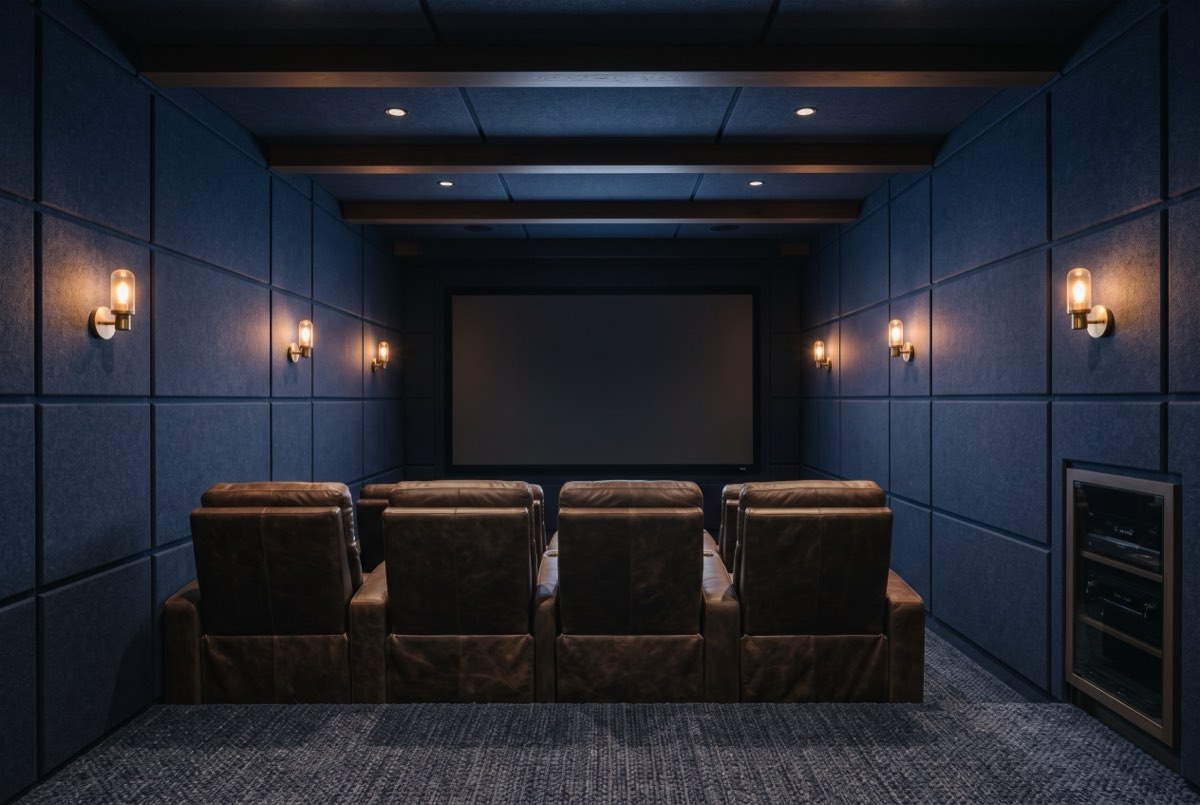
Navy felt acoustic walls and ceiling in a home theatre with brass sconces, Promontory, Utah
Navy felt, home theatre
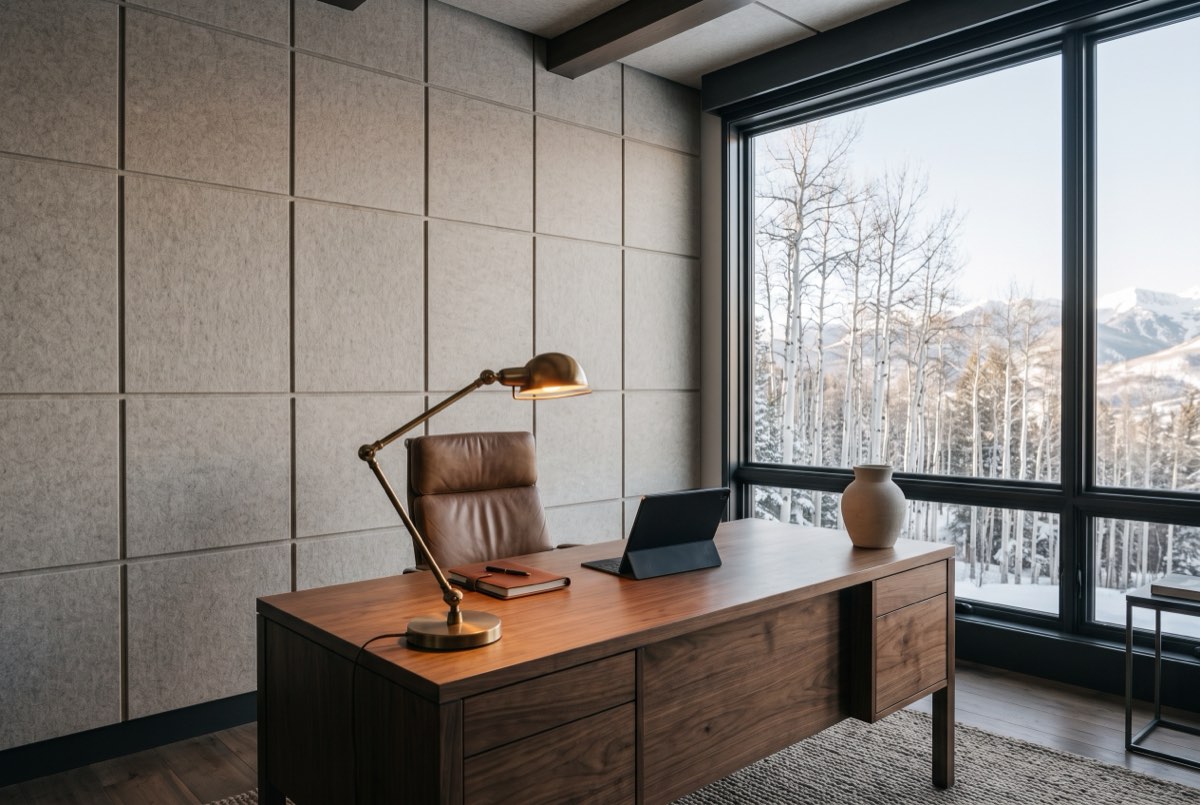
Oatmeal felt acoustic tiles behind a walnut desk in a home office, Park City, Utah
Felt tiles, home office
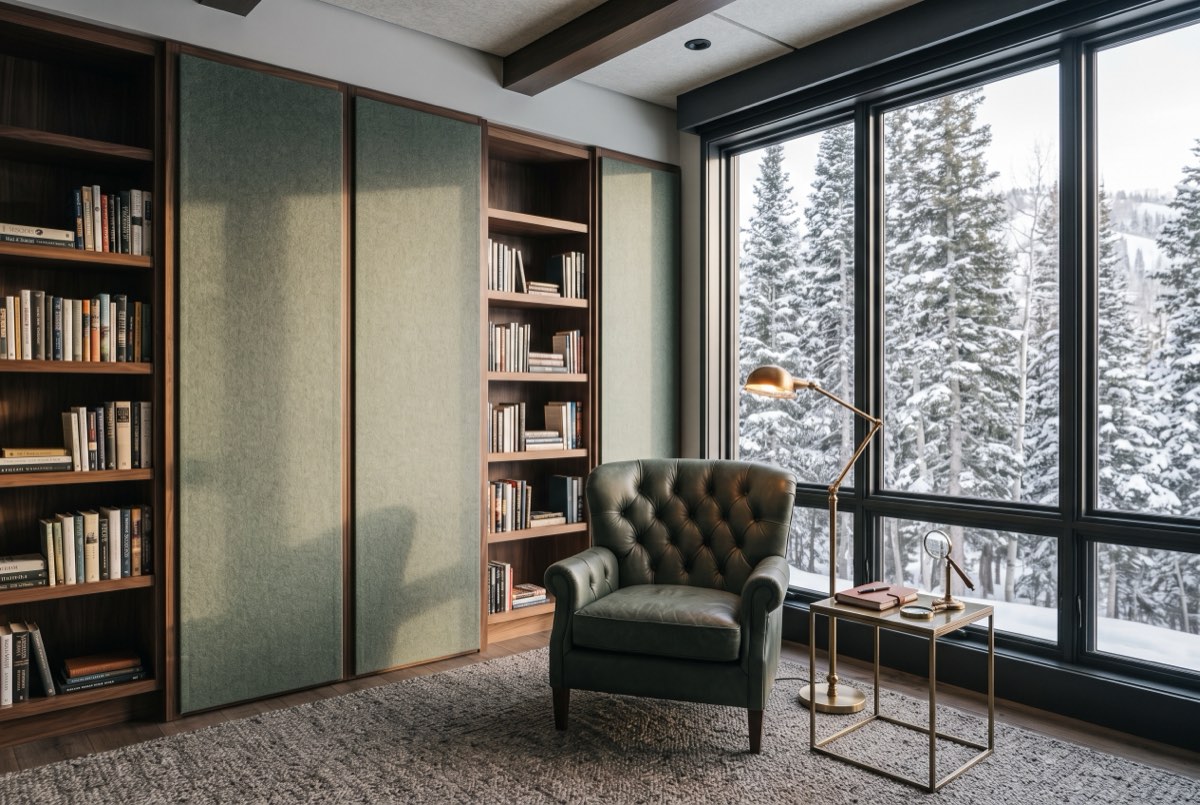
Sage felt acoustic panels between walnut shelves in a library, Deer Valley, Utah
Sage panels, library
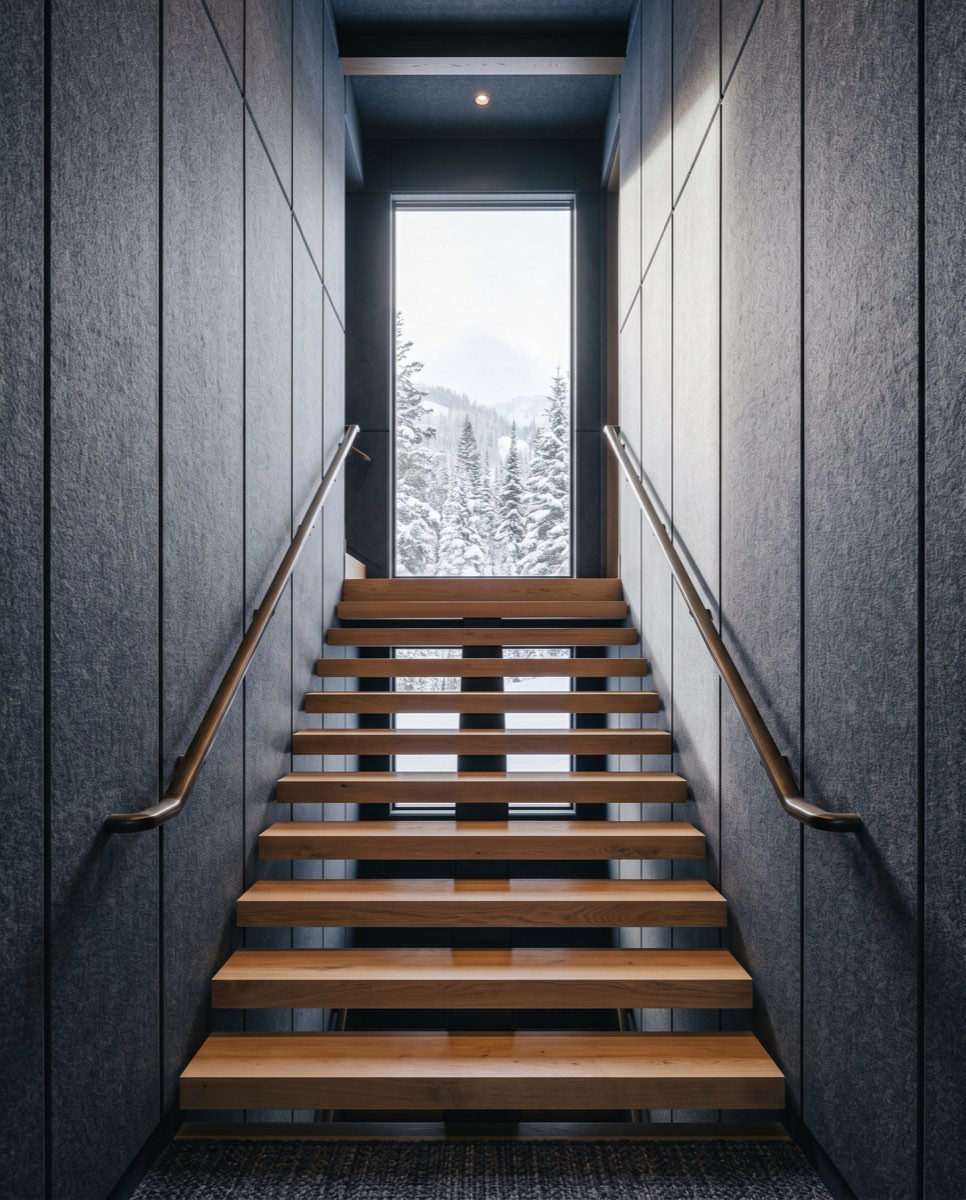
Tall graphite felt panels up a stair hall wall, Park City, Utah
Graphite panels, stair hall
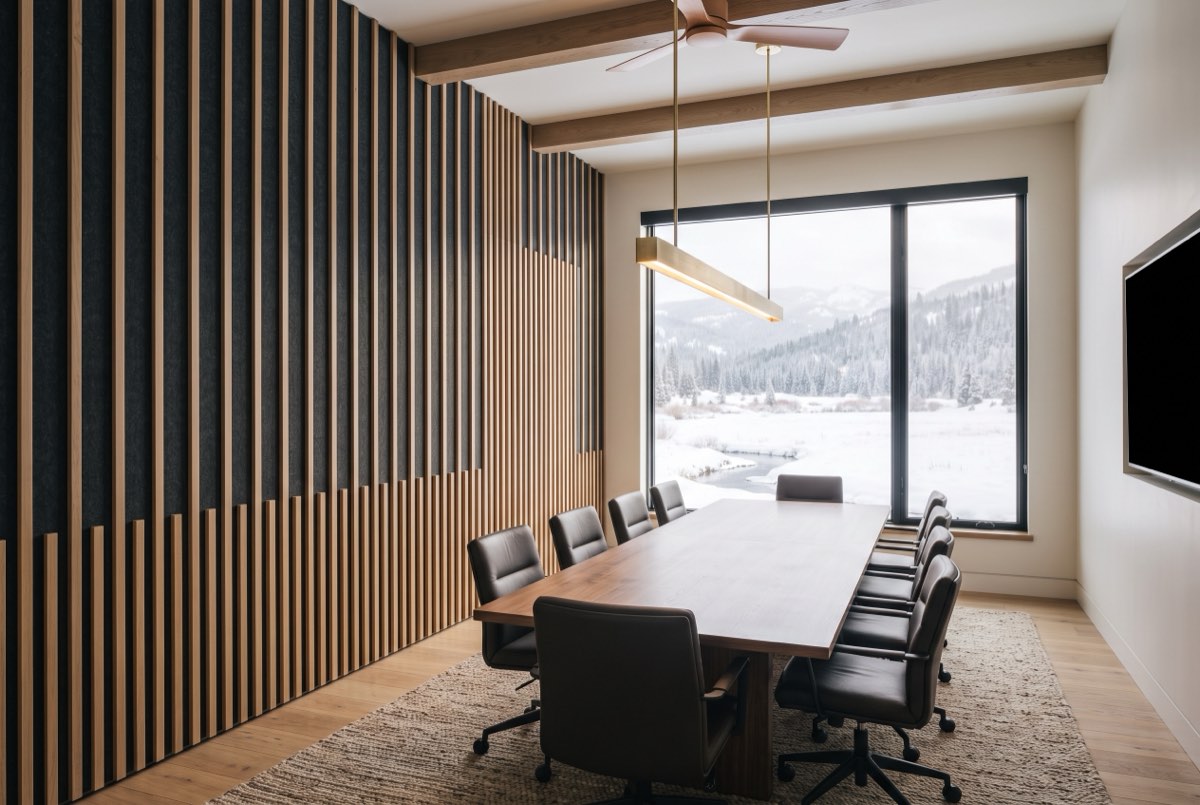
PET acoustic felt behind oak slats in a Park City conference room, Utah
PET behind slats, conference room
Felt acoustic ceiling baffles over a great room with tall glass, Park City, Utah
Baffles, great room ceiling
Warm-toned felt tiles in a playroom, Heber Valley, Utah
Felt tiles, playroom
Wool felt panel edge and shadow-gap reveal, cut clean, close detail, Park City, Utah
Cut edge and reveal
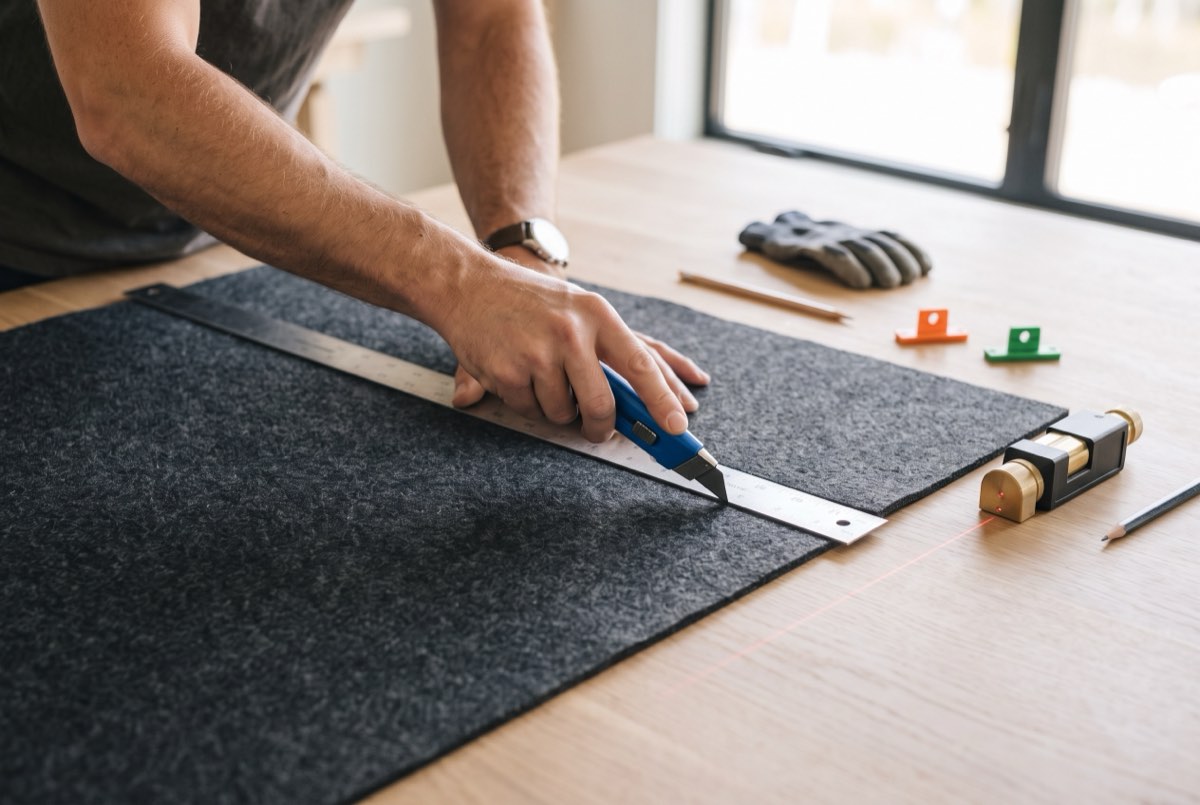
Hands cutting wool felt against a straightedge with a fresh blade, installation, Utah
Fresh blade, straightedge

Felt and acoustic products are installed by the crews that carry Mancini's textile wallcovering work across the Wasatch Back and its commercial work along the Wasatch Front: four crews, twelve trained installers, fully insured and bonded, with 70+ five-star reviews.

The makers

Felt and acoustic products we know at the wall

Each maker builds its product differently and publishes its own data sheet. These are the ones we install most, and what each asks for.

FilzFelt

Wool felt in roll goods, tiles, and acoustic systems, with adhesive and substrate instructions published per product. Colour sequenced by lot across the wall.

Installation notes

Maharam

Wool felt and acoustic textiles for the designer market, including stretched and panelised systems, each with its own fixing specification.

Installation notes

Designtex

Acoustic wallcoverings and PET panel systems for residential and contract work, with tested absorption data per product.

Installation notes

Kirei

PET acoustic panels, baffles, and felt-backed slat systems. Clip and adhesive fixings per product; blocking coordinated before drywall.

Installation notes

Autex

PET acoustic panels, tiles, and cut shapes from New Zealand, adhesive-fixed to the published substrate specification.

Installation notes

Woven Image

PET acoustic tiles and panels in cut patterns; laid out from a centre line so the pattern reads across the wall.

Installation notes

BAUX

Wood-wool and felt acoustic tiles from Sweden, set to a drawn grid with the maker's adhesive and reveal.

Installation notes

Your product not listed?

Send the data sheet and the room. If it is felt or an acoustic panel, we have installed something built the same way, and we read the maker's instructions before the order.

Send the sample

Design house and manufacturer names referenced on this page are the property of their respective owners. They identify materials we install and completed project history. Mancini Wallpapers holds no partnership, certification, or endorsement from any house named, and installs every product to the instructions its manufacturer publishes.

Client reviews

Homeowners and designers, in their own words

5.0 · 70+ Google reviews

Where we install felt

Headquartered in Park City. Serving the Wasatch luxury corridor.

Four crews, twelve trained installers, most projects on the calendar within weeks.

Park CityDeer ValleyEmpire PassThe ColonyPromontoryGlenwildJeremy RanchHeber CityMidwayRed LedgesVictory RanchTuhayeAlpineHighlandTraverse MountainSalt Lake CityHolladayCottonwood HeightsDraperSandy

Questions

Fifteen felt and acoustic questions, answered

The questions homeowners, designers, and contractors ask before, during, and after a felt or acoustic installation.

Yes. Felt and acoustic panels are installed by the crews that carry our textile wallcovering work across Summit, Wasatch, Salt Lake, and Utah counties, laid out to the millimetre and fixed to the maker's data sheet. Where an acoustician has drawn the room, we build to the drawing.

Wool felt is pressed wool fibre, two to five millimetres thick, dyed through, and it reads as warmth. PET panel is bonded polyester fibre, nine to twelve millimetres, semi-rigid and edge-cut, and it reads as architecture. Both absorb sound by friction inside the fibre; the thicker product and an air gap behind it absorb more.

Thin felt changes how a room feels more than how it measures: it kills the flutter off a hard wall and warms the sound. Real absorption comes from thickness and from air behind the panel, so a media room that must perform is specified with the panel, the gap, and the coverage together, and installed to that drawing.

No. The adhesive grabs on contact, and a panel set a millimetre off its mark stays there. That is why the layout is drawn first, the marks are laser-set and checked twice, and every reveal is held with spacers as the panels go up.

Per the maker's data sheet: full-spread adhesive for wool felt rolls and tiles on a flat, sealed wall; adhesive or mechanical clips for rigid PET panels and baffles, with blocking behind the drywall; a track system for stretched acoustic textile. The substrate is confirmed at the measurement and the fixing is coordinated with the contractor before drywall closes.

Felt shows a wave as a shadow. A joint feathered proud of the wall reads as a band across the panel, and a rigid panel rocks on it. The wall is skimmed flat, sealed, and checked before the layout is marked.

Yes. Ceiling panels and hanging baffles are set from a scaffold, every fin level and plumb, at the spacing on the acoustician's or designer's drawing. Ceiling clips and cable need blocking or structure located before the ceiling closes.

Yes. Slatted acoustic walls are a PET backing behind timber slats, and the slat module is centred on the wall and coordinated with the millwork. Blocking is located before drywall, and the backing goes up before the slats.

Vacuum with a soft brush along the nap. A dry mark lifts with a clean, dry sponge; a liquid is blotted, never rubbed. No steam and no solvents. The maker's guidance governs for a specific stain, and a marked panel is replaced rather than patched.

Dyed wool softens under direct, sustained sun; PET panel holds colour better. Walls that take the sun are identified at the measurement, and the specification follows the room.

No. Existing wallpaper comes off and texture is skim-coated flat, then sealed, before the layout is marked. That preparation is part of the scope and is written into the proposal when the walls need it.

Every cut is drawn before the first panel is mounted. Where the electrician allows it, outlets and switches are moved into a reveal so no panel is cut around a plate; where they cannot move, the cut is planned and made from the face with a fresh blade.

It depends on the wall dimensions, the module, the reveal width, and where the cuts fall. James measures every wall, the module is chosen with the designer, and the quantity is derived from the drawn layout with the maker's overage. The proposal shows the arithmetic, and the surplus tiles stay with you for future replacement.

No. Mancini is installation-only. Product comes through your designer's trade account, the maker's dealer, or your own order, and we install what arrives. Designers keep their procurement chain and their markup; we are the execution at the end of it.

With a complimentary on-site measurement. James walks the space, notes what the room does to sound and where the blocking will need to be, and measures it himself. A written proposal follows, and the layout is drawn with the designer before the order. Send the property address and a photo of the room to begin.

Begin your felt project

Schedule a measurement

Send the property address and a photo of the room. James will come back with a time to walk the space, note what the room does to sound, and measure it himself. A written proposal follows.

hello@manciniwallpapers.com · Mon–Fri 8 AM – 7 PM MT · Saturday by appointment

70+
Five-Star Reviews
12
Trained Installers
4
Active Crews
100%
Insured & Bonded
Park City
Headquarters